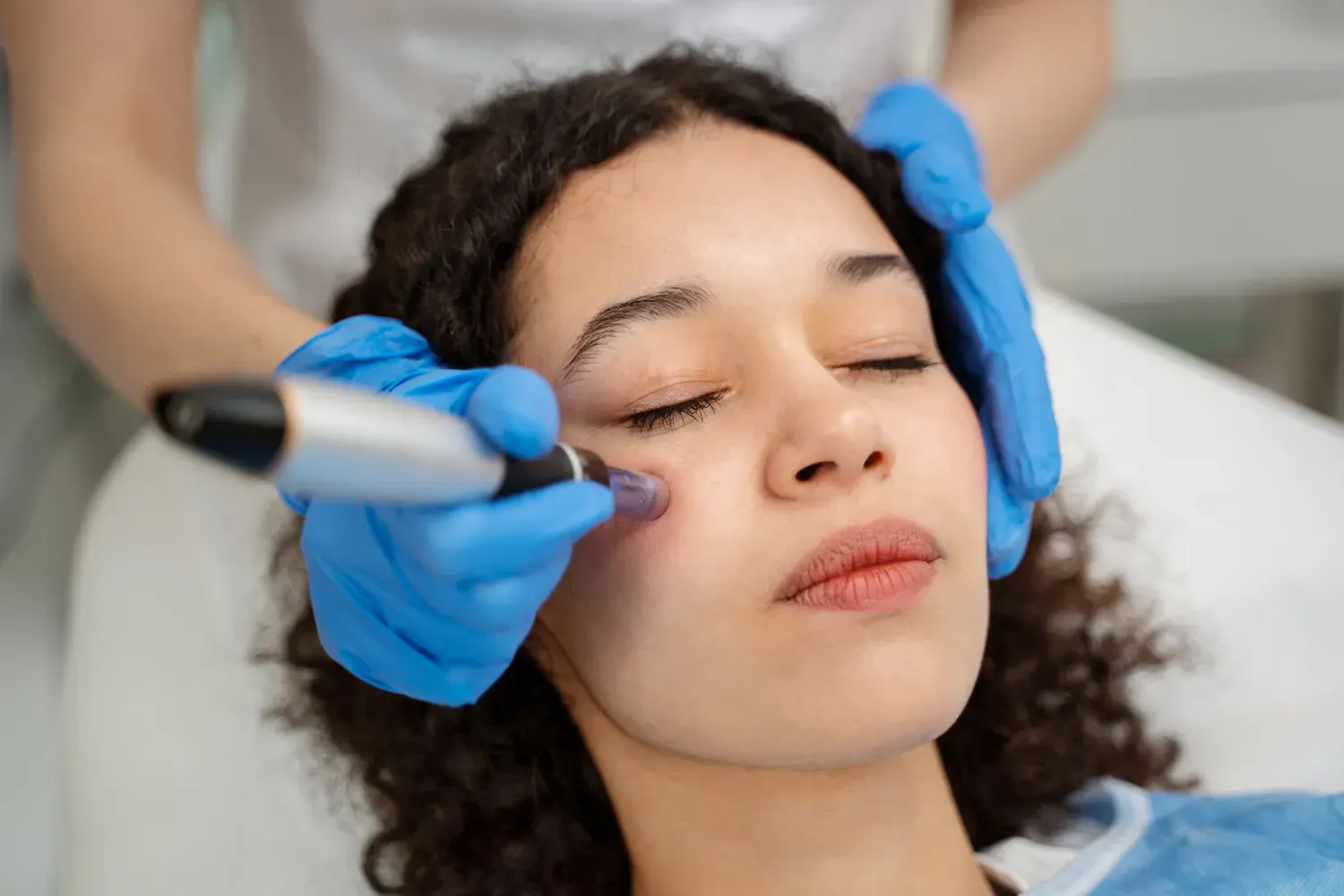
Microneedling in London
GMC-registered doctors | Medical-grade collagen induction therapy | Treats acne scars, fine lines, pores, and skin texture at 33 Cavendish Square
Duration
45-60 mins (including numbing)45-60 mins (including numbing)
Sessions
3-6 (course recommended)3-6 (course recommended)
Price From
£250£250
Downtime
24-48 hours redness24-48 hours redness
Key Benefits
- Performed exclusively by four GMC-registered doctors — never a nurse, technician, or beauty therapist.
- Medical-grade collagen induction therapy targeting acne scars, fine lines, enlarged pores, stretch marks, and dull skin.
- Safe for all skin types (Fitzpatrick I–VI) — meta-analysis confirms no risk of post-inflammatory hyperpigmentation.
- 83% patient satisfaction rate confirmed across 21 studies and 723 patients (Foppiani et al., 2025).
- Minimal downtime — 24–48 hours of redness, with most patients returning to normal activities the next day.
- Can be combined with PRP, exosomes, or AnteAGE Biosomes for enhanced regenerative results.
- Course-based approach with progressive, cumulative improvement over 3–6 sessions.
Common Target Areas
Microneedling in London — Medical-Grade Collagen Induction Therapy
Microneedling london at PRP London Clinic is performed exclusively by GMC-registered doctors using medical-grade devices at 33 Cavendish Square, London W1G. Also known as collagen induction therapy, microneedling uses controlled micro-injuries to stimulate your skin's natural wound-healing response — triggering new collagen and elastin production to improve acne scars, fine lines, enlarged pores, stretch marks, and overall skin texture.
This is our dedicated page for microneedling treatment london — the foundational skin-needling procedure that delivers impressive results with minimal downtime and a well-established safety profile across all skin types. If you are looking for a more intensive treatment that combines microneedling with radiofrequency energy for deeper skin tightening and remodelling, explore our RF Microneedling hub featuring Sylfirm X and Morpheus8.
For enhanced results, medical microneedling can be combined with PRP Facial therapy — where your own platelet-rich plasma is applied to the micro-channels created during treatment — or with Exosomes for Skin Rejuvenation to accelerate cellular repair and collagen synthesis. A systematic review by Foppiani et al. (2025) across 21 studies and 723 patients confirmed an 83% patient satisfaction rate with microneedling for facial rejuvenation, with low rates of adverse events.
Whether your goal is smoother skin texture, reduced scarring, smaller pores, or a more radiant complexion, our doctors tailor every microneedling facial london session to your skin type, concern severity, and clinical goals — never a one-size-fits-all protocol.
This procedure is part of our comprehensive Guide to Acne Scars & Uneven Skin Texture.
Your Microneedling Doctors
Every microneedling london session at PRP London Clinic is performed by one of our four GMC-registered doctors operating from 33 Cavendish Square, London W1G 0PW: Dr Bruno Amendola (GMC: 4346629), a Save Face accredited practitioner with an international postgraduate degree in Aesthetic Medicine and over 25 years of clinical experience; Dr Mohamed Nafei (GMC: 7520509), holding postgraduate diplomas in both Aesthetic Medicine and Endocrinology with over 10 years of international training; Dr Reem Nouri (GMC: 6149512), with a DRCOG and advanced aesthetic medicine credentials across nearly 20 years of medical practice; and Dr Mohammad Akbar (GMC: 5206673), FRCS Edinburgh, Medical Director, who provides clinical governance and oversight across all microneedling procedures — every treatment at this clinic is delivered by a qualified medical doctor, never a nurse, technician, or beauty therapist.
Microneedling Before and After Results
Real patient results from microneedling treatments performed by our Clinical Board at PRP London Clinic. All photographs are taken under standardised clinical conditions with informed patient consent.
How Microneedling Works — The Science of Collagen Induction Therapy
The Wound-Healing Cascade
Collagen induction therapy works by creating thousands of controlled micro-injuries in the skin using a medical-grade device fitted with fine, sterile needles. These micro-channels trigger the body's three-phase wound-healing cascade:
- Inflammation phase (0–48 hours): The body releases growth factors, cytokines, and platelet-derived factors to the treatment site. Blood flow increases, delivering nutrients and immune cells that initiate the repair process.
- Proliferation phase (2–42 days): Fibroblasts migrate to the micro-injury sites and begin synthesising new collagen type III, elastin, and glycosaminoglycans. New blood vessels form (angiogenesis), improving nutrient delivery to the dermis.
- Remodelling phase (21 days – 12 months): The initial collagen III is gradually replaced by stronger, more organised collagen type I. The extracellular matrix matures and contracts, producing firmer, smoother, and more resilient skin.
This progressive biological response is why microneedling results continue to improve for weeks and months after each session, and why a course of treatments delivers cumulative, compounding benefits.
Conditions Treated by Medical Microneedling
- Acne Scarring: A meta-analysis by Shen et al. (2022) of 12 randomised controlled trials confirmed that microneedling monotherapy achieves superior scar improvement — and crucially, no cases of post-inflammatory hyperpigmentation were reported, making it particularly suitable for darker skin types.
- Fine Lines and Wrinkles: Controlled collagen induction smooths superficial and moderate wrinkles across the forehead, periorbital area, and cheeks.
- Enlarged Pores: New dermal collagen compresses pore structures from beneath, reducing their visible diameter.
- Stretch Marks: Needling disrupts the fibrotic scar tissue within striae and stimulates replacement with healthier collagen and elastin fibres.
- Uneven Skin Texture and Dull Skin: By stimulating epidermal turnover and dermal remodelling, microneedling restores a smoother, more luminous skin surface.
- Mild Skin Laxity: Progressive collagen accumulation improves skin firmness, although patients seeking more dramatic tightening may benefit from RF microneedling.
- Pigmentation: Microneedling can improve post-inflammatory hyperpigmentation and sun damage by promoting healthy epidermal turnover.
How Microneedling Differs from RF Microneedling
Standard medical microneedling relies on mechanical micro-injury alone to trigger collagen induction. RF microneedling adds radiofrequency energy delivered through the needle tips into the deeper dermis and subdermis, creating controlled thermal zones for more intensive collagen remodelling and skin tightening. In practical terms, this means:
- Standard microneedling treats at shallower depths (0.5–2.5 mm) vs RF microneedling (up to 4–8 mm)
- Standard microneedling has less downtime (24–48 hours vs 24–72 hours for RF)
- Standard microneedling is lower cost per session
- RF microneedling produces more dramatic skin tightening and deeper scar remodelling
Both are excellent treatments — the right choice depends on your clinical goals, concern severity, and budget. Your doctor will advise during consultation.
Combination Treatments for Enhanced Results
Medical microneedling can be combined with active biologics applied immediately to the open micro-channels for enhanced penetration and efficacy:
- PRP (Platelet-Rich Plasma): Your own concentrated growth factors are applied to the skin during microneedling, amplifying the wound-healing response and accelerating collagen synthesis.
- Exosomes for Skin Rejuvenation: Exosome serums deliver targeted cell-signalling molecules through the micro-channels to enhance cellular repair and rejuvenation.
- AnteAGE Biosomes: Bone marrow stem cell-derived growth factors applied during treatment to boost regenerative outcomes.
The Microneedling Treatment Process
Preparation and Numbing
Before your microneedling treatment london session begins, your doctor cleanses the skin thoroughly and applies a potent topical anaesthetic cream (typically lidocaine-based) to the treatment area. This is left in place for 30–45 minutes to ensure the procedure is comfortable throughout.
Treatment Delivery
Your doctor uses a medical-grade automated dermapen microneedling device (Dermapen or equivalent) fitted with sterile, single-use needle cartridges. The device creates thousands of controlled micro-channels per second at precisely calibrated depths:
- 0.5–1.0 mm: Forehead, periorbital area, and sensitive zones — targeting fine lines, texture, and product penetration
- 1.0–1.5 mm: Cheeks, chin, and general facial rejuvenation — stimulating collagen induction in the mid-dermis
- 1.5–2.5 mm: Acne scars, stretch marks, and areas requiring deeper remodelling — targeting the deep dermis for scar revision
During the procedure, treatment serums (hyaluronic acid, growth factors, or PRP depending on your protocol) are applied to the skin surface, allowing them to penetrate directly through the open micro-channels for enhanced absorption.
Duration
A full facial microneedling facial london session takes approximately 30–45 minutes for the needling itself, plus 30–45 minutes of numbing time. Total appointment time is typically 60–90 minutes from arrival to departure.
Your Microneedling Treatment Journey
Here is what to expect when you book a microneedling treatment london appointment at PRP London Clinic, from initial enquiry through to your maintenance programme.
Book Your Consultation
Contact PRP London Clinic to schedule your initial consultation. You can book online, by phone, or via our booking system. Evening and weekend appointments are available at 33 Cavendish Square.
Comprehensive Skin Assessment
Your GMC-registered doctor conducts a thorough assessment of your skin type (Fitzpatrick classification), texture, scarring severity, pore size, and treatment goals. Clinical photographs are taken for documentation and progress tracking. Your medical history, current skincare routine, and any previous treatments are reviewed.
Numbing Application
A potent topical anaesthetic cream is applied to the treatment area and left in place for 30–45 minutes. Your doctor uses this time to finalise the treatment protocol, confirm needle depths, and select any adjunctive serums (hyaluronic acid, PRP, or exosomes).
Microneedling Treatment
Your doctor performs the microneedling procedure using a medical-grade automated device, adjusting needle depth across different facial zones for optimal results. The treatment is delivered in systematic, overlapping passes to ensure even coverage.
Serum Infusion
During and immediately after needling, treatment serums are applied to the skin surface. The thousands of open micro-channels allow these active ingredients to penetrate directly into the dermis — far deeper than topical application alone.
Aftercare Guidance
Post-treatment photographs are taken. Your doctor provides detailed aftercare instructions covering sun protection, skincare product restrictions, and what to expect during the recovery period. A soothing post-procedure product and SPF are applied before you leave.
Review and Course Planning
A follow-up review is scheduled at 4–6 weeks to assess your response, compare progress photographs, and plan your next session. Most patients achieve optimal results with a course of 3–6 sessions spaced 4–6 weeks apart, with maintenance sessions every 6–12 months.
Assessment After Previous Microneedling Treatments
If you have undergone microneedling at a non-medical setting — including beauty salons, spas, or at-home treatments with consumer-grade dermarollers — and are unhappy with your results or have experienced adverse effects, our doctors can assess your skin and recommend a proper medical-grade treatment plan. At-home rollers and non-medical devices typically use shorter, blunter needles at inconsistent depths without adequate infection control, often producing little clinical benefit and occasionally causing scarring or infection. Our microneedling clinic london doctors can evaluate your skin, determine an appropriate treatment protocol, and help you achieve the results you were originally seeking with a medically supervised approach.
Microneedling vs Other Skin Treatments
Understanding how microneedling compares to other skin rejuvenation options helps you make an informed treatment decision with your doctor.
| Factor | Medical Microneedling | RF Microneedling | Chemical Peels | Laser Resurfacing | At-Home Dermarollers |
|---|---|---|---|---|---|
| Mechanism | Mechanical micro-injury (collagen induction) | Mechanical + radiofrequency energy | Chemical exfoliation | Ablative or non-ablative light energy | Mechanical micro-injury (shallow) |
| Needle depth | 0.5–2.5 mm (adjustable) | Up to 4–8 mm | N/A | N/A | 0.2–0.5 mm (fixed) |
| Collagen stimulation | Moderate to strong | Strong to very strong | Mild to moderate | Strong | Minimal |
| Acne scar improvement | Good (evidence-based) | Very good (deeper remodelling) | Mild (superficial only) | Good (ablative) | Minimal |
| Skin tightening | Mild | Moderate to strong | Minimal | Moderate | None |
| Safe for all skin types | Yes (Fitzpatrick I–VI) | Yes (insulated needles) | Caution with deeper peels | Higher risk of PIH in darker skin | Variable (infection risk) |
| Downtime | 24–48 hours | 24–72 hours | 1–14 days (depth dependent) | 5–14 days (ablative) | None to mild irritation |
| Cost per session | Lower | Higher | Lower to moderate | Higher | Very low (but limited results) |
| Performed by | Doctor | Doctor | Doctor or trained practitioner | Doctor | Self-administered |
| Sessions required | 3–6 | 3–6 | 3–6 | 1–3 | Ongoing (limited efficacy) |
Your doctor recommends the most appropriate treatment based on your specific concerns, skin type, budget, and recovery preferences.
Microneedling London Price
Microneedling london price at PRP London Clinic starts from £250 per session. All treatments are performed by a GMC-registered doctor using medical-grade devices — not a beauty therapist or technician.
Course Pricing
Most patients achieve optimal results with a course of 3–6 sessions. Course packages offering multiple sessions at a reduced per-session rate are available — ask your doctor during your consultation for current course pricing.
Combination Treatment Pricing
Microneedling can be combined with PRP Facial or Exosomes for Skin Rejuvenation for enhanced results. Combination pricing is available — discuss options with your doctor to find the best protocol for your skin and budget.
Current pricing for all treatments is available on our pricing page.
Microneedling Safety Profile
Medical microneedling has an excellent safety profile when performed by qualified practitioners using appropriate devices. A systematic review by Gowda et al. (2021), encompassing 51 articles and 1,029 patients, confirmed that microneedling is a relatively safe procedure with minimal adverse effects regardless of device type. Reported side effects were limited to expected and transient outcomes: erythema, mild pain, oedema, and temporary skin irritation — all of which resolve within days.
Importantly for patients with darker skin tones, a meta-analysis by Shen et al. (2022) of 12 randomised controlled trials found that no form of microneedling caused post-inflammatory hyperpigmentation. This is a significant advantage over ablative laser treatments, which carry a higher risk of PIH in Fitzpatrick skin types IV–VI. Medical microneedling is therefore considered safe and effective across all skin types.
Our Safety Protocols
- GMC-Registered Doctors Only — Every microneedling session is performed by a qualified medical doctor, ensuring clinical judgement in needle depth selection, treatment intensity, and patient safety.
- Single-Use Sterile Cartridges — All needle cartridges are single-use and disposed of immediately after each patient, eliminating cross-contamination risk.
- Full Medical Assessment — All contraindications are screened during your consultation, including active skin conditions, medication history, and previous treatment outcomes.
- Emergency Preparedness — All treatment rooms at 33 Cavendish Square are equipped with full emergency medical equipment.
Microneedling Aftercare
First 24–48 Hours
- Redness and mild swelling are normal and typically resolve within 24 hours. Some patients experience warmth or a sunburn-like sensation.
- Avoid touching, rubbing, or applying make-up to the treated area for at least 24 hours.
- Cleanse gently with a mild, fragrance-free cleanser.
- Apply the post-procedure soothing serum provided by your doctor.
- Avoid direct sun exposure. Apply SPF 50 broad-spectrum sunscreen before going outside — this is mandatory.
- Do not swim, use saunas, steam rooms, or hot baths for 48 hours.
Days 2–5
- The skin may feel tight, dry, or slightly flaky as it renews — this is normal. Apply a gentle, fragrance-free moisturiser regularly.
- Avoid active skincare ingredients including retinoids, vitamin C serums, AHAs, BHAs, and exfoliants for at least 5 days post-treatment.
- Continue daily SPF 50 application and reapply every 2 hours if exposed to sunlight.
- Do not pick at any flaking or peeling skin — allow it to shed naturally.
Ongoing
- Maintain a consistent sun protection routine throughout your treatment course and beyond.
- Attend your scheduled follow-up review at 4–6 weeks for progress assessment and next-session planning.
- Inform the clinic immediately if you experience prolonged swelling, spreading redness, signs of infection, or any unexpected skin changes.
Am I a Good Candidate for Microneedling?
| Ideal Candidate | May Need an Alternative Approach |
|---|---|
| Acne scars (atrophic, rolling, or boxcar) | Deep ice-pick scars (may benefit from TCA cross or RF microneedling) |
| Fine lines, wrinkles, and early signs of ageing | Significant skin laxity (RF microneedling or surgical options) |
| Enlarged pores and uneven skin texture | Active cystic or pustular acne (must be controlled first) |
| Stretch marks on the body | Active eczema or psoriasis in the treatment area |
| Dull, sun-damaged, or lacklustre skin | Currently taking isotretinoin or within 6 months of stopping |
| Post-inflammatory hyperpigmentation | Active herpes simplex (cold sores) — treatment deferred |
| All Fitzpatrick skin types (I–VI) | Pregnancy or breastfeeding (treatment deferred) |
| Seeking gradual, natural-looking improvement | Seeking dramatic one-session results (RF microneedling or laser may suit better) |
Contraindications for Microneedling
Microneedling may not be suitable for patients with the following conditions. All contraindications are assessed during your consultation.
- Absolute Contraindications: Active acne or pustular breakouts in the treatment area; isotretinoin (Roaccutane) use within the past 6 months; pregnancy or breastfeeding; active herpes simplex (cold sores) in the treatment zone; active skin infection in the treatment area.
- Relative Contraindications (Require Medical Review): Active eczema, psoriasis, or dermatitis in the treatment area; anticoagulant therapy or blood-clotting disorders; history of keloid or hypertrophic scarring; uncontrolled diabetes or immunosuppressive therapy; recent chemical peel or ablative laser in the treatment area (timing dependent); autoimmune skin conditions.
If you are unsure whether you are suitable for microneedling, please book a consultation so our doctors can assess your medical history and recommend the most appropriate treatment plan for your skin.
Clinical Disclaimer
Microneedling is a medical procedure that creates controlled micro-injuries in the skin to stimulate collagen induction. Individual results vary based on skin type, age, condition severity, and adherence to aftercare protocols. While microneedling has a well-established safety profile when performed by qualified medical professionals, all procedures carry inherent risks including transient erythema, swelling, sensitivity, and rare adverse events. A professional consultation is required to determine suitability and plan your treatment course. All before-and-after photographs represent individual results and should not be interpreted as a guarantee of outcome. Content on this page was last reviewed on 2 April 2026.
Visit Our Microneedling Clinic at 33 Cavendish Square
PRP London Clinic is located at 33 Cavendish Square, London W1G 0PW — in the heart of the Harley Street medical district. We are a short walk from Oxford Circus and Bond Street tube stations. Our clinic is open 7 days a week, including late evenings and bank holidays, with appointments available at short notice. Whether you are exploring microneedling london for the first time or looking to upgrade from at-home rollers to a medically supervised protocol, our team of four GMC-registered doctors is here to assess your skin and recommend the right approach for your goals.
Book Your Microneedling Consultation Today
Discover what medical-grade microneedling can achieve for your skin. Whether your goal is smoother acne scars, fewer fine lines, smaller pores, reduced stretch marks, or a brighter, more even complexion, our Clinical Board will assess your concerns and design a personalised treatment plan using the right needle depths, serums, and session frequency for your skin type and goals. Book a consultation at PRP London Clinic and take the first step toward healthier, more radiant skin — backed by evidence, delivered by doctors.
Myths vs Facts
At-home dermarollers deliver the same results as medical microneedling.
Consumer-grade dermarollers use shorter, often blunter needles (typically 0.2–0.5 mm) that cannot reach the dermis where collagen induction occurs. They lack the speed, precision, and depth control of medical-grade automated devices like the Dermapen, which penetrate up to 2.5 mm at thousands of micro-channels per second. Furthermore, at-home rollers carry a higher risk of infection due to inadequate sterilisation and inconsistent technique. Medical microneedling performed by a doctor with adjustable depth is a fundamentally different treatment.
Microneedling is only effective for acne scars.
While microneedling is indeed highly effective for acne scarring — confirmed by a meta-analysis of 12 RCTs by Shen et al. (2022) — it treats a wide range of skin concerns. A systematic review by Foppiani et al. (2025) found that the most common treatment endpoints were wrinkling (71% of studies), skin texture (33%), photoaging (29%), and skin laxity (14%). Microneedling is a versatile collagen induction therapy for fine lines, enlarged pores, stretch marks, pigmentation, and overall skin rejuvenation.
Microneedling is not safe for darker skin tones.
This is directly refuted by clinical evidence. A meta-analysis by Shen et al. (2022) of 12 randomised controlled trials found that no form of microneedling caused post-inflammatory hyperpigmentation — a significant finding for patients with Fitzpatrick skin types IV–VI. Unlike ablative lasers, which carry a meaningful PIH risk in darker skin, microneedling works mechanically without light or heat energy, making it one of the safest skin rejuvenation treatments available for all skin tones.
You will see dramatic results immediately after your first session.
Microneedling triggers a biological wound-healing cascade that takes weeks and months to complete. While some initial improvement in skin radiance and texture may be noticeable within 1–2 weeks, meaningful collagen remodelling continues for 4–6 weeks per session. Peak results from a full course typically emerge 3–6 months after the final treatment. Patience and adherence to the full course are essential for optimal outcomes.
One microneedling session is enough to achieve lasting results.
While a single session can produce noticeable improvement in skin texture and radiance, the collagen induction process is cumulative. Each session adds new collagen and elastin to the dermis, and a course of 3–6 sessions spaced 4–6 weeks apart is typically recommended for meaningful and lasting improvement in acne scars, fine lines, and pore size. Maintenance sessions every 6–12 months help sustain the results long term.
Standard microneedling and RF microneedling are the same treatment.
They share the principle of needle-based skin treatment, but the mechanisms differ significantly. Standard microneedling creates mechanical micro-injuries only, relying on the body's wound-healing response for collagen induction. RF microneedling adds radiofrequency energy delivered through the needle tips into deeper dermal and subdermal layers, creating thermal zones for more intensive tissue remodelling. RF microneedling achieves greater skin tightening and deeper scar revision, but at a higher cost and with slightly more downtime. Your doctor can recommend the right approach for your specific goals.
Microneedling Cost
| Treatment | Price |
|---|---|
| Microneedling (Standalone) Per session. Course of 3-6 recommended for optimal results. Excludes PRP/Exosomes/Biosomes. | £250per treatment |
Prices are indicative. Please book a consultation for a personalised quote.
Frequently Asked Questions
Clinical Evidence & Scientific References
Foppiani (2025): Microneedling for Facial Rejuvenation: A Systematic Review
Jose A Foppiani, James E Fanning, Kassandra Beltran, Otakar Raska, Angelica Hernandez Alvarez, Iulianna Taritsa, Erin Kim, Maria-Jose Escobar, Daniela Lee, Umar Choudry, Samuel J Lin · Aesthetic Plastic Surgery, 2025PMID: 40542236
Supports: Systematic review and meta-analysis of 21 studies (723 patients) showing 83% patient satisfaction rate with microneedling for facial rejuvenation. Most common endpoints were wrinkling (71%), skin texture (33%), photoaging (29%), and skin laxity (14%). Low rates of adverse events — transient erythema (6.8%), scaling (1.7%), burning sensation (1.5%).
Limitations: Lack of standardised measures for aesthetic outcomes across studies. Most trials used multiple treatment sessions with varying schedules. Level IV evidence.
View on PubMed →Shen (2022): Microneedling Monotherapy for Acne Scar: Systematic Review and Meta-Analysis of Randomized Controlled Trials
Yu-Chun Shen, Wen-Kuan Chiu, Yi-No Kang, Chiehfeng Chen · Aesthetic Plastic Surgery, 2022PMID: 35426044
Supports: Meta-analysis of 12 RCTs (414 participants) confirming microneedling without radiofrequency achieved superior results for scar improvement. No form of microneedling caused postinflammatory hyperpigmentation — a significant advantage for acne scar treatment, especially in darker skin types.
Limitations: Level III evidence. Subjective satisfaction showed no significant difference between microneedling and other treatments. Limited to acne scarring indication.
View on PubMed →Gowda (2021): A Systematic Review Examining the Potential Adverse Effects of Microneedling
Asha Gowda, Brayden Healey, Harib Ezaldein, Miesha Merati · Journal of Clinical and Aesthetic Dermatology, 2021PMID: 33584968
Supports: Systematic review of 51 articles (1,029 patients) confirming microneedling is a relatively safe procedure with minimal adverse effects regardless of device type. Adverse effects limited to expected erythema, pain, oedema, and temporary skin irritation.
Limitations: Included clinical trials, retrospective studies, and case reports — not restricted to RCTs. Heterogeneous devices and treatment protocols across included studies.
View on PubMed →*PRP London Clinic provides these references for educational purposes. Our Clinical Board regularly reviews emerging peer-reviewed literature to ensure our protocols align with the latest advancements in regenerative medicine.
Quick Links
Our Medical Team
Your treatment will be performed by one of our qualified medical professionals

Dr Mohamed Nafei
GMC: 7520509GMC-registered doctor with 10+ years experience. Expert in PRP, exosomes, and ad...
Profile
Dr Reem Nouri
GMC: 6149512GMC-registered doctor with nearly 20 years of medical experience including 10+ y...
Profile
Dr Bruno Amendola
GMC: 4346629Highly sought-after aesthetic physician with decades of medical experience, inte...
Profile
Dr Mohammad Akbar
GMC: 5206673FRCS (Edinburgh) Fellow of the Royal College of Surgeons with extensive experien...
Scroll to see all
Ready to Get Started?
Book your consultation today and take the first step towards your transformation.
Book ConsultationVerified Clinical Reputation
Ruby K
19 Jan 2026
Norin Hanifi
19 Jan 2026
Dominique Heslop
13 Jan 2026
lloyda221
06 Jan 2026
Mane Authority
06 Jan 2026
Victor Contreras Guerra
4 months ago
A A
5 months ago
harris jan
3 months ago
Independent Patient Feedback
Read all verified stories →Medical Suitability Note
As a GMC-regulated practice, a mandatory consultation is required for all new patients to assess suitability and clinical need. This treatment may not be appropriate for everyone. All procedures are performed by GMC-registered doctors whose credentials can be verified on the official GMC register.