Acne Scars & Uneven Skin Texture
What Are Acne Scars? The three main types of atrophic acne scars: Ice Pick, Boxcar, and Rolling Acne scars are permanent textural changes in the skin that occur when severe acne damages the deeper layers of skin (the dermis). Unlike temporary red or brown marks that fade over time, true acne scars represent a structural change—either a loss of tissue (atrophic scars) or an excess of tissue (hypertrophic/keloid scars).
Content Author & Reviewer
PRP London Clinic Medical Team
GMC-Registered Medical Professionals
Our team of GMC-registered medical professionals collaboratively review all medical content to ensure clinical accuracy and provide evidence-based information for patient education.




Last reviewed: November 14, 2025
What Are Acne Scars?
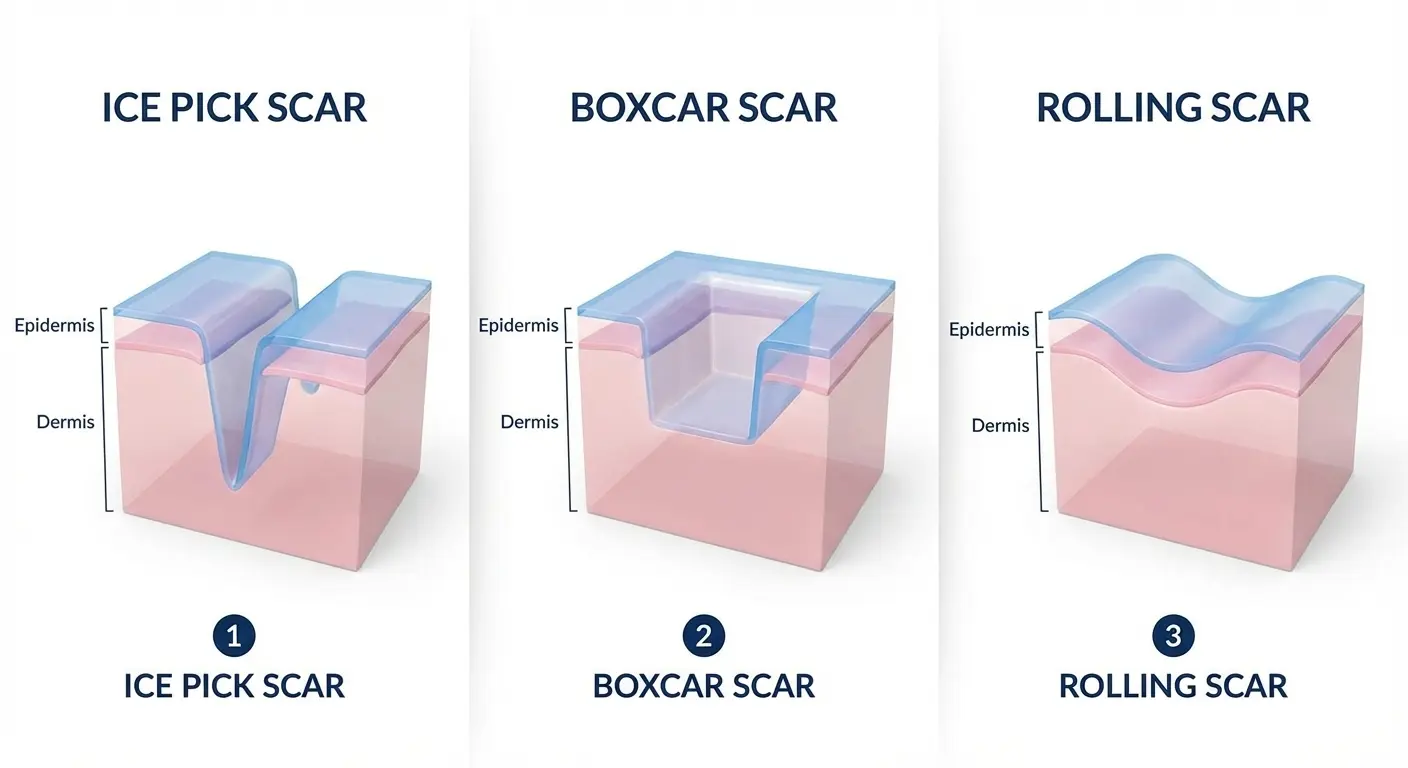
What Causes Acne Scars?
- Severe or cystic acne — The deeper the inflammation, the higher the scarring risk
- Picking or squeezing spots — This forces bacteria deeper and increases tissue damage
- Delayed treatment — Letting acne persist untreated increases cumulative damage
- Genetics — Some people are simply more prone to scarring
Can Acne Scars Be Removed?
The Foundation: Skincare & Sun Protection
Step 1: Control Active Acne First
Step 2: Scar Revision Treatments
- Energy-based devices (Sylfirm X, Tixel) — Deliver controlled thermal energy to remodel collagen
- Subcision + Fillers (HA or PRF Bio Filler) — Break fibrous bands and volumise depressed scars
- Chemical peels (TCA, PRX-T33) — Resurface and stimulate regeneration
- Regenerative therapies (PRP Facial, Polynucleotides) — Use growth factors to accelerate healing
Who Experiences This Condition?
Common in
- •Those who experienced severe, inflammatory, or cystic acne
- •People who picked, squeezed, or popped their acne lesions
- •Individuals whose acne went untreated for extended periods
- •Those with a family history of acne scarring
- •People with darker skin tones (higher risk of PIH)
- •Individuals who experienced acne during adolescence when skin is still developing
Factors Affecting Severity
- •Depth and duration of inflammatory acne
- •How the acne was managed (picking increases scarring)
- •Genetic predisposition to scarring
- •Skin type and ethnicity
- •Age at which acne occurred
- •Whether acne was treated promptly or allowed to persist
Types of Acne Scars Explained
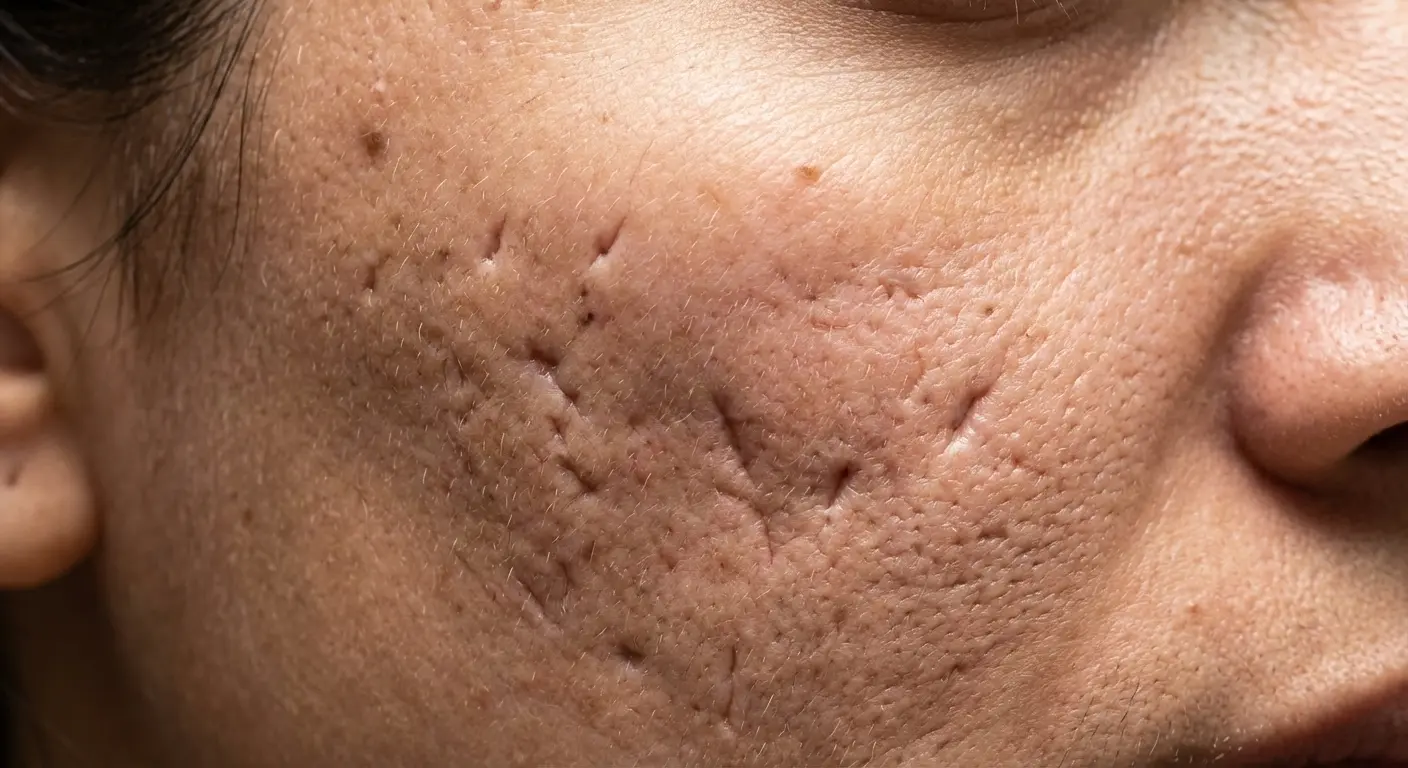
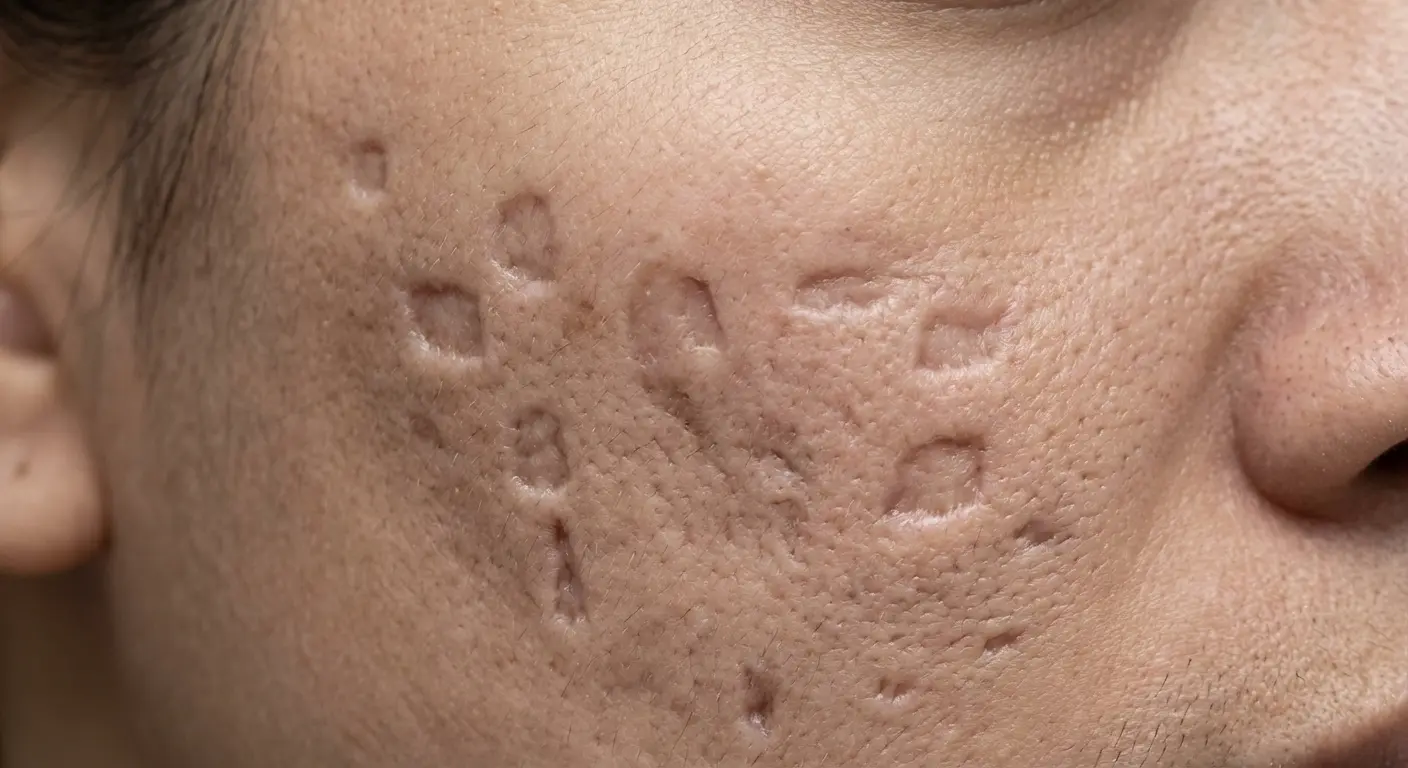
Atrophic (Pitted) Scars
Rolling Scars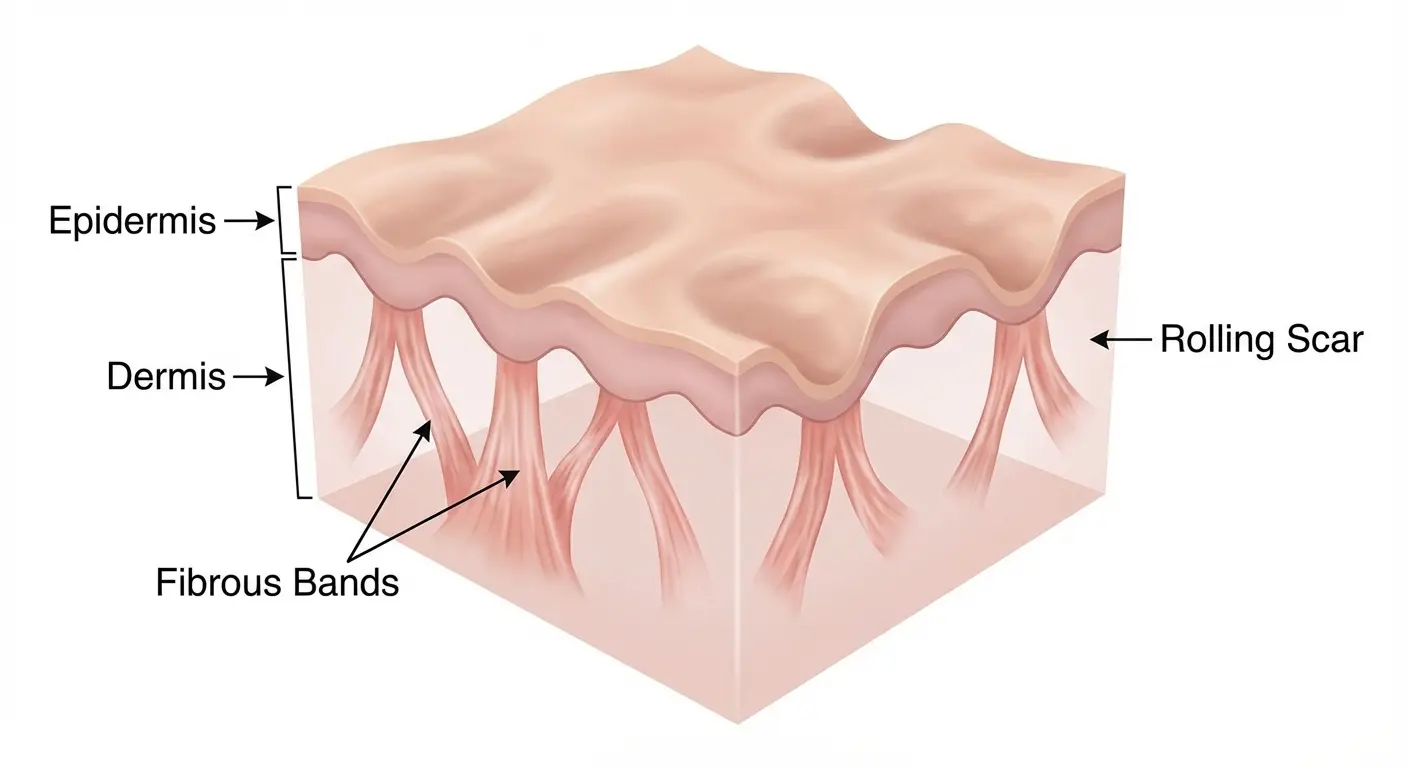
Hypertrophic & Keloid Scars
Unlike pitted scars, these are raised, firm scars caused by excess collagen production during healing. They're more common in certain skin types and body areas. Treatment approach:- Intralesional steroid injection — For larger raised lesions
- Cryotherapy (Cryopen) — For smaller lesions
- Silicone sheets — Used between treatments to flatten and soften
Why Won't My Acne Scars Go Away?
If you've tried every cream, serum, and home remedy but your acne scars refuse to budge, you're not alone—and there's a reason.
The answer lies in understanding what you're actually dealing with. Many people confuse acne marks (which do fade) with true acne scars (which don't).
Post-Inflammatory Marks (What WILL Fade)
Post-Inflammatory Hyperpigmentation (PIH) — Brown or dark spots from excess melanin production. More common in darker skin tones. These fade naturally but treatment accelerates resolution.
Treatment approach:
- Topical pigment suppression — Alternating cycles of Hydroquinone, Azelaic Acid, Kojic Acid, Alpha Arbutin, and Tranexamic Acid
- Sylfirm X (Pigment-Specific Protocol) — After sufficient pigment suppression, RF targets residual melanin
Post-Inflammatory Erythema (PIE) — Red or pink marks left after acne heals. These are caused by damaged blood vessels, NOT structural damage.
Treatment approach:
- Topical agents — Azelaic Acid, Niacinamide to calm inflammation
- Pulsed Dye Laser / IPL — Targets damaged vessels directly
- Sylfirm X — For overall texture and quality recovery after complete resolution of erythema
What WON'T Fade — True Acne Scars
If you can feel a pit, depression, or texture change when you run your finger across your skin, that's a true scar. This represents permanent structural damage to the dermis where collagen has been lost or disorganised.
No amount of waiting, no topical product, and no home remedy will fix this. True scars require professional treatments that physically remodel the collagen structure beneath your skin. The good news? Modern combination treatments can achieve 50-80% improvement in scar depth and texture.
Acne Scars & London Living: Environmental Factors
Living in London presents unique challenges for acne-prone and scarred skin:
Hard Water London's notoriously hard water (high in calcium and magnesium) can disrupt the skin's natural pH balance, irritate sensitive post-acne skin, and leave mineral deposits that clog pores—potentially worsening breakouts and delaying scar healing.
Urban Pollution Airborne particulate matter (PM2.5) from traffic and industry penetrates the skin, triggering oxidative stress and inflammation. Research shows pollution can exacerbate post-inflammatory hyperpigmentation (PIH), making dark spots more stubborn in city dwellers.
Central Heating & Air Conditioning London's indoor environments tend to be dry, which can compromise the skin barrier and slow the healing process for acne scars.
What This Means for Treatment These factors make professional intervention even more valuable for Londoners—home skincare alone often can't overcome the environmental burden on your skin.
Understanding Your Acne Scar Management Options
| Scar Type | Possible Treatments | Why It Works |
|---|---|---|
| Rolling Scars Wide, wave-like | Subcision + Filler (HA/PRF) Sylfirm X | Breaks fibrous bands + volumises depressions + RF remodelling |
| Ice Pick Scars Deep, narrow, V-shaped | TCA Peel (PRX-T33) Sylfirm X | TCA triggers deep regeneration + RF remodels collagen |
| Boxcar Scars Broad with sharp edges | Subcision + Filler (HA/PRF) TCA Peel (PRX-T33) Sylfirm X | Multi-modal: volumise + resurface + remodel |
| Hypertrophic/Keloid Raised, firm scars | Intralesional Steroids Cryotherapy (Cryopen) Silicone Sheets | Flattens excess tissue + suppresses collagen overproduction |
| PIH Brown/dark spots | Topical Pigment Suppression* Sylfirm X (Pigment Protocol) | Suppress melanin production first, then RF targets residual pigment |
| PIE Red/pink marks | Topicals (Azelaic Acid, Niacinamide) Pulsed Dye Laser / IPL Sylfirm X (after resolution) | Calm inflammation + target damaged vessels + texture recovery |
*Topical pigment suppression: alternating cycles of Hydroquinone, Azelaic Acid, Kojic Acid, Alpha Arbutin, and Tranexamic Acid.
Educational Information Only: This guide is for informational purposes only and does not constitute medical advice. Treatment recommendations are made only after a face-to-face consultation and examination by a GMC-registered doctor, taking into account your medical history, scar severity, skin type, and individual goals.
Why Choose Us for Acne Scar Treatment in London
At PRP London Clinic, we take a different approach to acne scar treatment:
Combination Therapy Expertise We understand that a single treatment rarely delivers optimal results. Our strength lies in creating synergistic plans that layer multiple technologies—energy devices, biostimulators, and regenerative medicine—for results that exceed what any single treatment can achieve.
Advanced Sylfirm X Technology We offer Sylfirm X—the most advanced RF Microneedling device available—alongside Morpheus8, allowing us to match the right technology to your specific needs. Sylfirm X excels at texture and pigment with minimal downtime; Morpheus8 goes deeper for structural remodelling.
Doctor-Led Care Every treatment plan is designed and overseen by our Clinical Board, led by Dr Mohamed Nafei (GMC: 7520509), whose background in Endocrinology and Aesthetic Medicine ensures a medically rigorous approach to skin health.
Honest Expectations We provide realistic assessments. We'll tell you what's achievable and create a plan designed for the best possible improvement in YOUR skin.
Treatment Process
Our acne scar treatment protocol follows Dr. Nafei's evidence-based approach:
Foundation: Skincare & Sun Protection All treatments must be accompanied by a strict skincare routine, especially SPF 30+ daily. Without this, results are compromised.
Phase 1: Active Acne Control Before treating scars, any active acne must be controlled using topical agents: Adapalene, Tretinoin, Azelaic Acid, Salicylic Acid, and topical antibiotics as needed.
Phase 2: Scar-Specific Treatment
- Rolling Scars: Subcision with cannula + Filler (HA/PRF bio filler), followed by Sylfirm X
- Ice Pick Scars: TCA Chemical Peel (PRX-T33) + Sylfirm X
- Boxcar Scars: Subcision + Filler + TCA Peel + Sylfirm X (fractional ablative laser for severe cases)
- Hypertrophic/Keloid: Intralesional steroids (large) / Cryotherapy (small) + silicone sheets
Phase 3: Post-Inflammatory Marks
Diagnosis & Assessment
Acne scars are typically classified by their appearance and depth. A proper assessment involves identifying the scar types present (ice pick, boxcar, rolling, or mixed), grading their severity, and evaluating any associated concerns like PIE (redness) or PIH (pigmentation). The Goodman and Baron scale is commonly used to grade acne scars from Grade 1 (macular/flat marks only) to Grade 4 (severe scarring). Understanding your specific scar profile is essential for determining which treatment approaches will be most effective.
Prevention & Management
Lifestyle Tips
- •Treat active acne promptly — the longer inflammation persists, the higher the scarring risk
- •Never pick, squeeze, or pop pimples — this forces bacteria deeper and increases tissue damage
- •Seek professional help for severe or cystic acne before scarring occurs
- •Wear SPF 30+ daily — UV exposure worsens post-inflammatory marks and slows healing
Home Care
- •Use a consistent skincare routine with gentle, non-irritating products
- •Retinoids can help improve skin texture and promote cell turnover over time
- •Vitamin C serums may help brighten PIH (brown marks) gradually
- •Niacinamide can help improve overall skin tone and barrier function
- •Sunscreen is essential — sun exposure makes scars and marks more visible
Symptoms & Causes
Common Symptoms
- Pitted or indented scars (ice pick, boxcar, rolling)
- Uneven or rough skin surface
- Enlarged pores in areas of scarring
- Persistent red marks post-acne (Post-Inflammatory Erythema)
- Lingering brown spots post-acne (Post-Inflammatory Hyperpigmentation)
- A dull complexion due to textural irregularities
Potential Causes
- Inflammatory acne (cysts, nodules, severe papules) that damages the dermis
- Disrupted healing process — either too little collagen (pitted scars) or too much (raised scars)
- Mechanical damage from picking, squeezing, or extracting acne lesions
- Delayed or inadequate treatment of active acne, allowing inflammation to persist
- Genetic factors affecting collagen production and wound healing
- Bacterial colonisation deepening inflammation beyond the epidermis
Treatment Options at PRP London
Sylfirm X
Our primary choice for acne scars. This next-generation RF Microneedling device precisely targets scar tissue while stimulating collagen production—with minimal downtime compared to traditional RF Microneedling.
View Sylfirm XChemical Peels (PRX-T33)
TCA-based peels like PRX-T33 are particularly effective for ice pick scars, triggering deep regeneration without significant downtime.
View Chemical Peels (PRX-T33)Dermal Fillers
HA or PRF bio fillers volumise depressed scars after subcision, lifting rolling and boxcar scars from beneath for immediate and lasting improvement.
View Dermal FillersPolynucleotides Treatment
A biostimulator that signals your skin to repair itself. It is excellent for improving the health and structure of scarred tissue at a cellular level.
View Polynucleotides TreatmentPRP Facial
Our advanced PRP Facial combines medical-grade microneedling with your body's own growth factors to accelerate scar remodelling and restore smooth, even skin texture.
View PRP FacialTixel® Skin Resurfacing
A unique thermal-mechanical treatment that resurfaces the skin to improve the appearance of shallow scars, fine lines, and overall texture.
View Tixel® Skin ResurfacingChemical Peels
Effective for addressing surface texture irregularities and post-inflammatory hyperpigmentation (dark spots) left behind by acne.
View Chemical PeelsMicroneedling
A proven collagen-induction therapy that creates controlled micro-injuries to stimulate your skin's natural healing response. Ideal for mild to moderate scarring.
View MicroneedlingFrequently Asked Questions
Acne scars form when severe or inflammatory acne damages the deeper layers of skin (dermis). During healing, the body may produce too little collagen (causing pitted scars) or too much (causing raised scars). Picking or squeezing spots, delayed treatment of active acne, and genetic factors all increase scarring risk.
Acne marks are flat discolourations—either red (PIE) or brown (PIH)—that fade over time. True acne scars are permanent textural changes (pits or raised areas) that require treatment to improve. If you can feel an indentation when you run your finger over the area, it's a scar, not just a mark.
True acne scars (pitted or raised) are permanent and will not heal on their own. Red marks (PIE) and brown spots (PIH) will fade naturally over months to years, but the process can be significantly accelerated with professional treatment.
For pitted scars (ice pick, boxcar, and rolling), Sylfirm X is considered the gold standard. This advanced RF Microneedling device remodels collagen at a deep level, 'lifting' the scar from beneath with minimal downtime. We often combine this with regenerative treatments like PRP Facial or Polynucleotides for enhanced results.
Significant improvement typically requires 3 to 6 treatment sessions, spaced 4-6 weeks apart. The exact number depends on your scar types, their depth, and your treatment plan. Mild scarring may improve in fewer sessions; severe scarring may require more.
Complete removal of deep scars is rarely possible, but most patients achieve 50-80% improvement in their skin texture—a dramatic difference that significantly improves skin smoothness and confidence. Setting realistic expectations is important for satisfaction with results.
Unfortunately, yes. As we age, we naturally lose collagen, which can make existing acne scars appear more pronounced. This is why treating acne scars sooner rather than later often yields better results—you're working with more youthful, resilient skin.
Downtime varies by treatment. Sylfirm X typically involves 2-5 days of redness and mild swelling—less than traditional RF Microneedling. Morpheus8 may involve 3-7 days of redness and possible grid marks. Standard Microneedling with PRP has 1-3 days of redness. Chemical Peels may involve peeling for 3-7 days. Our team will provide a clear timeline for your specific plan.
While home skincare (retinoids, vitamin C, SPF) can improve skin quality and help with marks, true structural scars require professional treatment to remodel the damaged collagen. Home devices are much less powerful than clinical equipment and cannot achieve the same results.
Verified Clinical Reputation
Ruby K
19 Jan 2026
Norin Hanifi
19 Jan 2026
Dominique Heslop
13 Jan 2026
lloyda221
06 Jan 2026
Mane Authority
06 Jan 2026
Victor Contreras Guerra
4 months ago
A A
5 months ago
harris jan
3 months ago
Independent Patient Feedback
Verify on Google Reviews →Clinical Note: To protect patient confidentiality while maintaining educational clarity, some anatomical illustrations on this site utilise medically-verified, AI-generated models. Every anatomical demonstration is reviewed for clinical accuracy by our GMC-registered medical board.