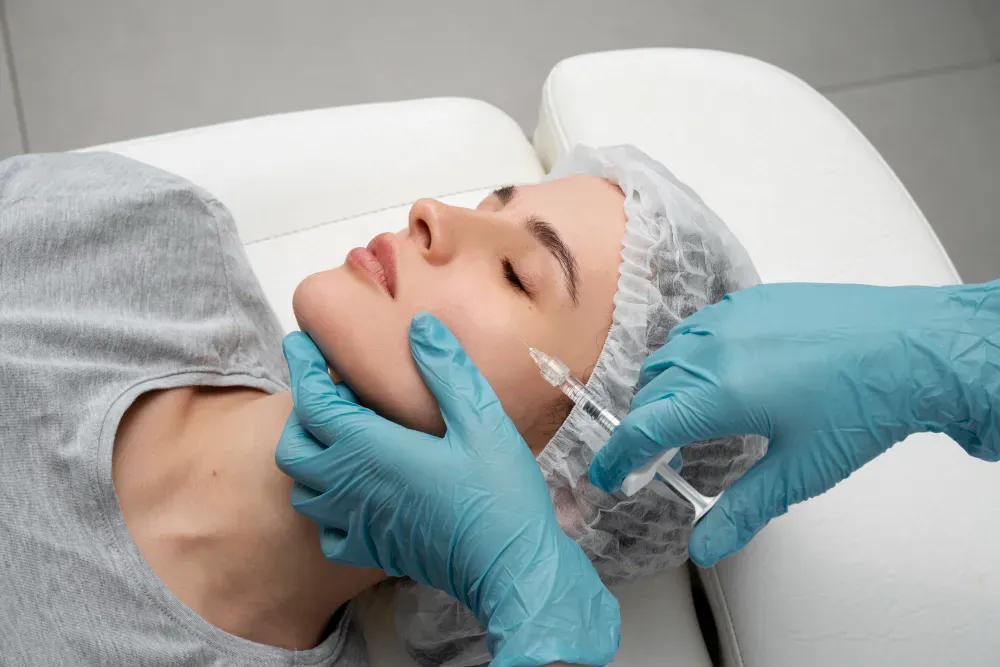
Dermal filler consultation with GMC-registered doctor at PRP London Clinic, 33 Cavendish Square — facial assessment for hyaluronic acid filler treatment

Dermal Fillers in London

Premium hyaluronic acid fillers — including Juvéderm, Restylane, Revolax and Teosyal — administered by GMC-registered doctors at 33 Cavendish Square in the Harley Street medical district.

Duration

30-60m

Sessions

1-2

Price From

£300

Downtime

Minimal — mild swelling 24-48hrs

Key Benefits

  • Immediate, visible improvement in facial volume, contour, and proportion.
  • Fully reversible with Hyaluronidase — the only volumising treatment with a complete safety net.
  • Performed exclusively by four GMC-registered doctors with advanced facial anatomy training.
  • Premium product range: Juvéderm, Restylane, Revolax, and Teosyal HA fillers selected per treatment area.
  • Comprehensive hub of filler treatments: lips, cheeks, chin, tear trough, and nasolabial/marionette lines.
  • Dedicated filler correction service for migration, overfilling, and unsatisfactory work from other clinics.
  • Needle and micro-cannula techniques selected for safety and precision in every treatment zone.

Common Target Areas

Lips (Augmentation & Shaping) Cheeks (Midface Volume & Contouring) Chin (Augmentation & Profile Balancing) Tear Trough (Under-Eye Hollowing) Nasolabial Folds Marionette Lines Jawline Temples Perioral Region

The Best Dermal Fillers in London — Expert-Led, Evidence-Based

Dermal fillers london treatments at PRP London Clinic are performed exclusively by GMC-registered doctors who specialise in facial anatomy and injectable aesthetics. Whether you are considering fillers for the first time or seeking correction of previous work, our Clinical Board provides a medically led approach that prioritises safety, natural results, and long-term facial harmony.

As a dedicated dermal filler clinic london, we offer a comprehensive range of hyaluronic acid (HA) filler treatments across every treatable area of the face. Our hub of specialist filler services includes:

Each area demands a different filler product, injection technique, and clinical approach. This page provides an overview of our best dermal fillers london practice, the products we use, and what to expect from treatment at our clinic at 33 Cavendish Square, London W1G 0PW — in the heart of the Harley Street medical district.

This procedure is part of our comprehensive Guide to Jowls & Lower Face Sagging.

Our Clinical Board: Four GMC-Registered Doctors

All dermal filler treatments at PRP London Clinic are performed by our team of four GMC-registered doctors operating from 33 Cavendish Square, London W1G 0PW: Dr Bruno Amendola (GMC: 4346629), a Save Face accredited practitioner with an international postgraduate degree in Aesthetic Medicine and over 25 years of clinical experience; Dr Mohamed Nafei (GMC: 7520509), holding postgraduate diplomas in both Aesthetic Medicine and Endocrinology with over 10 years of international training; Dr Reem Nouri (GMC: 6149512), with a DRCOG and advanced aesthetic medicine credentials across nearly 20 years of medical practice; and Dr Mohammad Akbar (GMC: 5206673), FRCS Edinburgh, Medical Director, who provides clinical governance and oversight across all injectable procedures — every dermal filler at this clinic is delivered by a qualified medical doctor, never a nurse, technician, or non-medical practitioner.

Hyaluronic Acid Fillers: The Science Behind the Treatment

All dermal fillers used at PRP London Clinic are based on hyaluronic acid (HA) — a naturally occurring glycosaminoglycan found throughout the skin, connective tissue, and synovial fluid. In its cross-linked, injectable form, HA acts as a volumiser, hydrator, and structural scaffold that integrates with the surrounding tissue to restore lost volume, define contours, and improve skin quality.

How Dermal Fillers Work

Cross-linked HA gels are injected beneath the skin at precise depths and volumes to achieve three distinct clinical objectives:

  • Volume Restoration — Replenishing age-related fat pad descent and bone resorption in the midface, temples, and perioral region. This addresses the hollowing and sagging that occurs as the facial fat compartments thin and descend with time.
  • Facial Contouring — Enhancing structural features such as cheekbones, chin projection, and jawline definition using high G-Prime (structurally rigid) fillers that resist compression and maintain shape.
  • Skin Quality Improvement — Using softer, more hydrophilic HA gels to improve skin hydration, fine lines, and overall radiance — particularly effective in the tear trough, perioral area, and hands.

Our Product Range

We select from four premium hyaluronic acid filler ranges, each with distinct rheological properties suited to different facial zones and clinical goals:

  • Juvéderm® (Allergan/AbbVie) — The world's most widely researched HA filler range. Includes Voluma for midface volumisation, Volux for chin and jawline structural augmentation, Volift for nasolabial folds, and Volbella for lip hydration and fine lines. VYCROSS cross-linking technology provides smooth integration and longevity of 12–24 months depending on the product.
  • Restylane® (Galderma) — Features NASHA and XpresHAn Technology for natural tissue integration with flexible movement. Restylane Lyft excels in midface augmentation, Defyne provides jawline definition with natural expression, and Kysse delivers soft, mobile lip enhancement.
  • Revolax® — A cost-effective Korean HA filler range available in Fine, Deep, and Sub-Q formulations. High-purity HA with dense cross-linking provides excellent longevity. Particularly suited to patients seeking quality results at an accessible price point.
  • Teosyal® Redensity II — A specialist tear trough filler containing HA combined with a complex of amino acids, antioxidants, minerals, and vitamin B6. Specifically formulated for the delicate periorbital area where standard fillers carry a higher risk of Tyndall effect or irregularity.

Your doctor selects the optimal product based on your anatomy, treatment area, skin type, and aesthetic goals — not a one-brand-fits-all protocol.

The Dermal Filler Treatment Process

Every dermal filler treatment at PRP London Clinic follows a structured clinical protocol designed to maximise safety, precision, and patient satisfaction.

Consultation and Facial Assessment

Your journey begins with a comprehensive consultation where your doctor assesses your facial anatomy, discusses your goals, and identifies the treatment areas that will deliver the most impactful results. This includes photographic documentation, assessment of facial proportions, and evaluation of skin quality, fat pad distribution, and bone structure.

Product Selection

Based on the assessment, your doctor recommends specific products from our range of Juvéderm, Restylane, Revolax, and Teosyal fillers. Each product is chosen for its rheological properties — G-Prime (structural rigidity), cohesivity, and hydrophilicity — to match the anatomical demands of the target area. A high G-Prime filler like Juvéderm Volux is ideal for chin projection; a soft, hydrophilic product like Teosyal Redensity II is required for the tear trough.

Injection Techniques: Needle vs Cannula

Our doctors are trained in both sharp-needle and blunt-tip micro-cannula techniques, and select the appropriate approach for each treatment area:

  • Sharp Needle — Used where millimetre-level precision is essential: Cupid's bow definition, vermilion border refinement, precise nasolabial fold correction, and small asymmetry adjustments.
  • Blunt-Tip Micro-Cannula — Preferred for larger volume placements in the cheeks, chin, jawline, and tear trough. The blunt tip navigates around blood vessels rather than through them, significantly reducing the risk of vascular occlusion, bruising, and downtime.

Many treatments combine both techniques — for example, cannula for cheek volume placement followed by needle for fine contour refinement. Your doctor explains the rationale for each decision before any injection takes place.

Step-by-Step: Your Dermal Filler Journey

Our Clinical Board follows a structured protocol for every filler treatment, ensuring consistent, safe, and predictable outcomes across all facial areas.

1

Book Your Consultation

Contact PRP London Clinic to schedule your initial consultation. You can book online, by phone, or via our booking system. Evening and weekend appointments are available.

2

Comprehensive Facial Consultation

Your GMC-registered doctor conducts a thorough assessment of your facial anatomy, skin quality, volume distribution, and aesthetic goals. Photographs are taken for treatment planning and progress tracking. Your medical history and any previous filler treatments are reviewed.

3

Personalised Treatment Plan

Based on the consultation, your doctor creates a bespoke treatment plan specifying the target areas, recommended products (Juvéderm, Restylane, Revolax, or Teosyal), volumes, and injection techniques. Pricing is confirmed and informed consent is taken.

4

Treatment Day

The treatment area is cleansed and topical anaesthetic is applied for 15–20 minutes. Your doctor then performs the injections using the planned technique — needle, cannula, or a combination — with continuous assessment and patient feedback throughout. Most treatments take 30–60 minutes.

5

Immediate Aftercare

Post-treatment photographs are taken. Your doctor reviews the result, provides detailed aftercare instructions, and addresses any questions. You are advised on swelling management, activity restrictions, and what to expect over the following 48 hours.

6

Follow-Up Review

A complimentary review appointment is scheduled at 2–4 weeks to assess your results, make any minor adjustments if required, and plan any additional areas you may wish to address.

7

Maintenance Planning

Your doctor advises on the expected longevity of your treatment (typically 6–18 months depending on the product and area) and recommends a maintenance schedule to sustain your results over time.

Filler Dissolution and Correction Service

Not every filler experience delivers the result you hoped for. At PRP London Clinic, we receive a significant number of patients seeking correction of unsatisfactory filler work performed at other clinics. Our dermal filler removal london service addresses:

  • Filler Migration — HA filler that has drifted from its intended position, creating unnatural fullness, 'shelf' effects, or distorted facial contours.
  • Overfilling — Excessive volume creating a 'puffy' or disproportionate appearance, particularly common in the lips, cheeks, and under-eye area.
  • Asymmetry — Uneven placement resulting in visible imbalance between left and right sides of the face.
  • Nodules and Irregularities — Palpable lumps from filler placed at incorrect tissue depths or with products unsuitable for the treatment area.
  • Tyndall Effect — Bluish discolouration caused by HA filler placed too superficially, most commonly seen in the tear trough.

Our Correction Protocol

Revision cases begin with a thorough clinical assessment to determine the type, volume, and distribution of existing filler material. Where dissolution is appropriate, we use Hyaluronidase (Hyalase) — an enzyme that selectively breaks down hyaluronic acid filler — to remove or reduce misplaced product. Dosing is carefully calculated based on the estimated filler volume, and the process is performed under controlled clinical conditions.

Patients are typically reviewed at 2 weeks, after which re-treatment with correctly placed filler can be planned if desired. Our doctors' extensive corrective experience means they understand not only how to place filler correctly, but also how to identify and resolve complications from previous treatments safely and predictably.

Dermal Fillers vs Other Facial Rejuvenation Options

Understanding how hyaluronic acid fillers compare to alternative approaches helps you make an informed decision about the right treatment for your goals.

FactorHA Dermal FillersSurgical FaceliftFat TransferCollagen Stimulators (Sculptra)
Procedure time30–60 minutes3–6 hours (general anaesthesia)1–3 hours (sedation/GA)30–45 minutes
Downtime24–72 hours mild swelling2–4 weeks recovery1–2 weeks recovery24–48 hours mild swelling
ReversibilityFully reversible with HyaluronidaseNot reversibleNot reversible (fat resorption is unpredictable)Not reversible (collagen stimulation is gradual)
Results visibleImmediateAfter swelling subsides (4–8 weeks)After swelling subsides (2–4 weeks)Gradual over 2–3 months
Longevity6–24 months (product dependent)5–10+ yearsVariable (30–70% fat survival)Up to 2 years
PrecisionMillimetre-level volume controlTissue repositioning (less volumetric control)Moderate (some resorption variability)Gradual, less precise volumetric control
Risk profileLow (no general anaesthesia, reversible)Higher (surgical risks, anaesthesia)Moderate (donor-site morbidity, fat necrosis)Low (nodule risk with incorrect technique)
Best forTargeted volume, contour, and line correctionSignificant skin laxity and saggingLarge-volume facial restorationGradual collagen rebuilding and skin quality

Many patients combine HA fillers with other treatments for comprehensive facial rejuvenation. For example, dermal fillers can be paired with anti-wrinkle injections for dynamic lines, or with Sculptra for gradual collagen stimulation alongside immediate volumisation.

Dermal Fillers Cost London

Dermal filler london price at PRP London Clinic starts from £300. Pricing varies depending on the treatment area, product selected, and volume required. All treatment plans include a comprehensive consultation, the procedure itself, and a complimentary follow-up review.

Pricing by Treatment Area

  • Lip Fillers: From £300
  • Cheek Fillers: From £300
  • Chin Fillers: From £360
  • Tear Trough Fillers: From £450
  • Nasolabial & Marionette Lines: From £450

Factors that influence dermal fillers cost london include the number of treatment areas, the specific filler brand and formulation selected, and whether your treatment involves corrective work on previous filler. Your doctor confirms the full cost during your consultation before any treatment begins.

Current pricing for all treatments is available on our pricing page.

Dermal Filler Safety: Reversibility and Risk Management

A 2024 systematic review by Kyriazidis et al., analysing 48 randomised controlled trials, confirmed that hyaluronic acid dermal fillers are generally safe and effective, with most adverse events being transient and mild to moderate in severity. The study classified adverse events into expected reactions (swelling, bruising, tenderness), technique-related events, and rare severe events — reinforcing that practitioner skill and anatomical knowledge are the primary determinants of safety outcomes.

One of the most significant safety advantages of HA fillers over all other facial volumisation methods is reversibility. If any complication arises — or if a patient is simply unhappy with a result — Hyaluronidase (Hyalase) can be administered to dissolve the filler rapidly and predictably. This enzymatic 'safety net' does not exist for surgical implants, fat transfer, or collagen-stimulating injectables like Sculptra.

Our Safety Protocols

  • GMC-Registered Doctors Only — Every injection is performed by a qualified medical doctor with advanced anatomical training, never delegated to non-medical staff.
  • Micro-Cannula Technique — Used wherever clinically appropriate to reduce the risk of intravascular injection, bruising, and tissue trauma.
  • Aspiration Protocol — Where needle technique is used, aspiration is performed before each bolus to check for intravascular placement.
  • Emergency Preparedness — All treatment rooms at 33 Cavendish Square are stocked with Hyaluronidase for immediate vascular rescue, alongside full emergency medical equipment.
  • Product Traceability — Every batch number and product used is recorded in your clinical notes for complete traceability.

Dermal Filler Aftercare

First 24–48 Hours

  • Apply cold compresses intermittently to reduce swelling — avoid direct ice on the skin.
  • Avoid touching, pressing, or massaging the treated area unless specifically instructed by your doctor.
  • Sleep with your head slightly elevated for the first two nights to minimise swelling.
  • Avoid strenuous exercise, saunas, steam rooms, and hot baths for 48 hours.
  • Avoid alcohol for 24 hours as it may increase bruising.
  • Take paracetamol for discomfort if needed — avoid ibuprofen and aspirin as they may increase bruising.

First 2 Weeks

  • Avoid dental treatment for 2 weeks following lip or perioral filler (and for 2 weeks before, ideally).
  • Avoid facials, chemical peels, laser treatments, and microneedling for at least 2 weeks.
  • Apply SPF 30+ daily to protect the treated area from UV-induced inflammation.
  • It is normal for the filler to feel firm or slightly lumpy initially — this typically softens over 1–2 weeks as the product integrates with surrounding tissue.
  • Attend your scheduled follow-up review at 2–4 weeks so your doctor can assess the result and make any minor adjustments if necessary.

Contact the clinic immediately if you experience prolonged blanching, severe pain, skin colour changes, or visual disturbance — these may indicate a vascular event requiring emergency treatment.

Am I a Good Candidate for Dermal Fillers?

Ideal CandidateMay Need an Alternative Approach
Age-related facial volume loss in the cheeks, temples, or perioral areaSignificant skin laxity requiring surgical lifting (facelift)
Seeking enhanced facial contour — lips, cheeks, chin, or jawlinePrimarily concerned with dynamic wrinkles (anti-wrinkle injections may be more appropriate)
Hollow under-eye area or deep tear troughsUnder-eye puffiness caused by fat prolapse (blepharoplasty may be needed)
Deep nasolabial folds or marionette linesExcess skin without volume loss (skin tightening or thread lift may be considered)
Seeking non-permanent, reversible enhancementWanting a permanent, one-time solution
Healthy adult with no active infections at the treatment siteActive infection, uncontrolled autoimmune condition, or pregnancy
Realistic expectations and willingness to maintain resultsExpecting permanent results from a single session

Contraindications for Dermal Fillers

Dermal filler treatment may not be suitable for patients with the following conditions. All contraindications are assessed during your consultation.

  • Absolute Contraindications: Known allergy or hypersensitivity to hyaluronic acid or lidocaine; active skin infection at the treatment site; pregnancy or breastfeeding; history of anaphylaxis to HA-based products.
  • Relative Contraindications (Require Medical Review): Blood-clotting disorders or anticoagulant therapy; autoimmune connective tissue disorders (e.g. lupus, scleroderma); active cold sores or herpes simplex history (antiviral prophylaxis may be prescribed); previous permanent filler in the treatment area; recent dental procedures (within 2 weeks for perioral treatments); immunosuppressive therapy.

If you are unsure whether you are suitable for dermal fillers, please book a consultation so our doctors can assess your medical history and advise accordingly.

Clinical Disclaimer

Dermal filler treatment involves injection of a medical product beneath the skin. Individual results vary based on anatomy, skin quality, age, and lifestyle factors. While hyaluronic acid fillers are considered safe when administered by qualified medical professionals, all injectable treatments carry inherent risks including bruising, swelling, infection, asymmetry, and rare but serious vascular complications. A professional consultation is required to determine suitability. All before-and-after photographs represent individual results and should not be interpreted as a guarantee of outcome. Content on this page was last reviewed on 2 April 2026.

Visit Our Dermal Filler Clinic at 33 Cavendish Square

PRP London Clinic is located at 33 Cavendish Square, London W1G 0PW — in the heart of the Harley Street medical district. Our clinic is open 7 days a week, including late evenings and bank holidays, with appointments available at short notice. Whether you are seeking your first filler treatment or a complex multi-area transformation, our Clinical Board is here to guide you through every step.

Book Your Dermal Filler Consultation Today

Discover what medically led dermal fillers can achieve for your appearance. Whether you are looking to restore lost volume, enhance your facial contour, or correct previous filler work, our team of four GMC-registered doctors will create a personalised treatment plan tailored to your anatomy and goals. Book a consultation at PRP London Clinic and take the first step toward natural, balanced, and evidence-based results.

Myths vs Facts

M

Dermal fillers always look fake and obvious.

F

When administered by a skilled doctor using the correct product and volume for each facial area, dermal fillers produce natural, proportionate results. The 'overfilled' look is the result of excessive volume or inappropriate product selection — not an inherent limitation of the treatment itself. Our Clinical Board prioritises balance and restraint over exaggerated aesthetics.

M

Fillers stretch the skin and make you look worse when they wear off.

F

Hyaluronic acid fillers are gradually metabolised by the body over 6–18 months. As the product dissolves, the skin returns to its pre-treatment state — it does not stretch, sag, or deteriorate. In fact, some research suggests that repeated HA filler treatment may stimulate low-level collagen production, potentially leaving the skin in better condition than before treatment.

M

Filler always migrates over time.

F

Filler migration is uncommon when the correct product is placed at the appropriate tissue depth by an experienced practitioner. Migration is primarily a consequence of poor technique — using products that are too soft for structural areas, injecting at incorrect depths, or placing excessive volume. Our doctors select filler rheology specifically matched to each anatomical zone to minimise this risk.

M

All dermal fillers are the same — the brand does not matter.

F

Dermal fillers vary enormously in their G-Prime (structural rigidity), cohesivity, water-absorption capacity, and cross-linking technology. A filler designed for lip hydration (e.g. Juvéderm Volbella) is fundamentally different from one designed for chin projection (e.g. Juvéderm Volux). Using the wrong product in the wrong area is a common cause of poor outcomes. Our doctors match the product to the anatomy — not the other way round.

M

Anyone can inject dermal fillers — it does not require a doctor.

F

While UK regulations currently permit non-medical practitioners to perform filler injections, the facial anatomy involved — including high-risk vascular zones around the nose, eyes, and lips — demands advanced medical knowledge. At PRP London Clinic, every injection is performed by a GMC-registered doctor with postgraduate aesthetic training and emergency management capability. This is not a treatment we believe should be delegated to non-medical staff.

M

Dermal fillers are permanent and cannot be removed.

F

Hyaluronic acid fillers are fully reversible. An enzyme called Hyaluronidase (Hyalase) can dissolve HA filler rapidly and predictably — often within 24–48 hours. This reversibility is one of the primary safety advantages of HA fillers over permanent alternatives such as silicone or PMMA, and it provides both a correction tool and an emergency safety net.

Dermal Fillers Cost

TreatmentPrice
Cheek Fillers

Premium hyaluronic acid fillers to restore volume and enhance cheekbone definition.

£500per treatment
Lip Fillers

Natural-looking lip enhancement utilising premium Juvederm® or Restylane®.

£300per treatment
Nasolabial / Marionette Lines

Dermal filler treatment for nasolabial folds and marionette lines.

£450per treatment
Chin Fillers

Profile enhancement and chin projection using premium dermal fillers.

£360per treatment
Tear Trough Fillers

Specialised under-eye filler treatment to reduce hollow appearance.

£450per treatment

Prices are indicative. Please book a consultation for a personalised quote.

Frequently Asked Questions

Dermal filler pricing at PRP London Clinic starts from £300 and varies depending on the treatment area, product selected, and volume required. Lip fillers start from £300, cheek fillers from £300, chin fillers from £360, tear trough fillers from £450, and nasolabial/marionette line treatment from £450. All plans include a consultation, the procedure, and a complimentary follow-up review.
Longevity depends on the product used and the treatment area. Lip fillers typically last 6–12 months, cheek and midface fillers 12–18 months, and chin or jawline fillers (using high G-Prime products like Juvéderm Volux) can last 18–24 months. Areas with more movement — such as the lips — metabolise filler faster than more static zones. Your doctor will advise on the expected longevity for your specific treatment during your consultation.
When administered by experienced, medically qualified practitioners, hyaluronic acid dermal fillers have an excellent safety profile. A 2024 systematic review of 48 randomised controlled trials confirmed that most adverse events are transient and mild to moderate. The key safety advantage of HA fillers is their full reversibility with Hyaluronidase. At PRP London Clinic, all injections are performed by GMC-registered doctors with emergency preparedness protocols in place.
We use four premium hyaluronic acid filler ranges: Juvéderm (Allergan/AbbVie), Restylane (Galderma), Revolax, and Teosyal Redensity II. Each brand offers products with different rheological properties — G-Prime, cohesivity, and hydrophilicity — suited to specific facial areas. Your doctor selects the optimal product for your anatomy and goals, not a one-brand-fits-all approach.
Yes. All hyaluronic acid fillers are fully reversible using an enzyme called Hyaluronidase (Hyalase). This can dissolve misplaced, migrated, or unwanted filler within 24–48 hours. We keep Hyaluronidase available in all treatment rooms as both a correction tool and an emergency safety measure. This reversibility is one of the primary advantages of HA fillers over permanent filler alternatives.
Dermal fillers differ in their cross-linking technology, G-Prime (stiffness), cohesivity, and water-absorption properties. Structural fillers like Juvéderm Volux have a high G-Prime for chin and jawline projection. Softer fillers like Juvéderm Volbella or Restylane Kysse are designed for lip hydration and fine lines. Specialist products like Teosyal Redensity II are formulated specifically for delicate areas like the tear trough. Using the right product in the right area is critical for natural results and safety.
Discomfort is generally minimal. We apply topical anaesthetic cream for 15–20 minutes before the procedure, and most modern HA fillers contain integrated lidocaine for comfort during injection. Our use of micro-cannula technique — where clinically appropriate — further reduces discomfort compared to multiple needle punctures. Most patients describe a feeling of pressure rather than sharp pain.
Results are visible immediately after treatment, although mild swelling may obscure the final outcome for the first 48–72 hours. The true result settles over 1–2 weeks as the product integrates with the surrounding tissue and swelling fully resolves. Your follow-up review at 2–4 weeks allows your doctor to assess the settled result and make any minor adjustments if needed.
All dermal filler treatments are performed by one of our four GMC-registered doctors: Dr Bruno Amendola (GMC: 4346629), Dr Mohamed Nafei (GMC: 7520509), Dr Reem Nouri (GMC: 6149512), and Dr Mohammad Akbar (GMC: 5206673). Every doctor has postgraduate training in aesthetic medicine and advanced facial anatomy. No treatment at this clinic is performed by a nurse, technician, or non-medical practitioner.
We treat all major facial areas with dermal fillers: lips (volume, shape, and symmetry), cheeks (midface volume and contouring), chin (augmentation and profile balancing), tear troughs (under-eye hollowing), nasolabial folds, marionette lines, jawline, temples, and the perioral region. Each area requires a different product and technique, which is why we offer specialist treatments for each zone rather than a one-size-fits-all approach.
Top-up frequency depends on the treatment area and product used. Lip fillers typically require maintenance every 6–12 months, cheek and midface fillers every 12–18 months, and chin or jawline fillers every 12–24 months. Some patients find that with repeated treatments, the intervals between top-ups gradually extend as residual filler volume accumulates. Your doctor will recommend a personalised maintenance schedule.
Yes. Many patients choose to treat multiple areas in a single appointment — for example, combining cheek and lip filler, or addressing the chin and jawline together. Treating complementary areas simultaneously can produce more harmonious overall results than treating zones in isolation. Your doctor will advise on the optimal combination and whether any areas should be staged across separate sessions.
Dermal fillers and anti-wrinkle injections (commonly known as Botox) address different concerns using different mechanisms. Fillers add volume beneath the skin to restore fullness, define contours, and soften static lines and folds. Anti-wrinkle injections temporarily relax specific facial muscles to reduce dynamic wrinkles — such as frown lines, crow's feet, and forehead lines. The two treatments are frequently combined for comprehensive facial rejuvenation.
Yes. We have extensive experience correcting unsatisfactory filler results from other clinics, including migration, overfilling, asymmetry, nodules, and Tyndall effect. Our correction protocol begins with a thorough assessment of existing filler material. Where appropriate, Hyaluronidase is used to dissolve misplaced product before re-treatment can be planned. Book a consultation to discuss your specific concerns.

Clinical Evidence & Scientific References

Signorini (2016): Global Aesthetics Consensus – Avoidance and Management of Complications from Hyaluronic Acid Fillers

Mauricio Signorini, Tatjana Liew, Sabrina Fabi, Hema Sundaram, et al. · Plastic and Reconstructive Surgery, 2016PMID: 27219265

Supports: Global expert consensus on avoidance and management of HA filler complications. Provides standardised protocols for prevention, recognition, and treatment of adverse events including vascular occlusion.

Limitations: Consensus-based rather than trial-based. Expert opinion may vary by region and practice setting.

View on PubMed

Colon (2023): Adverse Events Reported From Hyaluronic Acid Dermal Filler Injections to the Facial Region: A Systematic Review

Jonathan Colon, et al. · Dermatologic Surgery, 2023PMID: 37261136

Supports: Systematic review of adverse events from facial HA filler injections, providing comprehensive safety data across multiple injection sites.

Limitations: Heterogeneity across included studies in reporting methods and adverse event definitions.

View on PubMed

Kyriazidis (2024): Adverse Events Associated with Hyaluronic Acid Filler Injection for Non-surgical Facial Aesthetics: A Systematic Review of High Level of Evidence Studies

Ioannis Kyriazidis, Georgia-Alexandra Spyropoulou, George Zambacos, Anna Tagka, Hinne A Rakhorst, Konstantinos Gasteratos, Juan Enrique Berner, Apostolos Mandrekas · Aesthetic Plastic Surgery, 2024PMID: 37563436

Supports: Systematic review of 48 high-level evidence studies (RCTs only) confirming HA dermal fillers are generally safe and effective. Most adverse events are transient and mild to moderate. Provides classification system for complications: expected reactions, technique-related events, and severe events.

Limitations: Severe adverse events, although rare, do occur. Specific HA fillers and injection techniques influenced occurrence of adverse events. Focus on RCTs may underreport rare complications seen in real-world practice.

View on PubMed

Trinh (2021): Hyaluronic Acid Fillers for Midface Augmentation: A Systematic Review and Meta-Analysis

Lara M Trinh, et al. · Medicina, 2021PMID: 33634456

Supports: Systematic review confirming HA fillers are effective for midface augmentation with high patient satisfaction.

Limitations: Most studies focused on midface rather than full facial assessment.

View on PubMed

*PRP London Clinic provides these references for educational purposes. Our Clinical Board regularly reviews emerging peer-reviewed literature to ensure our protocols align with the latest advancements in regenerative medicine.

Ready to Get Started?

Book your consultation today and take the first step towards your transformation.

Verified Clinical Reputation

Verified

"Cannot recommend this clinic enough, excellent location and an absolutely brilliant doctor. Everything was explained so clearly to me and the consultation was very thorough. The advice and aftercare has also been brilliant. I will be back for my future appointments, Thankyou!"

Ruby K

19 Jan 2026

Verified

"I had Sylfirm X treatment and I’m really happy with the results. After just one session, I noticed a clear improvement in my face. The clinic is clean, professional, and very welcoming, and Dr. Nafei is kind and skilled."

Norin Hanifi

19 Jan 2026

Verified

"I was quite nervous about getting something done but the team made me feel completely at ease. From the moment I walked in, the atmosphere was so calming and professional, they explained every step of the process and answered all my questions. I’m already seeing great results and have already booked my next appointment!"

Dominique Heslop

13 Jan 2026

Verified

"I recently had a PRF treatment done and the results are incredible. The entire team from start to finish was second to none. As an anxious client they took their time to explain thoroughly the procedure and aftercare."

lloyda221

06 Jan 2026

Verified

"I had an excellent PRF treatment and really happy with the results. I found the doctor highly professional and knowledgable. I was explained the PRF treatment and process throughly. The expertise was amazing and really happy with the results. I would highly recommend this clinic."

Mane Authority

06 Jan 2026

Verified

"It was easy to book. All necessary information shared before and after the treatment. Very affordable."

Victor Contreras Guerra

4 months ago

Verified

"I haven't come here yet but wow the clinic is so lucky to have Mo as part of their team. His advice and genuine care is unmatched. I hope PRP London Clinic is looking after him well. If I come it'll be because of his excellent advice"

A A

5 months ago

Verified

"I visited the clinic today. I would like to thank you for your professionalism and best care you have provided me. I was but nervous but it was great. See you soon"

harris jan

3 months ago

Independent Patient Feedback

Read all verified stories →

Medical Suitability Note

As a GMC-regulated practice, a mandatory consultation is required for all new patients to assess suitability and clinical need. This treatment may not be appropriate for everyone. All procedures are performed by GMC-registered doctors whose credentials can be verified on the official GMC register.

Clinical Technology & Equipment

Regenerative Substance

Juvéderm® Hyaluronic Acid Dermal Fillers

by Juvéderm

Manufacturer Info →

Premium cross-linked hyaluronic acid dermal filler range with VYCROSS® technology for smooth, long-lasting facial volumisation and contouring.

Certifications

CE Marked Medical Device VYCROSS® Technology

Technical Specifications

Active Ingredient
Cross-linked Hyaluronic Acid
Technology
VYCROSS® (smooth gel consistency)

Clinical Applications

Lip Augmentation Cheek Enhancement Chin Augmentation Non-Surgical Rhinoplasty 8-Point Non-Surgical Facelift Nasolabial and Marionette Lines

Official Resources

Regenerative Substance

Restylane® Hyaluronic Acid Dermal Fillers

by Restylane

Manufacturer Info →

Stabilised hyaluronic acid dermal filler range using NASHA® and OBT™ technology for natural-looking facial volumisation, contouring, and skin rejuvenation.

Certifications

CE Marked Medical Device NASHA® / OBT™ Technology

Technical Specifications

Active Ingredient
Stabilised Hyaluronic Acid
Technology
NASHA® (Non-Animal Stabilised Hyaluronic Acid) / OBT™ (Optimal Balance Technology)

Clinical Applications

Lip Augmentation Cheek Enhancement Chin Augmentation Non-Surgical Rhinoplasty 8-Point Non-Surgical Facelift Nasolabial and Marionette Lines

Official Resources

Regenerative Substance

Revolax® Hyaluronic Acid Dermal Fillers

by Revolax

Manufacturer Info →

High-purity, cross-linked hyaluronic acid dermal filler range manufactured using advanced Bio-Cell technology for smooth injection and natural results.

Certifications

CE Marked Medical Device KFDA Approved

Technical Specifications

Active Ingredient
Cross-linked Hyaluronic Acid
Purity
High-purity (Bio-Cell Technology)

Clinical Applications

Lip Augmentation Cheek Enhancement Chin Augmentation Non-Surgical Rhinoplasty 8-Point Non-Surgical Facelift Nasolabial and Marionette Lines

Official Resources

Regenerative Substance

Teosyal® Redensity II

by Teosyal

Manufacturer Info →

Specialist under-eye dermal filler designed specifically for the tear trough area. Contains hyaluronic acid combined with a patented dermo-restructuring complex of amino acids, antioxidants, vitamins, and minerals for periorbital rejuvenation.

Certifications

CE Marked Medical Device RHA® (Resilient Hyaluronic Acid) Technology

Technical Specifications

Active Ingredient
Hyaluronic Acid + Dermo-Restructuring Complex
Specialisation
Purpose-designed for the periorbital (tear trough) zone

Clinical Applications

Tear Trough Hollowing Under-Eye Dark Circles Periorbital Volume Loss Infraorbital Hollows

Official Resources

This technical specification is provided for informational purposes only. All medical devices and substances are used exclusively by GMC-registered practitioners at PRP London Clinic. Individual results may vary.