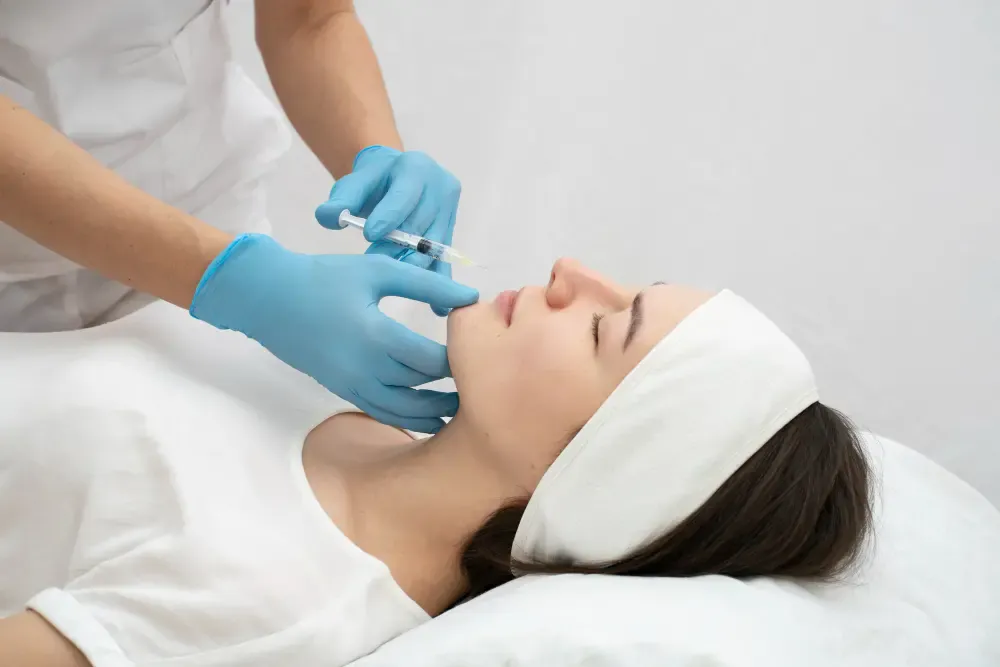
PRP Facial London with Medical Microneedling
GMC-registered doctors combining Rein PRP™ growth factors with medical microneedling for evidence-based skin rejuvenation at 33 Cavendish Square, London W1G.
Procedure Time
60m60 Mins
Sessions
33 Recommended
Price From
£400£400
Downtime
1-3 Days1-3 Days (Redness)
Key Benefits
- Dual mechanism: microneedling collagen induction + PRP growth factor delivery
- 2.97x higher odds of significant improvement vs microneedling alone (meta-analysis)
- 100% autologous — uses your body's own growth factors, no synthetic products
- Treats acne scars, fine lines, texture, pores, dullness, and sun damage
- Safe for all Fitzpatrick skin types (I–VI)
- Performed by three GMC-registered doctors, not therapists
- Two advanced PRP systems: Rein PRP™ and MCT Plasma
- Minimal downtime — 1–3 days redness, return to routine quickly
Common Target Areas
PRP Facial with Microneedling: Evidence-Based Skin Rejuvenation in London
The PRP facial london at PRP London Clinic combines two clinically-validated modalities — Platelet-Rich Plasma therapy and medical-grade microneedling — into a single, synergistic skin rejuvenation treatment. This procedure uses concentrated growth factors from your own blood with precision-controlled microchannels created by a medical microneedling device to stimulate collagen synthesis, accelerate cellular turnover, and improve skin texture from within.
Our prp microneedling london treatments are performed exclusively by GMC-registered doctors using the Rein PRP™ System (93–97% platelet recovery) and the MCT Plasma System (photobiomodulation-enhanced PRP). Located at 33 Cavendish Square, London W1G, our dedicated medical aesthetic clinic provides a private, clinical environment for patients seeking measurable improvements in skin quality.
A 2022 meta-analysis of 14 controlled studies (472 patients) confirmed that microneedling combined with PRP is significantly more effective than microneedling alone — with 2.97 times higher odds of achieving greater than 50% clinical improvement. This evidence base underpins our treatment approach, combining the controlled dermal injury of microneedling with the regenerative capacity of autologous PRP.
This procedure is part of our comprehensive Signs of Ageing Skin.
Doctor-Led Treatment and Patient Safety
Every PRP Facial (with Microneedling) consultation and treatment at PRP London Clinic is carried out by a GMC-registered doctor. The treating doctor reviews your medical history, assesses whether the treatment is suitable, explains the expected result and risks, and gives you clear aftercare instructions.
PRP Facial Before and After: Real Patient Results
These prp facial before and after cases demonstrate the improvements in skin texture, tone, and clarity achieved through our combined PRP and microneedling protocols. All images are taken with informed patient consent at PRP London Clinic.
PRP Facial Before and After 3 Treatments - Skin Rejuvenation London
PRP Facial Before and After: Female patient after 3 sessions of Rein PRP™ + Medical Microneedling. Results shown 4 months post-treatment. Note: Results are biological and vary by patient.
What a PRP Facial Treats: Clinical Applications
The Science Behind PRP Facial Microneedling
This medical procedure applies concentrated platelet-rich plasma to the skin through microneedling channels. When PRP enters the dermis through these micro-channels, it releases a cascade of growth factors (PDGF, VEGF, EGF, TGF-β) that activate fibroblasts, stimulate neocollagenesis, and promote angiogenesis. This biological response drives measurable improvements in skin quality over the following weeks and months.
Conditions Treated
- Acne scars — atrophic scarring (ice pick, boxcar, rolling types) responds to the combined collagen-induction of microneedling and PRP's growth factor delivery. Published meta-analysis data shows 2.97x higher odds of significant improvement versus microneedling alone
- Fine lines and early wrinkles — PRP-stimulated collagen synthesis and dermal remodelling soften fine lines, particularly around the eyes, mouth, and forehead
- Uneven skin texture — the controlled micro-injury combined with PRP accelerates cellular turnover, replacing damaged surface cells with healthier, more uniform skin
- Dull, tired complexion — PRP promotes angiogenesis (new blood vessel formation), improving oxygen and nutrient delivery to the skin for a more radiant appearance
- Enlarged pores — collagen remodelling around pore structures can reduce visible pore size over a treatment course
- Sun damage and photoageing — a 2024 review confirmed PRP provides significant protection against UV-induced damage and enhances repair of photoaged skin
Histological Evidence
Biopsy studies have demonstrated an 89.05% improvement in collagen optical density following PRP treatment — nearly double the control group — providing objective, histological evidence for PRP's collagen-stimulating mechanism beyond subjective assessment.
Technique & Products: The PRP Facial Protocol
The prp facial london combines two synergistic modalities — medical-grade microneedling and concentrated PRP — in a single session. Understanding what makes our approach distinct:
Microneedling Device
We use professional-grade microneedling devices with sterile, single-use cartridges. Needle depth is adjusted by zone: 0.5–1.0mm for delicate periorbital areas, 1.0–1.5mm for cheeks and forehead, and up to 2.0mm for acne scarring. This creates thousands of controlled micro-channels that serve dual purposes — triggering collagen induction therapy AND creating pathways for PRP absorption.
PRP Preparation
Your PRP is prepared using the Rein PRP™ System (93–97% platelet recovery) or MCT Plasma (photobiomodulation-enhanced). The gel-free density-gradient technology eliminates contaminants found in standard separator-gel kits, producing a purer concentrate for topical application to micro-needled skin.
Application Technique
PRP is applied topically immediately after microneedling — the micro-channels remain open for approximately 15–20 minutes, allowing growth factors (PDGF, VEGF, TGF-β, EGF) to penetrate deep into the dermis. This is fundamentally different from injecting PRP — the microneedling creates thousands of delivery points rather than a limited number of injection sites.
Treatment Areas
The protocol covers the full face as standard. Neck, décolletage, and hands can be treated in the same session for comprehensive prp skin rejuvenation london. Areas of specific concern (acne scars, deep lines) receive additional passes at greater depth.
Step-by-Step: The PRP Facial Protocol
Our GMC-registered doctors follow a precise 6-step protocol for every prp skin rejuvenation london treatment.
Consultation & Skin Assessment
Your doctor examines your skin under clinical lighting, discusses your concerns and goals, reviews your medical history, and confirms suitability for combined PRP and microneedling treatment.
Blood Draw
A small blood sample (15–20ml) is drawn from your arm using sterile vacuum-sealed phlebotomy equipment to ensure maximum cell viability for PRP processing.
PRP Processing
Your blood is centrifuged in the Rein PRP™ System (850 G for 8 minutes) or MCT Plasma System to isolate a concentrated platelet-rich plasma with 4–6x baseline platelet levels.
Topical Anaesthesia
A medical-grade topical numbing cream is applied to your face for 20–30 minutes before the procedure begins, ensuring comfort throughout the microneedling process.
Medical Microneedling
Your doctor performs precision microneedling across the treatment area at clinically appropriate depths, creating controlled microchannels.
PRP Application
Concentrated PRP is applied topically during and immediately after microneedling, allowing growth factors to penetrate the open micro-channels and reach the dermal layer for maximum regenerative effect.
Unhappy with a Previous Facial Treatment?
We regularly see patients at PRP London Clinic who are disappointed with results from PRP facials or microneedling treatments performed elsewhere. Common issues include:
- Minimal or no visible improvement — often due to low-quality PRP preparation with inadequate platelet recovery, or cosmetic-grade microneedling devices that do not create sufficient dermal penetration
- Uneven results — caused by inconsistent needling depth, improper device technique, or PRP applied too late after microneedling when channels have already begun closing
- Prolonged redness or irritation — may indicate overly aggressive needling depth without adequate clinical assessment of skin thickness and type
- No difference from standalone microneedling — suggests the PRP quality was too low to add meaningful benefit, or preparation methods degraded the growth factor content
The quality of your PRP preparation is the single most important variable in treatment outcome. Our Rein PRP™ System achieves 93–97% platelet recovery — meaning virtually all available growth factors are captured and delivered to your skin. If you have had disappointing results from a previous PRP facial or microneedling treatment, we offer honest assessment and evidence-based retreatment options.
PRP Facial vs Other Skin Rejuvenation Options
| Factor | PRP Facial (with Microneedling) | Chemical Peels | Laser Resurfacing | Standalone Microneedling |
|---|---|---|---|---|
| Mechanism | Collagen induction + autologous growth factor delivery | Chemical exfoliation of superficial skin layers | Thermal ablation and remodelling of dermal tissue | Collagen induction via controlled micro-injury only |
| Procedure time | 60 minutes | 20–30 minutes | 30–60 minutes | 30–45 minutes |
| Downtime | 1–3 days (redness) | 1–7 days (depending on peel depth) | 5–14 days (significant redness, peeling) | 1–2 days (redness) |
| Acne scar efficacy | 2.97x higher odds of >50% improvement vs microneedling alone (meta-analysis) | Limited — superficial peels have minimal impact on atrophic scars | Good for select scar types; risk of post-inflammatory changes | Effective, but less so without PRP growth factor enhancement |
| Suitable for darker skin | Yes — low risk of post-inflammatory hyperpigmentation | Medium/deep peels carry significant risk for Fitzpatrick IV–VI | Higher risk of hyperpigmentation in darker skin types | Yes — low risk of pigment changes |
| Collagen stimulation | Dual mechanism (micro-injury + growth factors) | Moderate (chemical stimulation) | Strong (thermal remodelling) | Single mechanism (micro-injury only) |
| Allergy/rejection risk | Virtually zero — uses your own blood (autologous) | Chemical sensitivity possible | N/A (light/heat based) | Virtually zero |
| Sessions recommended | 3 sessions, 4–6 weeks apart | 3–6 sessions, 2–4 weeks apart | 1–3 sessions, 4–8 weeks apart | 3–6 sessions, 4–6 weeks apart |
PRP Facial Cost London
PRP facial london price at PRP London Clinic starts from £400 per session. We recommend a course of 3 sessions spaced 4–6 weeks apart for optimal collagen remodelling and skin texture improvement, with maintenance treatments every 6–12 months.
Your consultation includes a comprehensive skin assessment, treatment plan discussion, and transparent pricing before you commit. The prp facial cost depends on the preparation system used (Rein PRP™ or MCT Plasma) and the extent of the treatment area. There are no hidden fees — the quoted price includes PRP preparation, the microneedling procedure, and all aftercare instructions.
Safety of PRP Facial with Microneedling
The prp facial treatment has an excellent safety profile, underpinned by two key factors: the autologous nature of PRP and the use of medical-grade microneedling equipment with sterile single-use cartridges.
Expected Post-Treatment Effects
- Redness — similar to moderate sunburn, typically lasting 1–3 days. This is the normal inflammatory response that initiates the collagen remodelling cascade
- Mild swelling — possible in the first 24–48 hours, particularly around the under-eye area if treated
- Pinpoint bleeding — occurs during treatment and resolves within hours. This is expected and indicates adequate needling depth
- Skin tightness or dryness — may occur for 2–3 days as the skin heals and renews
Safety Measures
- Every treatment is performed by a GMC-registered doctor — not a therapist or technician
- Microneedling cartridges are single-use and disposed of after each patient
- PRP is prepared from your own blood in a closed, sterile system
- Full medical history review and contraindication screening before every treatment
- No synthetic fillers, foreign proteins, or animal-derived products are used
The 2022 meta-analysis of 14 studies found no significant increase in severe adverse events when PRP was added to microneedling, confirming the combination does not meaningfully elevate the risk profile beyond standalone microneedling.
PRP Facial Aftercare Instructions
First 24–48 Hours
- Do not wash your face for the first 6 hours — allow the PRP to absorb fully
- Avoid touching, rubbing, or picking at the treated skin
- Do not apply make-up, retinoids, AHAs, BHAs, or vitamin C serums
- Avoid strenuous exercise, saunas, steam rooms, and hot baths
- Do not take anti-inflammatory medications (ibuprofen, aspirin) — these can blunt the regenerative inflammatory response
- Use only a gentle, fragrance-free cleanser and hydrating moisturiser when you resume cleansing
- Apply broad-spectrum SPF 50 if going outdoors
First 2 Weeks
- Continue using SPF 50 daily — your skin is more photosensitive during the healing phase
- Avoid active skincare ingredients (retinol, glycolic acid, salicylic acid) for 7–10 days
- Do not have other facial treatments (chemical peels, laser) during this period
- Mild dryness or light flaking is normal — do not exfoliate manually; let the skin shed naturally
- Stay well hydrated to support the skin renewal process
Follow-Up Schedule
Your next session is typically scheduled 4–6 weeks after treatment. A course of 3 sessions builds cumulative collagen remodelling. Results continue to improve for 3–6 months after the final session as new collagen matures. Maintenance treatments every 6–12 months help sustain the improvements long-term.
Is a PRP Facial Right for You?
| Ideal Candidate | May Need an Alternative Approach |
|---|---|
| Concerns about fine lines, skin texture, or dullness | Seeking significant wrinkle correction (may benefit from dermal fillers or Botox) |
| Acne scarring (atrophic — ice pick, boxcar, rolling) | Active acne breakout (treat acne first, then address scarring) |
| Enlarged pores and uneven skin tone | Deep surgical scars or keloid scarring tendency |
| Healthy platelet count and no blood disorders | Platelet dysfunction or active anticoagulant therapy |
| Willing to commit to 3 sessions for optimal results | Expecting dramatic results from a single treatment |
| All Fitzpatrick skin types (I–VI) | Currently using isotretinoin or within 6 months of stopping |
| Seeking a natural, autologous approach with no synthetic products | Pregnant or breastfeeding |
| Sun-damaged or photoaged skin seeking renewal | Active herpes simplex (cold sores) in the treatment zone |
Contraindications for PRP Facial Treatment
PRP facial with microneedling is not suitable for all patients. The following conditions require consideration before treatment can proceed:
- Active acne or skin infection — microneedling over active lesions risks spreading bacteria and worsening breakouts. The infection must be fully resolved first
- Active cold sores (herpes simplex) — microneedling can trigger viral reactivation and spread. Prophylactic antiviral medication may be prescribed if you have a history of cold sores
- Current isotretinoin (Roaccutane) use — this medication thins the skin and impairs healing. Treatment is contraindicated during use and for 6 months after stopping
- Platelet disorders or anticoagulant therapy — conditions affecting platelet function or blood clotting require medical review before PRP treatment
- Active eczema, psoriasis, or dermatitis in the treatment area — microneedling over inflamed skin can exacerbate these conditions
- Keloidal scarring tendency — patients who form keloid scars require careful assessment, as microneedling creates controlled skin injury
- Pregnancy or breastfeeding — as a precautionary measure, treatment is deferred until after breastfeeding is complete
- Active malignancy — growth factors may theoretically stimulate cancerous cell activity
- Recent sunburn or chemical peel — the skin must be intact and non-compromised before microneedling
Clinical Disclaimer
PRP facial with microneedling is a biological medical procedure. Individual results vary based on age, skin condition, lifestyle factors, and individual healing capacity. PRP therapy aims to stimulate your body's own regenerative processes — it cannot guarantee identical outcomes for every patient, and results are cumulative over a course of treatments. A professional consultation with one of our GMC-registered doctors is required to set realistic expectations and confirm suitability.
The clinical evidence cited on this page is drawn from peer-reviewed medical literature and represents study-level findings. Individual patient outcomes may differ from published study averages.
Trademark clarification: VAMPIRE FACIAL is a registered trade mark owned by Charles E. Runels. PRP London Clinic is independent and is not affiliated with, authorised by or licensed by Charles E. Runels or the Cellular Medicine Association, and does not offer that branded treatment. The service described on this page is PRP London Clinic's own doctor-led PRP facial with microneedling protocol.
Last medical review: March 2026.
PRP Facial Treatment in London W1
PRP London Clinic is located at 33 Cavendish Square, London W1G 0PW — in the heart of London's medical district, moments from Oxford Circus and Bond Street stations. Our dedicated clinical premises provide a private, professional environment for your prp facial london treatment.
Whether you are searching for a doctor-led PRP facial in central London or travelling from further afield, our Cavendish Square location is easily accessible by tube, bus, and car. The clinic is a 2-minute walk from Oxford Circus station (Victoria and Bakerloo lines) and a 5-minute walk from Bond Street station (Central, Jubilee, and Elizabeth lines).
Book Your PRP Facial Consultation
Ready to improve your skin texture, reduce acne scarring, or restore a healthier, more radiant complexion? Book a consultation with one of our three GMC-registered doctors at PRP London Clinic. We will assess your skin, confirm suitability for combined prp microneedling london treatment, and create a personalised plan with transparent pricing — no obligation and no hidden costs.
Myths vs Facts
A PRP facial with microneedling is a cosmetic gimmick with no real science behind it.
False. The PRP facial is supported by peer-reviewed evidence. A 2022 meta-analysis of 14 controlled studies (472 patients) demonstrated microneedling with PRP produces 2.97 times higher odds of significant clinical improvement compared with microneedling alone, with 4.15 times higher patient satisfaction.
PRP facials produce instant, visible results after one session.
No. Collagen remodelling is a biological process that occurs over weeks and months. Most patients notice initial texture improvement at 2–4 weeks, with progressive results building over 3–6 months. A course of 3 sessions is recommended for optimal cumulative effect.
A PRP facial is extremely painful.
Medical-grade topical anaesthetic cream is applied for 20–30 minutes before the procedure. Most patients describe the sensation as mild prickling or warmth rather than pain. The doctor adjusts the microneedling depth for each treatment area.
PRP facials are not safe for darker skin tones.
Incorrect. PRP facial with microneedling is suitable for all Fitzpatrick skin types (I–VI). Unlike laser resurfacing and medium-depth chemical peels, the combination carries a low risk of post-inflammatory hyperpigmentation, making it one of the safer skin rejuvenation options for patients with darker skin.
Any PRP preparation produces the same results.
Not true. PRP quality varies dramatically depending on the preparation system. Our Rein PRP™ System achieves 93–97% platelet recovery — far higher than many commercial systems. Low-quality PRP with inadequate platelet concentration will deliver inferior results regardless of the microneedling technique.
A home dermaroller with a PRP serum gives the same results as a clinical treatment.
False. Home dermarollers create inconsistent, angled microchannels at superficial depths and are not sterile medical devices. Clinical microneedling creates controlled channels at doctor-selected depths and is combined with fresh, autologous PRP rather than a bottled serum.
Price: PRP Facial (with Microneedling)
| Treatment | Price |
|---|---|
| PRP Facial with Microneedling (SkinPen) Single Session. Course of 3 recommended for optimal medical-grade results. | £400per treatment |
| PRP Facial Including Under-Eye with Microneedling (SkinPen) Single session PRP facial treatment including under-eye area with microneedling. | £500per treatment |
| PRP + Mesotherapy Facial Combination Per session. Combines PRP growth factors with mesotherapy vitamins and hyaluronic acid for enhanced skin rejuvenation and a natural glow. | £450per treatment |
| MCT Plasma Facial with Microneedling (SkinPen) Per session. Photobiomodulation-enhanced platelet therapy (MCT Plasma) with medical microneedling. Course of 3 recommended. | £500per treatment |
Prices are indicative. Please book a consultation for a personalised quote.
Frequently Asked Questions
Clinical Evidence & Scientific References
Kang & Lu (2022): Combined Effect of Microneedling and PRP for Acne Scars — A Meta-Analysis
B.K. Kang, X.R. Lu · Frontiers in Medicine, 2022PMID: 35237616
Supports: Meta-analysis of 4 randomised and 10 split-face controlled studies (472 patients) demonstrating microneedling combined with PRP is significantly more effective than microneedling alone for acne scars — 2.97x higher odds of >50% clinical improvement (P<0.001, I²=0%) and 4.15x higher patient satisfaction (P<0.001). No significant increase in severe adverse events.
Limitations: Majority of included studies were split-face non-randomised designs (10 of 14). Focused specifically on acne scars rather than broader skin rejuvenation outcomes. Moderate heterogeneity (I²=53%) in patient satisfaction analysis.
Read more →Abuaf et al. (2016): Histologic Evidence of New Collagen Formulation Using PRP
O.K. Abuaf, H. Yildiz, H. Baloglu, M.E. Bilgili, H.A. Simsek, B. Dogan · Annals of Dermatology, 2016PMID: 27904271
Supports: Biopsy results demonstrated an 89.05% improvement in collagen optical density following PRP treatment, nearly double the control group — providing histological evidence for PRP's collagen-stimulating mechanism.
Limitations: Small sample size typical of histological studies. Single-centre design. Collagen density measured at one time point — long-term sustained collagen production not assessed.
Read more →Lam et al. (2024): Use of PRP for Skin Rejuvenation — Review
A. Lam, E. Ranjan, S. Guttman-Yassky, R. Ahn · Skin Research and Technology, 2024PMID: 38650371
Supports: Comprehensive 2024 review confirming significant enhancements in skin pore size, texture, wrinkle reduction, and protection against UV damage with PRP therapy — validating PRP's broad skin rejuvenation benefits.
Limitations: Narrative review rather than systematic review with meta-analysis. Heterogeneity in PRP preparation protocols across reviewed studies.
Read more →Gupta et al. (2019): PRP Efficacy in Hair Restoration and Facial Aesthetics — Systematic Review and Meta-analysis
A.K. Gupta, S.G. Versteeg, J. Rapaport, A.K. Hausauer, N.H. Shear, V. Piguet · Journal of Cutaneous Medicine and Surgery, 2019PMID: 30606055
Supports: Systematic review and meta-analysis demonstrating 3 monthly PRP injections exhibit significantly greater efficacy over placebo for hair density in androgenetic alopecia (mean difference: 25.61 hairs/cm², P=0.02). Also found 2-4 PRP sessions combined with traditional therapies can minimise acne scarring and improve aesthetic outcomes — supporting PRP's broad application across hair and facial rejuvenation.
Limitations: Studies used half-head design which may have influenced results due to systemic PRP effects. Data for non-hair indications (scarring, facial burns, ageing skin) are less robust in design. Focused on mild AGA — less evidence for advanced hair loss stages.
Read more →*PRP London Clinic provides these references for educational purposes. Our Clinical Board regularly reviews emerging peer-reviewed literature to ensure our protocols align with the latest advancements in regenerative medicine.
Quick Links
Our Medical Team
Your treatment will be performed by one of our qualified medical professionals

Dr Mohamed Nafei
GMC: 7520509GMC-registered doctor with 10+ years experience. Expert in PRP, exosomes, and ad...
Profile
Dr Reem Nouri
GMC: 6149512GMC-registered doctor with nearly 20 years of medical experience including 10+ y...
Profile
Dr Kaveetha Kandiah
GMC: 7595211GMC-registered doctor with more than 8 years of postgraduate medical experience....
ProfileScroll to see all
Ready to Get Started?
Book your consultation today and take the first step towards your transformation.
Book ConsultationVerified Clinical Reputation
Ruby K
19 Jan 2026
Norin Hanifi
19 Jan 2026
Dominique Heslop
13 Jan 2026
lloyda221
06 Jan 2026
Mane Authority
06 Jan 2026
Victor Contreras Guerra
4 months ago
A A
5 months ago
harris jan
3 months ago
Independent Patient Feedback
Read all verified stories →Medical Suitability Note
As a GMC-regulated practice, a mandatory consultation is required for all new patients to assess suitability and clinical need. This treatment may not be appropriate for everyone. All procedures are performed by GMC-registered doctors whose credentials can be verified on the official GMC register.
Clinical Technology & Equipment
Rein PRP™ System
byRein PRP
CE Class IIB certified medical preparation system using 3.13% Sodium Citrate for high-yield (4-6x) autologous platelet recovery. Manufactured in ISO Class 8 cleanroom environments.
Certifications
Technical Specifications
- Platelet Recovery Rate
- 93-97%
- Centrifugation Protocol
- 850 G for 8 minutes
- Anticoagulant
- 1ml Sodium Citrate 3.13% Ph. Eur.
Clinical Applications
Contraindications
Official Resources
MCT System (Meta Cell Technology)
byMCT
CE/MDR-certified dual-function medical device providing both Advanced PRP (MCT Plasma) and autologous exosome preparation. Uses photobiomodulation (blue light) and thermal biomodulation to enhance platelet performance, boost growth factor release, and stimulate autologous exosome production from the patient's own cells.
Certifications
Technical Specifications
- MCT Plasma Mechanism
- Photobiomodulation + Thermal Biomodulation of PRP for sustained growth factor release and reduced pro-inflammatory cytokines
- MCT Exosome Source
- Autologous — photothermal conditioning stimulates exosome release from patient's own cells and platelets
- ATP Enhancement
- Photothermal biomodulation stimulates cellular metabolism and enhances ATP synthesis
- Platelet Activation
- Reduces VASP, increases p-38 phosphorylation; cold priming facilitates reactivity post-injection
- Procedure Benefit
- Cold temperature delays clot formation, producing less dense plasma for improved patient comfort
Clinical Applications
Official Resources
This technical specification is provided for informational purposes only. All medical devices and substances are used exclusively by GMC-registered practitioners at PRP London Clinic. Individual results may vary.