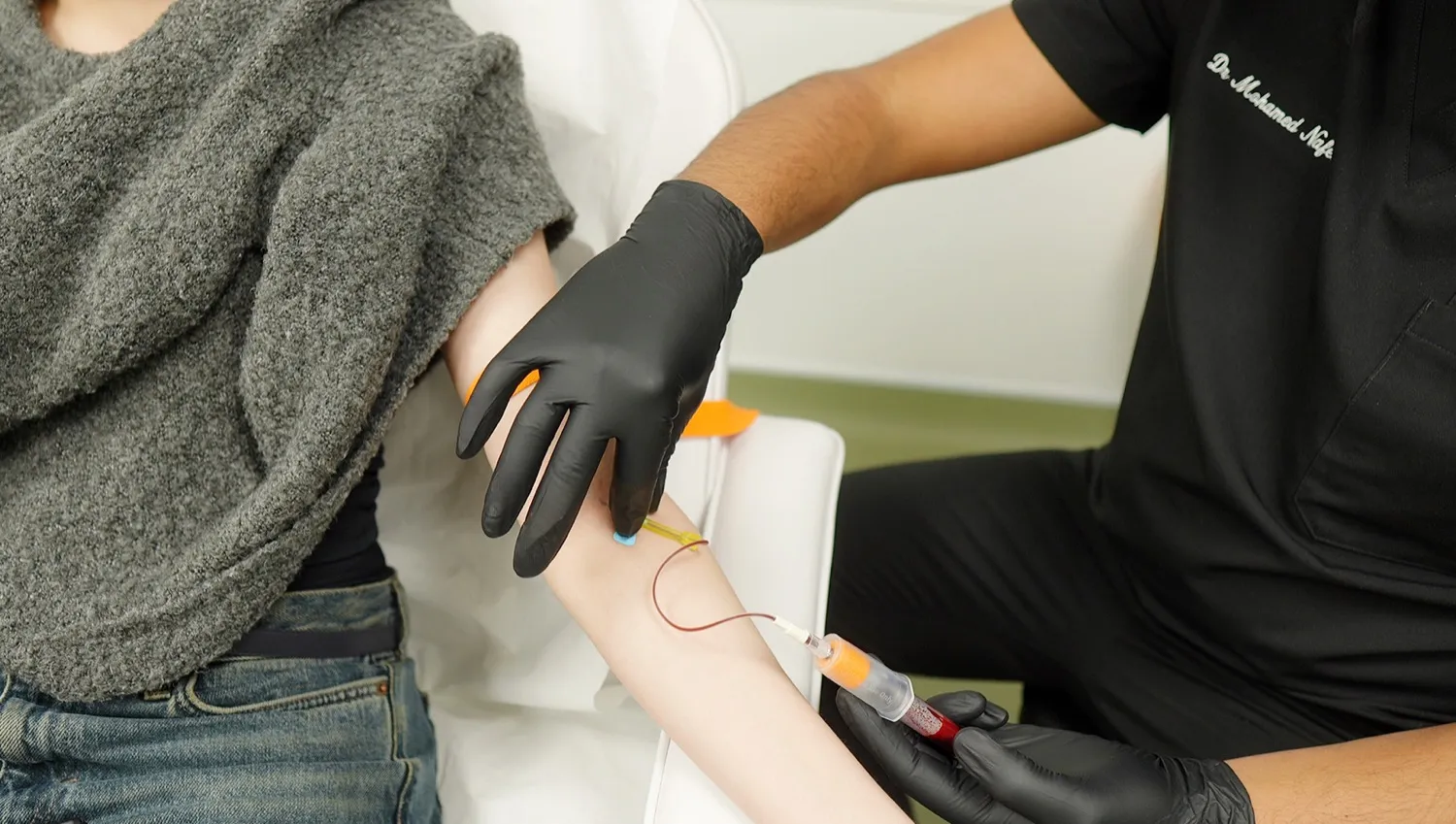
PRF therapy preparation using the T-Lab PRF System at PRP London Clinic, Cavendish Square, London

PRF Therapy London: Platelet-Rich Fibrin Treatments

GMC-registered doctors delivering advanced PRF therapy for hair, skin, and under-eye concerns using the T-Lab PRF System at 33 Cavendish Square, London W1G.

Duration

45-60m

Sessions

Variable by Treatment

Price From

£295

Downtime

Minimal

Key Benefits

  • 100% autologous and additive-free — zero chemicals
  • Sustained growth factor release over 10–14 days via fibrin matrix
  • Delivered by three GMC-registered doctors
  • T-Lab PRF System: CE Class IIB, #1 ranked at IMCAS 2025
  • Higher leukocyte concentration for anti-inflammatory benefit
  • Versatile: treats hair, face, under-eyes, and volumisation

Common Target Areas

Scalp (Hair Loss) Face (Skin Rejuvenation) Under Eyes (Dark Circles & Hollows) Lips (Volume & Texture) Neck / Décolletage

What Is PRF Therapy? London's Specialist Clinic

PRF therapy london patients trust begins with a simple but important distinction: Platelet-Rich Fibrin (PRF) is the next evolution of platelet-based regenerative medicine. Unlike PRP, which uses an anticoagulant to keep blood in liquid form, PRF treatment allows your blood to clot naturally — forming a fibrin matrix that releases growth factors gradually over 10 to 14 days. This sustained release is what sets PRF apart as a regenerative treatment.

At PRP London Clinic, 33 Cavendish Square, London W1G, our team of GMC-registered doctors uses the T-Lab PRF System (CE Class IIB, ranked #1 PRP/PRF System at IMCAS World Congress 2025) to deliver platelet rich fibrin london treatments tailored to each patient's clinical needs.

We offer PRF across specialist applications. Explore our dedicated treatment pages for detailed information on each:

Your PRF Treatment Team

Every PRF therapy london session is performed by a GMC-registered doctor from our clinical team — Dr Bruno Amendola (GMC: 4346629), Dr Mohamed Nafei (GMC: 7520509), and Dr Reem Nouri (GMC: 6149512). Our doctors follow standardised platelet-rich fibrin treatment protocols developed through shared clinical workflows, ensuring consistent outcomes regardless of which physician performs your procedure. Never a nurse, technician, or non-medical practitioner.

How PRF Works: The Science of Platelet-Rich Fibrin

What Is Platelet-Rich Fibrin?

Platelet-Rich Fibrin (PRF) is a second-generation autologous blood concentrate developed by Dr Joseph Choukroun. Unlike PRP, PRF is prepared without any anticoagulant — when blood is drawn and centrifuged immediately, the natural clotting cascade begins, trapping platelets, leukocytes, and growth factors within a three-dimensional fibrin scaffold.

The Fibrin Matrix Advantage

The key difference between PRF vs PRP lies in the delivery mechanism. PRP releases its growth factors in a rapid burst upon injection. PRF's fibrin matrix acts as a biological reservoir, releasing growth factors gradually over 10 to 14 days:

  • PDGF (Platelet-Derived Growth Factor) — stimulates cell proliferation and tissue remodelling
  • TGF-β (Transforming Growth Factor Beta) — promotes collagen synthesis and wound healing
  • VEGF (Vascular Endothelial Growth Factor) — drives angiogenesis and nutrient delivery
  • EGF (Epidermal Growth Factor) — accelerates epithelial cell renewal

Leukocyte Concentration

PRF retains a higher concentration of leukocytes (white blood cells) compared to standard PRP preparations. These leukocytes contribute anti-inflammatory cytokines and antimicrobial properties, which may enhance the regenerative environment at the treatment site.

PRF vs PRP: Key Differences

People often search for the difference between PRF and PRP. Both use your own blood and both concentrate growth factors — but the preparation and release profile differ:

FactorPRF (Platelet-Rich Fibrin)PRP (Platelet-Rich Plasma)
AnticoagulantNone — 100% additive-freeSodium Citrate (3.13%)
Growth factor releaseSustained over 10–14 daysImmediate burst release
Matrix structure3D fibrin scaffoldLiquid plasma
Leukocyte contentHigher — anti-inflammatoryLower in most preparations
Preparation timeFaster (no additive mixing)Standard centrifugation
ApplicationsHair, face, under-eyes, biofillerHair, face, beard, under-eyes, joints

We offer both PRP and PRF at our clinic. Your doctor will recommend the most appropriate protocol based on your clinical needs — and in some cases, a combination of both may be optimal.

PRF Treatment: Technique and Technology

The T-Lab PRF System (CE Class IIB)

All PRF injections at PRP London Clinic are prepared using the T-Lab PRF System — a CE Class IIB, ISO 13485:2016 certified medical device featuring proprietary micropolishing technology. Key specifications:

  • 100% additive-free — zero sodium citrate or other chemicals
  • Micropolished inner wall technology — prevents premature platelet aggregation during centrifugation
  • 1500 RCF for 4 minutes (injectable PRF / I-PRF protocol) — optimised for liquid PRF yield
  • Ranked #1 PRP/PRF System at the IMCAS World Congress 2025 (independent DEPA analysis)

Injectable PRF (I-PRF) Preparation

For hair and facial treatments, we use the I-PRF (injectable PRF) protocol — a lower centrifugation force that produces a liquid fibrin concentrate rich in platelets, leukocytes, and growth factors. This injectable form can be delivered via micro-injections or combined with microneedling for enhanced dermal penetration.

PRF Biofiller (Alb-PRF / EZ Gel)

For volumisation applications (under-eyes, nasolabial folds), the PRF preparation undergoes thermal induction to create a semi-solid PRF biofiller — also known as EZ Gel or Alb-PRF. This creates a natural, autologous filler alternative. See our dedicated PRF Biofiller page for details.

Your PRF Treatment: Step by Step

Regardless of the specific application, the core PRF treatment process follows a consistent medical protocol at our London clinic:

1

Consultation and Clinical Assessment

Your GMC-registered doctor reviews your medical history, examines the treatment area, and confirms PRF suitability. Contraindications are screened and a personalised treatment plan is discussed.

2

Blood Draw

A small sample (10–20ml) is taken from your arm — similar to a routine blood test. The blood is drawn into T-Lab PRF tubes which contain no additives or anticoagulants.

3

Centrifugation

The sample is immediately processed in the T-Lab PRF centrifuge at 1500 RCF for 4 minutes. The natural clotting cascade begins, forming a platelet-rich fibrin matrix.

4

Treatment Area Preparation

The treatment site is cleansed and topical or local anaesthetic is applied as appropriate for your comfort.

5

PRF Delivery

Your doctor performs targeted micro-injections of I-PRF into the treatment area, or applies PRF topically following microneedling. For biofiller applications, the EZ Gel preparation is delivered via micro-cannula.

6

Aftercare Briefing

Specific post-treatment instructions are provided for your application. A follow-up review is scheduled to assess your progress.

PRF Treatment Applications at Our London Clinic

Our clinic offers PRF therapy across specialist treatment pathways. Each is delivered by the same team of GMC-registered doctors using the T-Lab PRF System:

PRF for Hair Loss

Injectable PRF (I-PRF) delivers sustained growth factor release to scalp follicles over 10–14 days, stimulating hair density and reducing scalp inflammation in androgenetic alopecia.

PRF Hair Loss Treatment Details »

PRF Facial (with Microneedling)

Combines medical-grade microneedling with PRF to improve skin texture, elasticity, and fine lines through sustained growth factor delivery and collagen stimulation.

PRF Facial Treatment Details »

PRF Biofiller / EZ Gel

A natural, 100% autologous biofiller created from your own blood. The Alb-PRF matrix provides soft-tissue volume restoration for under-eye hollows, nasolabial folds, and mid-face concerns.

PRF Biofiller / EZ Gel Details »

PRF Treatment Pricing

PRF therapy london prices at PRP London Clinic start from £295 per session. The exact cost depends on the specific treatment application (hair, face, or biofiller) and the number of sessions recommended.

We believe in transparent pricing with no hidden costs. Your consultation includes a full clinical assessment, discussion of expected outcomes, and a clear treatment plan with itemised pricing before you commit to any procedure.

See the pricing table below for a breakdown by treatment type, or visit each individual treatment page for detailed pricing information.

PRF vs PRP vs Dermal Fillers

FactorPRF TherapyPRP TherapyDermal Fillers
SourceYour own blood (100% autologous, additive-free)Your own blood (autologous, with anticoagulant)Synthetic hyaluronic acid
Growth factor releaseSustained over 10–14 days (fibrin matrix)Immediate burst releaseNone — volume replacement only
Allergic reaction riskVirtually zeroVirtually zeroLow (but possible)
Results timelineGradual (weeks to months)Gradual (weeks to months)Immediate
Duration3–12 months6–18 months6–18 months
AdditivesNone — zero chemicalsSodium Citrate anticoagulantSynthetic HA gel
Can be combined?Yes — with PRP, microneedlingYes — with PRF, exosomes, microneedlingYes — with PRP, PRF, polynucleotides

Is PRF Therapy Safe?

PRF therapy has an excellent safety profile because it uses your body's own biological material with zero additives — a 100% autologous treatment that virtually eliminates the risk of allergic reactions, rejection, or disease transmission. A 2024 systematic review of 7 studies (130 patients) confirmed PRF's safety across alopecia and facial rejuvenation applications, with no serious adverse events reported.

As with any injection-based treatment, temporary side effects may include:

  • Mild redness or swelling at injection sites (resolves within 24–48 hours)
  • Minor bruising (particularly in delicate areas such as the under-eyes)
  • Temporary tenderness at injection points
  • Occasional pinpoint bleeding

All treatments are performed under sterile conditions by our GMC-registered doctors using single-use, CE-certified T-Lab PRF tubes. A full medical history review and contraindication screening is completed before every treatment.

PRF Aftercare: What to Do After Your Treatment

First 24–48 Hours

  • Avoid touching, rubbing, or applying pressure to the treated area
  • Skip strenuous exercise, saunas, and steam rooms
  • Do not apply makeup to the treated area for at least 6 hours (facial treatments)
  • Avoid anti-inflammatory medications (ibuprofen, aspirin) — these can interfere with the fibrin-mediated healing response

First 2 Weeks

  • Protect the treated area from excessive sun exposure; use SPF 50 for facial treatments
  • Maintain good hydration to support the healing process
  • Follow any treatment-specific instructions provided by your doctor

Follow-Up

Your doctor will schedule a follow-up review to assess your progress and discuss timing for subsequent sessions. Most PRF protocols recommend a course of 3–6 sessions spaced 4–6 weeks apart, followed by maintenance treatments as needed.

Is PRF Therapy Right for You?

Ideal CandidateMay Need an Alternative Approach
Seeking a 100% natural, additive-free regenerative treatmentRequires immediate visible results (fillers may be more appropriate)
Early-to-moderate hair thinning with existing folliclesComplete baldness with no remaining follicles (transplant may be needed)
Healthy platelet count and no blood disordersPlatelet dysfunction, thrombocytopenia, or anticoagulant therapy
Wants to improve skin texture and elasticity naturallySeeking significant volume restoration (HA fillers or fat transfer preferred)
Prefers zero chemical additives in their treatmentComfortable with standard PRP preparation (which uses sodium citrate)
Committed to a course of 3–6 sessions for optimal resultsSeeking a single-session permanent solution

PRF Contraindications and Medical Considerations

PRF therapy is not suitable for everyone. The following conditions are absolute or relative contraindications that our doctors screen for during your consultation:

  • Platelet dysfunction syndrome or critical thrombocytopenia — PRF requires adequate platelet levels to form the fibrin matrix
  • Active malignancy (cancer) — growth factors may theoretically stimulate existing cancerous cells
  • Sepsis or active systemic infection — treatment should be deferred until resolved
  • Chronic liver disease — affects platelet production and function
  • Blood-thinning medication (warfarin, heparin, aspirin) — requires medical review and possible temporary adjustment
  • Pregnancy or breastfeeding — as a precautionary measure
  • Active skin infection at the proposed treatment site
  • Severe anaemia or haemoglobin disorders

If you have any of the above conditions, please disclose them during your consultation. In some cases, treatment may proceed with appropriate medical supervision or after the underlying condition is managed.

Clinical Disclaimer

PRF therapy is a biological medical procedure. Individual results vary based on age, genetics, baseline health, platelet count, and the specific condition being treated. While the T-Lab PRF System is CE Class IIB certified and clinical evidence supports PRF's efficacy across hair and skin applications, PRF is a treatment to support natural regeneration — it is not a guaranteed cure for any condition. A professional consultation with our GMC-registered doctors is required to determine suitability and set realistic expectations.

Last medical review: March 2026.

PRF Therapy at 33 Cavendish Square, London W1G

PRP London Clinic is located at 33 Cavendish Square, London W1G 0PW — in the heart of London's medical district, moments from Oxford Circus and Bond Street stations. Our dedicated clinical premises provide a private, professional environment for all PRF therapy london treatments.

Whether you're searching for prf near me in central London or travelling from further afield for specialist PRF treatment, our Cavendish Square location is easily accessible by tube, bus, and car.

Book Your PRF Consultation

Ready to explore how platelet-rich fibrin can help your hair, skin, or under-eye concerns? Book a consultation with one of our three GMC-registered doctors at PRP London Clinic. We'll assess your suitability, explain how PRF differs from PRP, and create a personalised treatment plan.

Myths vs Facts

M

PRF and PRP are the same treatment.

F

False. PRF is prepared without any anticoagulant, allowing blood to clot naturally into a fibrin matrix. This matrix releases growth factors gradually over 10–14 days, compared to PRP's immediate burst release. The preparation, delivery mechanism, and biological activity are fundamentally different.

M

PRF is less effective than PRP because it uses fewer platelets.

F

PRF concentrates platelets within a fibrin scaffold alongside leukocytes and growth factors. The sustained release profile means the total biological effect over time may exceed that of PRP's rapid release — different mechanism, not inferior.

M

PRF treatment is painful.

F

Most patients report only minimal discomfort. Topical or local anaesthetic is applied before treatment, and our doctors use fine-gauge needles for precision and comfort.

M

You need many sessions of PRF to see any results.

F

While a course of 3–6 sessions is recommended for optimal results, some patients report improvements after the first session. A 2025 clinical study found an 80% response rate at 6 months with monthly i-PRF injections for hair loss.

M

PRF only works for hair loss.

F

PRF is used across multiple applications including hair restoration, facial rejuvenation, under-eye treatment, and as a natural biofiller (EZ Gel). A 2025 systematic review of 20 studies confirmed PRP/PRF improvements in skin thickness (80% of studies) and elasticity (75%).

Frequently Asked Questions

PRF therapy (Platelet-Rich Fibrin therapy) is a regenerative treatment that concentrates the growth factors in your own blood within a natural fibrin matrix — without any chemical additives. Unlike PRP, PRF is prepared without anticoagulant, allowing a 3D fibrin scaffold to form that releases growth factors gradually over 10–14 days.
The key difference between PRF and PRP is the preparation method and growth factor release. PRP uses sodium citrate anticoagulant and releases growth factors in an immediate burst. PRF uses no additives — blood clots naturally into a fibrin matrix that sustains growth factor release over 10–14 days. PRF also retains more leukocytes, which contribute anti-inflammatory properties. We offer both at our clinic and recommend the most appropriate option for each patient.
PRF therapy london prices at PRP London Clinic start from £295 per session. The exact cost varies depending on the treatment application (hair, face, or biofiller) and the number of sessions recommended. Transparent pricing is provided during your consultation.
PRF treatment has an excellent safety profile because it uses your body's own blood with zero chemical additives — virtually eliminating the risk of allergic reactions or rejection. A 2024 systematic review of 130 patients confirmed no serious adverse events across PRF studies. Temporary side effects like mild redness, swelling, or bruising typically resolve within a few days.
Most PRF protocols recommend a course of 3–6 sessions spaced 4–6 weeks apart for optimal results. The exact number depends on your specific treatment (hair, face, or under-eyes) and your individual response. A 2025 study found an 80% response rate after 6 monthly i-PRF sessions for androgenetic alopecia.
PRF results typically last 3–12 months depending on the treatment area and individual response. Maintenance sessions are recommended to sustain benefits. The fibrin matrix provides a sustained regenerative stimulus over 10–14 days per treatment, with cumulative improvement across a course of sessions.
Most patients report only minimal discomfort during PRF injections. Topical anaesthetic cream is applied before facial and scalp treatments. Our doctors use fine-gauge needles for precision and comfort. The blood draw is similar to a routine blood test.
PRF therapy is used for hair loss (androgenetic alopecia), facial rejuvenation (skin texture, elasticity, fine lines), under-eye dark circles and hollows, and natural volumisation via PRF Biofiller (EZ Gel). Your doctor will recommend the most appropriate application during your consultation.
Neither is universally superior — they have different strengths. PRF vs PRP: PRF offers sustained growth factor release and is 100% additive-free, while PRP offers a higher volume of liquid platelet concentrate suitable for larger treatment areas. A 2025 systematic review found PRF improved periorbital texture and wrinkles, while PRP showed stronger evidence for pigmentation. We offer both and recommend based on your clinical needs.
The T-Lab PRF System is a CE Class IIB medical device we use for all PRF preparations. It features proprietary micropolishing technology that prevents premature platelet aggregation, ensuring optimal fibrin matrix formation. It was ranked the #1 PRP/PRF System at the IMCAS World Congress 2025 by independent DEPA analysis.
Yes. PRF combines effectively with PRP (dual-protocol approach), medical microneedling, polynucleotides, mesotherapy, and exosomes therapy. Your doctor will discuss the most appropriate combination for your concerns during your consultation.
PRF is not suitable for patients with platelet disorders, active cancer, systemic infections, chronic liver disease, or those on anticoagulant medication without medical review. Pregnancy and breastfeeding are also contraindications. All patients undergo a full medical screening before treatment.
PRP London Clinic offers PRF treatments near me at 33 Cavendish Square, London W1G 0PW — in the heart of London's medical district. We are moments from Oxford Circus and Bond Street stations, easily accessible by tube, bus, and car.
PRF Biofiller (also known as EZ Gel or Alb-PRF) is a volumisation technique that transforms liquid PRF into a semi-solid, injectable biofiller through thermal induction. It creates a natural, 100% autologous alternative to synthetic dermal fillers — ideal for under-eye hollows, nasolabial folds, and mid-face volume loss. See our dedicated PRF Biofiller page for details.

Clinical Evidence & Scientific References

Mohale et al. (2024): Effectiveness of Injectable Platelet-Rich Fibrin Therapy in Alopecia and Facial Rejuvenation: A Systematic Review

Sandip A Mohale, Pallav V Thakare, Sagar S Gaurkar, Gopikishan Bharadia, Sourya Acharya · Cureus, 2024PMID: 39011192

Supports: 2024 systematic review of 7 studies (130 patients) evaluating injectable PRF for alopecia and facial rejuvenation. Three studies reported noticeable improvement in hair density and growth for alopecia. Four studies demonstrated moderate-to-significant improvements in skin texture, elasticity, and reduction in facial wrinkles, confirmed by both subjective assessments and objective VISIA skin analysis — supporting PRF's dual application across hair and skin.

Limitations: Small total sample size (130 patients across 7 studies). Study heterogeneity prevented meta-analysis; qualitative synthesis only. Included studies lacked standardised treatment protocols, control groups, and long-term follow-up. Further research with larger RCTs needed to validate findings.

View on PubMed

Qin et al. (2025): Systematic Review of Platelet-Rich Plasma and Platelet-Rich Fibrin in Facial Rejuvenation

Nancy Qin, Makayla Kochheiser, Izzet Akosman, David Dugue, Alex Raghunandan, Chetan Pavuluri, Carson Gundlach, Anna M Vaeth, Lucy Wei, Benjamin R Wesorick, David M Otterburn · Annals of Plastic Surgery, 2025PMID: 40167104

Supports: Systematic review of 20 studies (514 patients) evaluating PRP/PRF as monotherapy across 6 facial ageing parameters. Significant improvements reported in 80% of studies on skin thickness, 75% on elasticity. All studies evaluating patient satisfaction reported significant improvements. No serious adverse events in any included study.

Limitations: Weaker evidence for wrinkles (40%), texture (33%), and dyschromia (17%). Hydration showed no improvement in 67% of studies. Mixed study designs (controlled trials, cohort studies, case series) limit strength of conclusions.

View on PubMed

Sollitto et al. (2025): A Systematic Review of Platelet-Rich Plasma Versus Platelet-Rich Fibrin for Periorbital Rejuvenation

Catherine F Sollitto, Maxim Narduzzi, Claire Wolinsky · Journal of Cosmetic Dermatology, 2025PMID: 41190633

Supports: PRISMA-guided systematic review of 14 studies comparing injectable PRP vs PRF for periorbital rejuvenation. PRF was associated with improvements in skin texture, wrinkles, and crepiness. Both modalities demonstrated favourable safety profiles with only mild, transient adverse effects and high patient satisfaction.

Limitations: PRF improvements often diminished by 6 months, whereas PRP pigmentation outcomes were sustained. Current evidence does not support superiority of one modality over the other. Larger RCTs with standardised, objective outcome measures needed.

View on PubMed

Yao et al. (2025): New tool in our arsenal: efficacy of injectable platelet-rich fibrin (i-PRF) in androgenetic alopecia treatment

Songling Yao, Xiaoyan Chen, Sha Li, Lin Zhou, Qianqian Bai, Chen Zhao, Shuai Huang · Archives of Dermatological Research, 2025PMID: 40009221

Supports: Prospective study of 30 AGA patients receiving 6 monthly i-PRF injections. 80% response rate at 6 months with significant improvements in hair density, scalp inflammation (folliculitis, greasiness, dandruff, itching), DLQI scores, and patient satisfaction vs baseline. Minimal adverse reactions.

Limitations: Single-centre, no control group, small sample size (30 patients). Short-term follow-up (6 months only). Enrolled patients with inadequate responses to conventional treatments, which may not reflect typical treatment-naive population.

View on PubMed

*PRP London Clinic provides these references for educational purposes. Our Clinical Board regularly reviews emerging peer-reviewed literature to ensure our protocols align with the latest advancements in regenerative medicine.
Ready to Get Started?

Book your consultation today and take the first step towards your transformation.

Verified Clinical Reputation

Verified

"Cannot recommend this clinic enough, excellent location and an absolutely brilliant doctor. Everything was explained so clearly to me and the consultation was very thorough. The advice and aftercare has also been brilliant. I will be back for my future appointments, Thankyou!"

Ruby K

19 Jan 2026

Verified

"I had Sylfirm X treatment and I’m really happy with the results. After just one session, I noticed a clear improvement in my face. The clinic is clean, professional, and very welcoming, and Dr. Nafei is kind and skilled."

Norin Hanifi

19 Jan 2026

Verified

"I was quite nervous about getting something done but the team made me feel completely at ease. From the moment I walked in, the atmosphere was so calming and professional, they explained every step of the process and answered all my questions. I’m already seeing great results and have already booked my next appointment!"

Dominique Heslop

13 Jan 2026

Verified

"I recently had a PRF treatment done and the results are incredible. The entire team from start to finish was second to none. As an anxious client they took their time to explain thoroughly the procedure and aftercare."

lloyda221

06 Jan 2026

Verified

"I had an excellent PRF treatment and really happy with the results. I found the doctor highly professional and knowledgable. I was explained the PRF treatment and process throughly. The expertise was amazing and really happy with the results. I would highly recommend this clinic."

Mane Authority

06 Jan 2026

Verified

"It was easy to book. All necessary information shared before and after the treatment. Very affordable."

Victor Contreras Guerra

4 months ago

Verified

"I haven't come here yet but wow the clinic is so lucky to have Mo as part of their team. His advice and genuine care is unmatched. I hope PRP London Clinic is looking after him well. If I come it'll be because of his excellent advice"

A A

5 months ago

Verified

"I visited the clinic today. I would like to thank you for your professionalism and best care you have provided me. I was but nervous but it was great. See you soon"

harris jan

3 months ago

Independent Patient Feedback

Read all verified stories →

Medical Suitability Note

As a GMC-regulated practice, a mandatory consultation is required for all new patients to assess suitability and clinical need. This treatment may not be appropriate for everyone. All procedures are performed by GMC-registered doctors whose credentials can be verified on the official GMC register.

Clinical Technology & Equipment

Medical Device

T-Lab® PRF (Platelet-Rich Fibrin)

by T-Lab

Manufacturer Info →

A Class IIB medical device for the preparation of 100% autologous, anticoagulant-free Platelet-Rich Fibrin. Utilizes micropolishing technology to prevent platelet aggregation, allowing for a 14-day sustained growth factor release.

Certifications

CE Class IIB (Notified Body 2195) ISO 13485:2016 Micropolishing Technology (Inner Wall) Ranked #1 PRP/PRF System (IMCAS World Congress 2025)

Technical Specifications

Mechanism
Fibrin Scaffold (Sustained Release)
Centrifugation Protocol
1500 RCF for 4 Minutes (I-PRF)
Chemical Additives
Zero (100% Autologous / No Sodium Citrate)

Clinical Applications

Under-Eye Hollows (Bio-Filler) Deep Tissue Healing Natural Volume Restoration

This technical specification is provided for informational purposes only. All medical devices and substances are used exclusively by GMC-registered practitioners at PRP London Clinic. Individual results may vary.