Nasolabial fold and marionette lines filler treatment at PRP London Clinic, 33 Cavendish Square, London

Nasolabial & Marionette Lines Treatment in London

Medically led nasolabial fold and marionette lines correction by GMC-registered doctors at 33 Cavendish Square, London.

Duration

30-45m

Sessions

1 (review at 2 weeks)

Price From

£450

Downtime

Mild swelling 24-48hrs

Key Benefits

  • Immediate softening of nasolabial folds and marionette lines with natural-looking results.
  • Fully reversible with Hyaluronidase if correction or dissolution is needed.
  • Performed exclusively by GMC-registered doctors with advanced facial anatomy training.
  • Micro-cannula safety protocol reduces vascular risk in the angular artery zone.
  • Combined direct fold correction and midface volumisation for comprehensive, lasting results.
  • Premium HA fillers (Juvéderm Volift, Voluma, Restylane Defyne, Volyme) selected for your anatomy.
  • Dedicated correction service for overfilled, asymmetric, or botched nasolabial filler from other clinics.
  • Complimentary two-week review to assess results and refine if needed.

Common Target Areas

Nasolabial Folds (Nose-to-Mouth Lines) Marionette Lines (Mouth-to-Chin Grooves) Oral Commissure (Mouth Corners) Midface / Malar Region Pre-Jowl Sulcus Smile Lines

Nasolabial Fold & Marionette Lines Filler in London

Nasolabial folds — the lines running from the nose to the corners of the mouth — and marionette lines — the grooves extending from the mouth corners down toward the chin — are among the most common concerns in facial ageing. These creases deepen as midface volume diminishes, skin laxity increases, and the fat pads that once supported the cheek descend under gravity. The result is an appearance of tiredness, sadness, or premature ageing that often does not reflect how a person actually feels.

If you are researching how to reduce nasolabial folds, the evidence supports hyaluronic acid (HA) dermal fillers as a safe, effective, and reversible approach. At PRP London Clinic, our GMC-registered doctors use a combination of direct fold correction and strategic midface volumisation to address the cause — not merely disguise the symptom. Whether you need targeted nasolabial filler london treatment for early smile lines or a comprehensive approach combining fold, cheek, and oral commissure correction, every plan is tailored to your anatomy following a structured facial assessment.

We treat from 33 Cavendish Square, London W1G 0PW — in the heart of the Harley Street medical district — using premium HA fillers including Juvéderm Volift and Restylane Defyne via micro-cannula for maximum safety in this vascular zone. Our approach is rooted in the published clinical evidence, and all patients receive a complimentary two-week review to assess results and refine if needed. For an overview of all our injectable treatments, visit our dermal fillers hub.

This procedure is part of our comprehensive Guide to Marionette Lines & Mouth Corner Sagging.

Your Nasolabial & Marionette Lines Doctors

Every nasolabial fold filler and marionette lines treatment at PRP London Clinic is performed exclusively by GMC-registered doctors at 33 Cavendish Square, London W1G 0PW. Our medical team includes Dr Bruno Amendola (GMC: 4346629), an internationally recognised aesthetic physician with an international postgraduate qualification in aesthetic medicine and over 25 years of clinical experience, who developed our micro-cannula safety protocol for the nasolabial region; Dr Mohamed Nafei (GMC: 7520509), whose postgraduate training in aesthetic medicine and endocrinology informs a holistic understanding of midface volume loss and facial proportioning; Dr Reem Nouri (GMC: 6149512), who combines nearly 20 years of medical experience with advanced aesthetic training for precise, natural-looking nasolabial and perioral rejuvenation; and Dr Mohammad Akbar (GMC: 5206673), our Founder and Medical Director, a Fellow of the Royal College of Surgeons of Edinburgh whose surgical background ensures the highest clinical governance standards across every treatment we deliver.

Anatomy of Nasolabial Folds and Marionette Lines

Understanding why nasolabial folds and marionette lines develop is essential to treating them effectively. These creases are not simply skin wrinkles — they are the visible consequence of structural changes occurring across multiple tissue layers in the midface and lower face.

Nasolabial Folds: Midface Volume Loss and Fat Pad Descent

The nasolabial fold marks the boundary between the cheek and the upper lip. In youth, the malar fat pad sits high on the cheekbone, providing a smooth convexity that transitions seamlessly into the upper lip. With ageing, several processes converge to deepen this fold:

  • Malar fat pad descent — the deep and superficial fat compartments of the cheek migrate inferiorly under gravity, compressing tissue along the nasolabial crease.
  • Midface bone resorption — the maxilla loses volume with age, reducing the skeletal scaffolding that supports the overlying soft tissue.
  • Skin laxity — collagen and elastin degradation reduces the skin's ability to resist gravitational forces, allowing folds to deepen.

A systematic review and meta-analysis of randomised clinical trials by Stefura et al. (2021) demonstrated that tissue fillers achieve sustained improvement for nasolabial folds. The pooled Wrinkle Severity Rating Scale (WSRS) score improved from 3.23 at baseline to 1.79 at one month and 2.02 at six months, confirming that HA fillers deliver clinically meaningful correction that persists over time. Global Aesthetic Improvement Scale (GAIS) scores confirmed the aesthetic improvement was sustained at 12 months.

Marionette Lines: Oral Commissure Descent

Marionette lines form when the oral commissure (mouth corner) descends, creating grooves that run from the corners of the mouth toward the jawline. The key anatomical driver is the depressor anguli oris (DAO) muscle, which pulls the mouth corners downward. Combined with volume loss in the lower cheek and pre-jowl region, this creates the characteristic 'sad' or 'angry' resting expression that many patients wish to correct.

Direct Injection vs Midface Volumisation

There are two complementary approaches to treating these folds. Direct fold injection places filler immediately beneath the crease to physically lift and soften the line. Midface volumisation addresses the root cause by restoring cheek volume to re-support the descended fat pads. El-Mesidy et al. (2020) demonstrated that nasolabial fold correction can be achieved through midface volume restoration alone — confirming the value of an indirect approach that targets the cause rather than merely filling the symptom. At PRP London Clinic, our doctors frequently combine both strategies for optimal, natural-looking results.
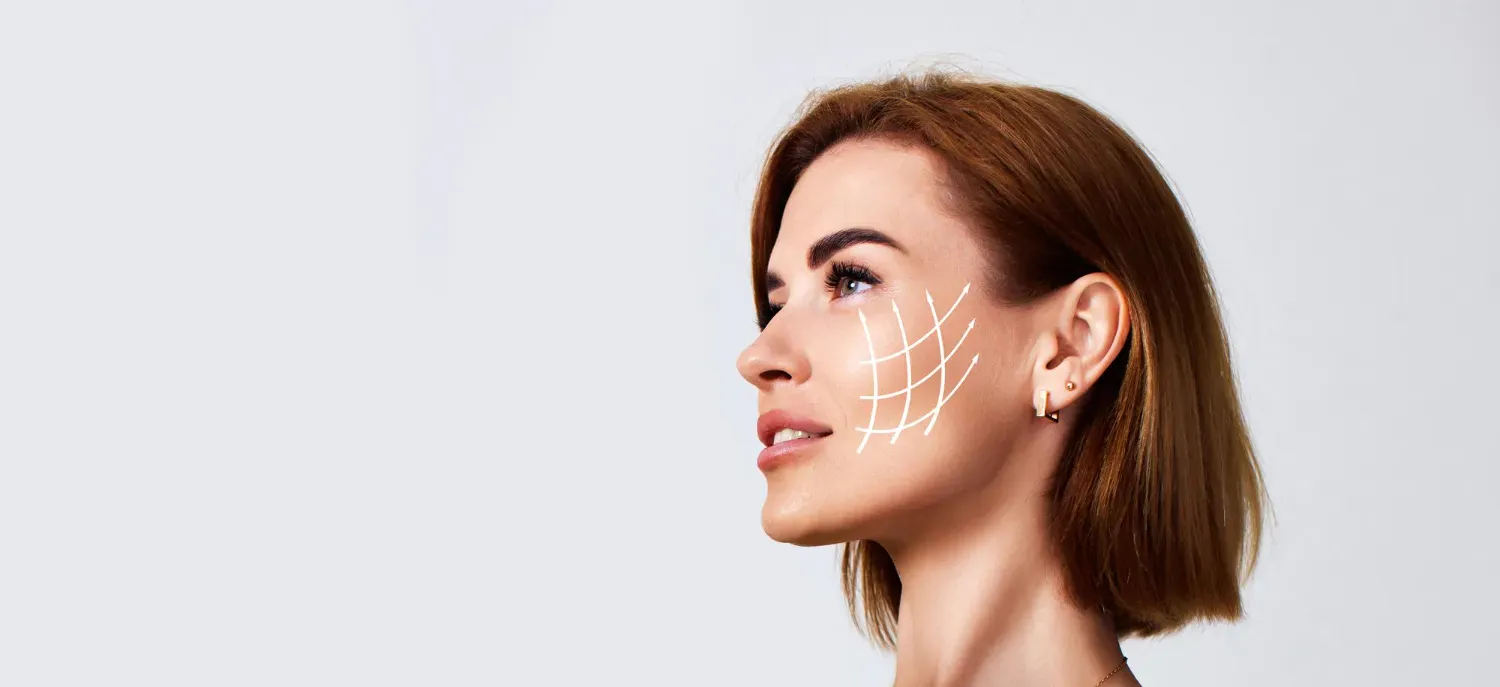

Technique, Products, and the Treatment Procedure

The nasolabial region contains the angular artery — a terminal branch of the facial artery — making injection safety a primary concern. Our Clinical Board selects both the filler product and injection technique based on each patient's anatomy, fold depth, and treatment goals.

Cannula vs Needle: Safety in the Nasolabial Zone

  • Micro-cannula (25G blunt-tip) — The preferred approach for the majority of nasolabial and marionette line cases. The blunt tip navigates around the angular artery and its branches rather than through them, significantly reducing the risk of intravascular injection. A single entry point also minimises bruising and allows smooth, linear filler placement along the length of the fold.
  • Needle (27G sharp-tip) — Used selectively for precise point correction, particularly at the oral commissure or for small, localised depressions that require targeted bolus placement.

Product Selection

  • Juvéderm Volift (Allergan) — A medium-density HA filler with Vycross technology, ideal for direct nasolabial fold correction. Provides smooth, natural integration with surrounding tissue and longevity of 12–15 months.
  • Juvéderm Voluma (Allergan) — A higher-density HA filler designed for deep structural support. Used for midface volumisation to restore cheek projection and indirectly lift the nasolabial fold from above.
  • Restylane Defyne (Galderma) — XpresHAn Technology provides flexible support with natural movement. An excellent choice for the nasolabial fold in patients who require correction that adapts to dynamic facial expression.
  • Restylane Volyme (Galderma) — Designed for deep volume restoration in the midface and cheek, supporting the indirect approach to nasolabial fold correction.

Typical Volumes

Volume requirements vary significantly depending on fold depth, skin quality, and whether the treatment is a first session or maintenance. A general guide:

  • Mild nasolabial folds: 0.5–1ml per side
  • Moderate to deep folds: 1–1.5ml per side (direct) plus 0.5–1ml per side (midface support)
  • Marionette lines: 0.5–1ml per side
  • Combined nasolabial + marionette + midface: 3–5ml total across all zones

Your doctor will recommend the appropriate volume during your consultation — we never apply a one-size-fits-all approach.

Step-by-Step: Your Nasolabial & Marionette Lines Treatment

Our doctors follow a structured clinical protocol to ensure consistent, safe, and predictable results for every patient.

1

Facial Assessment and Consultation

Your doctor conducts a thorough assessment of your nasolabial folds, marionette lines, midface volume, and overall facial proportions. Photographs are taken for treatment planning and progress tracking. The fold depth is graded using the Wrinkle Severity Rating Scale (WSRS).

2

Treatment Planning and Consent

Based on the assessment, your doctor recommends a specific combination of products, volumes, and injection zones — including whether direct fold correction, midface volumisation, or both are appropriate. Risks, expected outcomes, and aftercare are discussed in full before informed consent is taken.

3

Preparation and Anaesthesia

The treatment area is cleansed with antiseptic solution and topical anaesthetic cream is applied for 15–20 minutes. The HA fillers we use also contain integrated lidocaine for additional comfort during injection.

4

Midface Volumisation (If Indicated)

If the treatment plan includes cheek support, your doctor begins with deep midface volumisation using a structural filler such as Juvéderm Voluma or Restylane Volyme. This lifts descended tissue and partially corrects the nasolabial fold from above before any direct injection.

5

Direct Fold and Line Correction

Using micro-cannula or needle technique (as planned), your doctor places filler along the nasolabial fold and marionette line at the appropriate tissue depth. The cannula technique allows smooth, even product distribution with a single entry point per side, minimising bruising and vascular risk.

6

Symmetry Assessment and Moulding

The filler is gently moulded to achieve optimal contour. Your doctor reviews the result from multiple angles, comparing to baseline photographs and ensuring both sides are symmetrical.

7

Aftercare and Review Booking

Detailed aftercare instructions are provided, and a complimentary two-week review appointment is arranged to assess results, check for any asymmetry, and make refinements if needed.

Nasolabial Fold Filler Correction and Revision

We receive a significant number of patients seeking correction of unsatisfactory nasolabial fold or marionette line filler performed at other clinics. The nasolabial region is frequently over-treated, leading to an unnatural, puffy appearance that adds volume where subtlety is required. Common issues we assess and treat include:

  • Overfilled nasolabial folds: Excessive product creating a flattened or swollen appearance in the mid-face, obliterating the natural shadow between cheek and lip.
  • Asymmetry: Uneven fold correction resulting in one side appearing deeper or more prominent than the other.
  • Tyndall effect: A blue-grey discolouration visible through the skin when filler has been placed too superficially — particularly common in the thin skin of the nasolabial fold.
  • Pillow face: Excessive filler volume across multiple facial zones that creates an unnaturally convex, inflated midface.

Our Correction Protocol

Revision cases begin with a thorough assessment, including palpation mapping to identify the volume and distribution of existing filler. Where dissolution is appropriate, we use Hyaluronidase (Hyalase) — an enzyme that selectively breaks down hyaluronic acid — to remove or reduce misplaced product. Patients are typically reviewed at 2 weeks, after which retreatment with correctly placed filler can be planned if desired. Our doctors' extensive experience with nasolabial anatomy means they understand not only how to correct the fold, but how to avoid the complications that brought you to seek revision in the first place.

Treatment Options for Nasolabial Folds and Marionette Lines

Several approaches exist for addressing nasolabial folds and marionette lines. The table below compares the most common options to help you understand which may be most appropriate for your concerns.

FactorHA Dermal FillersThread LiftFat TransferSurgical Facelift
Procedure time30–45 minutes45–60 minutes1–2 hours3–6 hours (general anaesthetic)
Downtime24–72 hours mild swelling5–7 days swelling and bruising1–2 weeks swelling, possible asymmetry2–4 weeks recovery
Results onsetImmediate (final result at 2 weeks)Immediate but refines over 2–4 weeks3–6 months (after swelling resolves)3–6 months (final result)
Longevity9–18 months12–18 months2–5 years (variable resorption)5–10+ years
ReversibilityFully reversible with HyaluronidaseThreads dissolve; repositioning possibleNot reversibleNot reversible
Best forMild–deep folds, flexible maintenance, trialling resultsMild laxity with some fold deepeningVolume restoration with long-term resultsSignificant laxity, deep folds, structural repositioning
Risk profileLow (bruising, swelling, rare vascular events)Moderate (dimpling, thread palpability, migration)Moderate (asymmetry, fat resorption, calcification)Higher (nerve damage, scarring, haematoma)
Typical costFrom £450£1,500–£3,000£3,000–£6,000£8,000–£15,000+

Nasolabial & Marionette Lines Filler Cost

Nasolabial fold filler cost at PRP London Clinic depends on the volume of product required and the complexity of your treatment plan. Factors that influence pricing include:

  • Fold depth: Mild smile lines may require 1ml total, while deep nasolabial folds with marionette lines typically require 2–4ml across multiple zones.
  • Treatment approach: Direct fold correction alone costs less than a combined protocol that includes midface volumisation for structural support.
  • Product selection: Premium HA fillers such as Juvéderm Volift and Restylane Defyne are specifically selected for this region based on your anatomy and goals.

Treatment starts from £450. All plans include a comprehensive consultation, the procedure itself, and a complimentary two-week review to assess results and make any necessary adjustments. Current pricing is available on our pricing page.

Safety Considerations for Nasolabial and Marionette Filler

The nasolabial region is one of the most vascular zones in facial aesthetics. The angular artery — a direct continuation of the facial artery — runs alongside the nasolabial fold and anastomoses with branches of the ophthalmic artery. Inadvertent intravascular injection in this zone can have serious consequences, including skin necrosis or, in extremely rare cases, visual impairment. This is why we consider nasolabial filler a procedure that demands genuine anatomical expertise and strict safety protocols.

A systematic review by Kyriazidis et al. (2024), analysing 48 high-level evidence studies, confirmed that HA fillers are generally safe with most adverse events being transient and mild to moderate. However, the review emphasised that the safety profile is technique-dependent — reinforcing why practitioner skill and anatomical knowledge are the most important safety factors.

Our safety measures include:

  • Micro-cannula protocol: Blunt-tip cannula technique navigates around the angular artery and its branches rather than through them, dramatically reducing the risk of intravascular injection.
  • Aspiration testing: Where needle technique is used for precision point correction, aspiration is performed before each bolus to check for intravascular placement.
  • Slow injection technique: Filler is delivered in controlled, small-volume increments with continuous tissue observation for early signs of vascular compromise (blanching, pain, colour change).
  • Emergency preparedness: All treatment rooms at 33 Cavendish Square are equipped with Hyaluronidase for immediate vascular rescue, along with a comprehensive medical emergency kit.

Our doctors' combined experience across thousands of nasolabial and perioral treatments ensures both the anatomical expertise to deliver safe results and the clinical training to manage complications immediately should they arise.

Aftercare Following Nasolabial & Marionette Lines Treatment

First 24–48 Hours

  • Avoid touching, rubbing, or massaging the treated area
  • Do not apply makeup to injection or cannula entry sites for 12 hours
  • Avoid strenuous exercise, saunas, steam rooms, and hot baths
  • Limit alcohol consumption to reduce bruising risk
  • Sleep on your back if possible for the first two nights
  • Apply cold compresses gently if swelling is uncomfortable (avoid direct pressure on filler)

First Two Weeks

  • Results settle over 7–14 days as swelling subsides and the filler integrates with surrounding tissue
  • Avoid dental procedures for 2 weeks
  • Do not have facials or facial massage for 2 weeks
  • Attend your scheduled two-week review appointment
  • Contact the clinic immediately if you experience unusual pain, prolonged blanching, significant colour change, or visual disturbance

Your doctor will provide written aftercare instructions specific to your treatment at the time of your appointment.

Am I a Good Candidate for Nasolabial & Marionette Filler?

Ideal CandidateMay Need an Alternative Approach
Mild to deep nasolabial folds caused by volume loss and fat pad descentVery deep folds with significant skin laxity (surgical lift may offer more lasting improvement)
Marionette lines creating a downturned or saddened resting expressionMarionette lines caused primarily by masseter hypertrophy or skeletal asymmetry
Seeking natural-looking correction with minimal downtimeExpecting complete elimination of all visible lines
Good general health with no active infections in the treatment areaActive infection, cold sores, or perioral dermatitis
Realistic expectations following thorough consultationSeeking permanent results without ongoing maintenance
Willing to maintain results with top-ups every 9–18 monthsNot willing to attend for periodic maintenance treatments

Contraindications for Nasolabial & Marionette Lines Filler

Your suitability for nasolabial fold treatment is determined during your medical consultation. The following conditions are contraindications:

  • Known hypersensitivity to hyaluronic acid, lidocaine, or any filler excipient
  • Active skin infection or inflammation at the proposed injection site
  • Pregnancy or breastfeeding — treatment is not administered during pregnancy or lactation
  • Bleeding disorders or current anticoagulant therapy (discussed on a case-by-case basis)
  • Previous permanent filler in the nasolabial or marionette region (silicone, PMMA) — increases complication risk
  • Active herpes simplex (cold sores) at or near the treatment site
  • Autoimmune connective tissue disorders (relative contraindication — requires medical review)
  • Unrealistic expectations about achievable outcomes that cannot be managed through consultation

If you are unsure whether any of these apply to you, your consulting doctor will review your full medical history and advise accordingly.

Medical Disclaimer

This page is intended for informational and educational purposes only. The content does not constitute medical advice, diagnosis, or a recommendation for any specific treatment. Dermal filler treatments involve the injection of prescription-grade medical devices and can only be administered following a face-to-face medical assessment. Individual results vary based on anatomy, skin quality, fold depth, and baseline proportions. While hyaluronic acid fillers are considered safe when administered by trained professionals, all injectable treatments carry inherent risks including bruising, swelling, infection, asymmetry, and rare but serious vascular complications. A professional consultation is required to determine suitability. All before-and-after photographs represent individual results and should not be interpreted as a guarantee of outcome. This content was last reviewed on 2 April 2026 by the medical team at PRP London Clinic.

Nasolabial & Marionette Lines Treatment at 33 Cavendish Square

PRP London Clinic is located at 33 Cavendish Square, London W1G 0PW — in the heart of the Harley Street medical district. Our clinic is a short walk from Oxford Circus (Central, Victoria, and Bakerloo lines), Bond Street (Central and Jubilee lines), and Regent's Park (Bakerloo line). Whether you are searching for a specialist nasolabial fold filler london clinic or expert marionette lines treatment london with GMC-registered doctors, our medical team is here to provide a thorough consultation and personalised treatment plan.

Restore Natural Contour to Your Smile Lines

Whether you are concerned about deepening nasolabial folds, downturned mouth corners, or visible marionette lines, our GMC-registered doctors are here to guide you through every step. Book a consultation at PRP London Clinic and discover what medically led nasolabial fold treatment and marionette lines correction can achieve for your facial harmony.

Myths vs Facts

M

Nasolabial filler makes the lines worse over time by stretching the skin.

F

There is no clinical evidence that properly placed HA filler worsens nasolabial folds. Hyaluronic acid is naturally present in the skin and is gradually metabolised by the body. When filler dissolves, the skin returns to its pre-treatment state — it does not stretch or sag further. The appearance of 'worsening' is typically the natural progression of ageing that becomes more noticeable once a patient is accustomed to their corrected appearance.

M

Only surgery can fix deep nasolabial folds — fillers are a waste of money.

F

A meta-analysis of randomised clinical trials (Stefura et al., 2021) demonstrated that HA fillers achieve clinically meaningful and sustained improvement in nasolabial folds, with pooled WSRS scores improving from 3.23 at baseline to 2.02 at six months. While surgical facelifts offer more dramatic repositioning for severe laxity, the majority of patients with moderate folds achieve excellent results with filler — without the risks, downtime, and cost of surgery.

M

Nasolabial filler always looks puffy and unnatural.

F

The 'overfilled' or 'pillow face' appearance results from excessive volume placed incorrectly — not from the treatment itself. When administered by an experienced doctor using the right product at the correct tissue depth, nasolabial filler should be invisible. Our approach combines direct fold correction with strategic midface support to achieve natural-looking results, not an overfilled appearance.

M

One millilitre of filler is enough for everyone's nasolabial folds.

F

Volume requirements vary significantly depending on fold depth, facial anatomy, skin quality, and whether marionette lines are also being addressed. A mild crease may require just 0.5ml per side, while a comprehensive treatment combining nasolabial folds, marionette lines, and midface support can require 3–5ml total. A proper facial assessment determines the right volume — not an arbitrary standard.

M

Filler injected into nasolabial folds migrates to other areas of the face.

F

When placed at the correct tissue depth using appropriate products and techniques, HA filler remains localised within the treated zone. True migration is rare and typically results from excessive volume, superficial placement, or products with inappropriate rheological properties for the treatment area. Our doctors select fillers specifically designed for the nasolabial and midface region and place them at anatomically appropriate depths to ensure stability.

Nasolabial & Marionette Lines Treatment Cost

TreatmentPrice
Nasolabial / Marionette Lines

Per session. Treatment for nasolabial folds and marionette lines.

£450per treatment

Prices are indicative. Please book a consultation for a personalised quote.

Frequently Asked Questions

The best treatments for nasolabial folds depend on the severity and underlying cause. For mild to deep folds, hyaluronic acid dermal fillers are the most well-evidenced non-surgical option — a meta-analysis of randomised clinical trials confirmed sustained improvement at both one and six months. At PRP London Clinic, we combine direct fold correction with midface volumisation to address both the symptom and its cause. For patients with significant skin laxity, a surgical facelift may offer more lasting repositioning, and our doctors can advise on the most appropriate approach during your consultation.

The most effective non-surgical approach to reducing nasolabial folds is targeted HA dermal filler. This can be placed directly into the fold to soften the crease and/or into the midface to restore cheek volume and lift descended tissue. Supporting treatments such as skin-tightening procedures or collagen-stimulating therapies may complement filler for patients with skin laxity. Skincare alone (retinoids, SPF) can slow progression but will not correct an established fold. A consultation with our medical team will identify the right combination for your anatomy.

Nasolabial fold filler cost in London at PRP London Clinic starts from £450. The final price depends on the volume of product required, the number of zones treated (nasolabial only, marionette lines, midface support), and the specific products selected. A detailed, transparent quote is provided during your consultation with no hidden fees. All treatment plans include the procedure and a complimentary two-week review.

Nasolabial fillers typically last 9–18 months, depending on the product used, the volume placed, your metabolism, and the treatment area. Fillers in areas of high facial movement (such as the nasolabial fold and mouth corners) tend to metabolise faster than those in more static zones. Products like Juvéderm Volift offer 12–15 months of correction, while deeper structural fillers such as Voluma can last up to 18 months. Most patients return for a maintenance top-up once they notice the effect beginning to diminish.

Nasolabial folds deepen due to a combination of age-related changes: midface bone resorption reduces the skeletal framework supporting the cheek, the malar fat pads descend under gravity and compress tissue along the fold, collagen and elastin degradation reduces skin elasticity, and repeated facial expressions contribute to crease formation. Genetics, sun exposure, smoking, and weight fluctuations can accelerate these processes. Understanding the cause is essential — our doctors assess whether your folds are primarily volume-driven, laxity-driven, or both, and tailor the treatment accordingly.

Yes. Marionette lines respond well to HA dermal filler. Product is placed along the groove from the oral commissure toward the jawline, softening the crease and lifting the downturned mouth corners. In many cases, we also address the underlying causes — such as volume loss in the lower cheek and pre-jowl sulcus — for a more comprehensive and natural-looking correction. Filler for marionette lines is often combined with nasolabial fold treatment in a single session.

Discomfort is generally minimal. We apply topical anaesthetic cream for 15–20 minutes before the procedure, and the HA fillers we use contain integrated lidocaine for comfort during injection. Most patients describe a sensation of pressure rather than sharp pain. Our micro-cannula technique requires only a single entry point per side, which is significantly more comfortable than multiple needle punctures along the fold.

We primarily use Juvéderm Volift for direct nasolabial fold correction — its medium-density Vycross formulation provides smooth integration and 12–15 months of natural-looking correction. For midface volumisation to support the fold from above, Juvéderm Voluma or Restylane Volyme provide the structural lift needed. Restylane Defyne is an excellent alternative for patients who want correction that adapts to dynamic facial movement. Product selection is based on your individual anatomy and treatment goals — your doctor will recommend the most appropriate option during your consultation.

Volume requirements vary considerably. A mild crease may require just 0.5–1ml per side for direct correction. Moderate to deep folds often benefit from 1–1.5ml per side in the fold itself, plus an additional 0.5–1ml per side in the midface for structural support. If marionette lines are also being addressed, total volumes of 3–5ml across all zones are common. Your doctor will assess your fold depth, skin quality, and facial proportions to recommend the right volume — we never apply a standard amount regardless of anatomy.

When administered by an experienced doctor using the correct product at the appropriate tissue depth, nasolabial filler should be completely undetectable. The goal is to soften the fold and restore natural facial contour — not to eliminate all traces of the crease (which would itself look unnatural). Our approach of combining direct correction with midface support produces results that look refreshed rather than 'done'. The two-week review ensures the final result meets your expectations.

Nasolabial folds (also called smile lines or laugh lines) run from the sides of the nose to the corners of the mouth. Marionette lines run from the corners of the mouth downward toward the chin, creating a 'puppet-like' appearance. While both result from volume loss and gravity, they involve different anatomical structures — the nasolabial fold is driven by malar fat pad descent, while marionette lines are primarily caused by depressor anguli oris muscle action and lower cheek deflation. Both can be treated with HA filler, often in the same session.

Yes. Hyaluronic acid fillers are fully reversible using an enzyme called Hyaluronidase (Hyalase), which breaks down the HA filler. This is one of the key advantages of HA fillers over permanent alternatives. At PRP London Clinic, we keep Hyaluronidase available in all treatment rooms — both as a correction tool and as part of our emergency vascular rescue protocol.

All treatments are performed exclusively by GMC-registered doctors — never nurses, beauticians, or non-medical practitioners. Our team includes Dr Bruno Amendola (GMC: 4346629), Dr Mohamed Nafei (GMC: 7520509), Dr Reem Nouri (GMC: 6149512), and Dr Mohammad Akbar (GMC: 5206673), our Medical Director and Fellow of the Royal College of Surgeons of Edinburgh. This ensures the highest standards of anatomical knowledge, product selection, and clinical safety for every patient.

Yes. Research by El-Mesidy et al. (2020) demonstrated that nasolabial fold correction can be achieved through midface volume restoration — placing filler in the cheek to re-support the descended malar fat pad and indirectly lift the fold from above. At PRP London Clinic, our doctors frequently combine cheek filler with direct nasolabial fold correction for a more comprehensive, natural-looking result that addresses the root cause of the fold rather than merely filling the crease.

Clinical Evidence & Scientific References

Signorini (2016): Global Aesthetics Consensus – Avoidance and Management of Complications from Hyaluronic Acid Fillers

Mauricio Signorini, et al. · Plastic and Reconstructive Surgery, 2016PMID: 27219265

Supports: Global expert consensus on avoidance and management of HA filler complications.

Limitations: Consensus-based rather than trial-based.

View on PubMed

El-Mesidy (2020): Nasolabial fold correction through cheek volume loss restoration

M S El-Mesidy, et al. · Journal of Cosmetic Dermatology, 2020PMID: 31898756

Supports: Demonstrates that nasolabial fold correction can be achieved through midface volume restoration, supporting an indirect approach targeting the cause rather than just the fold itself.

Limitations: Single-centre study with limited sample size.

View on PubMed

Stefura (2021): Tissue Fillers for the Nasolabial Fold Area: A Systematic Review and Meta-Analysis of Randomized Clinical Trials

Tomasz Stefura, Artur Kacprzyk, Jakub Droś, Marta Krzysztofik, Oksana Skomarovska, Marta Fijałkowska, Mateusz Koziej · Aesthetic Plastic Surgery, 2021PMID: 34255156

Supports: Meta-analysis of RCTs showing tissue fillers achieve satisfying and sustainable improvement for nasolabial folds. Pooled WSRS score improved from 3.23 at baseline to 1.79 at one month and 2.02 at six months. GAIS scores confirmed aesthetic improvement sustained at 12 months.

Limitations: Overall pooled complication incidence was 0.58. Most common complications: lumpiness (43%), tenderness (41%), swelling (34%), bruising (29%). Heterogeneity across filler types and injection techniques.

View on PubMed

Kyriazidis (2024): Adverse Events Associated with Hyaluronic Acid Filler Injection for Non-surgical Facial Aesthetics: A Systematic Review

Ioannis Kyriazidis, et al. · Aesthetic Plastic Surgery, 2024PMID: 37563436

Supports: 48 high-level evidence studies confirming HA fillers are generally safe with most adverse events transient and mild to moderate.

Limitations: Severe events rare but do occur. Technique-dependent safety profile.

View on PubMed

*PRP London Clinic provides these references for educational purposes. Our Clinical Board regularly reviews emerging peer-reviewed literature to ensure our protocols align with the latest advancements in regenerative medicine.

Ready to Get Started?

Book your consultation today and take the first step towards your transformation.

Verified Clinical Reputation

Verified

"Cannot recommend this clinic enough, excellent location and an absolutely brilliant doctor. Everything was explained so clearly to me and the consultation was very thorough. The advice and aftercare has also been brilliant. I will be back for my future appointments, Thankyou!"

Ruby K

19 Jan 2026

Verified

"I had Sylfirm X treatment and I’m really happy with the results. After just one session, I noticed a clear improvement in my face. The clinic is clean, professional, and very welcoming, and Dr. Nafei is kind and skilled."

Norin Hanifi

19 Jan 2026

Verified

"I was quite nervous about getting something done but the team made me feel completely at ease. From the moment I walked in, the atmosphere was so calming and professional, they explained every step of the process and answered all my questions. I’m already seeing great results and have already booked my next appointment!"

Dominique Heslop

13 Jan 2026

Verified

"I recently had a PRF treatment done and the results are incredible. The entire team from start to finish was second to none. As an anxious client they took their time to explain thoroughly the procedure and aftercare."

lloyda221

06 Jan 2026

Verified

"I had an excellent PRF treatment and really happy with the results. I found the doctor highly professional and knowledgable. I was explained the PRF treatment and process throughly. The expertise was amazing and really happy with the results. I would highly recommend this clinic."

Mane Authority

06 Jan 2026

Verified

"It was easy to book. All necessary information shared before and after the treatment. Very affordable."

Victor Contreras Guerra

4 months ago

Verified

"I haven't come here yet but wow the clinic is so lucky to have Mo as part of their team. His advice and genuine care is unmatched. I hope PRP London Clinic is looking after him well. If I come it'll be because of his excellent advice"

A A

5 months ago

Verified

"I visited the clinic today. I would like to thank you for your professionalism and best care you have provided me. I was but nervous but it was great. See you soon"

harris jan

3 months ago

Independent Patient Feedback

Read all verified stories →

Medical Suitability Note

As a GMC-regulated practice, a mandatory consultation is required for all new patients to assess suitability and clinical need. This treatment may not be appropriate for everyone. All procedures are performed by GMC-registered doctors whose credentials can be verified on the official GMC register.

Clinical Technology & Equipment

Regenerative Substance

Juvéderm® Hyaluronic Acid Dermal Fillers

by Juvéderm

Manufacturer Info →

Premium cross-linked hyaluronic acid dermal filler range with VYCROSS® technology for smooth, long-lasting facial volumisation and contouring.

Certifications

CE Marked Medical Device VYCROSS® Technology

Technical Specifications

Active Ingredient
Cross-linked Hyaluronic Acid
Technology
VYCROSS® (smooth gel consistency)

Clinical Applications

Lip Augmentation Cheek Enhancement Chin Augmentation Non-Surgical Rhinoplasty 8-Point Non-Surgical Facelift Nasolabial and Marionette Lines

Official Resources

Regenerative Substance

Restylane® Hyaluronic Acid Dermal Fillers

by Restylane

Manufacturer Info →

Stabilised hyaluronic acid dermal filler range using NASHA® and OBT™ technology for natural-looking facial volumisation, contouring, and skin rejuvenation.

Certifications

CE Marked Medical Device NASHA® / OBT™ Technology

Technical Specifications

Active Ingredient
Stabilised Hyaluronic Acid
Technology
NASHA® (Non-Animal Stabilised Hyaluronic Acid) / OBT™ (Optimal Balance Technology)

Clinical Applications

Lip Augmentation Cheek Enhancement Chin Augmentation Non-Surgical Rhinoplasty 8-Point Non-Surgical Facelift Nasolabial and Marionette Lines

Official Resources

This technical specification is provided for informational purposes only. All medical devices and substances are used exclusively by GMC-registered practitioners at PRP London Clinic. Individual results may vary.