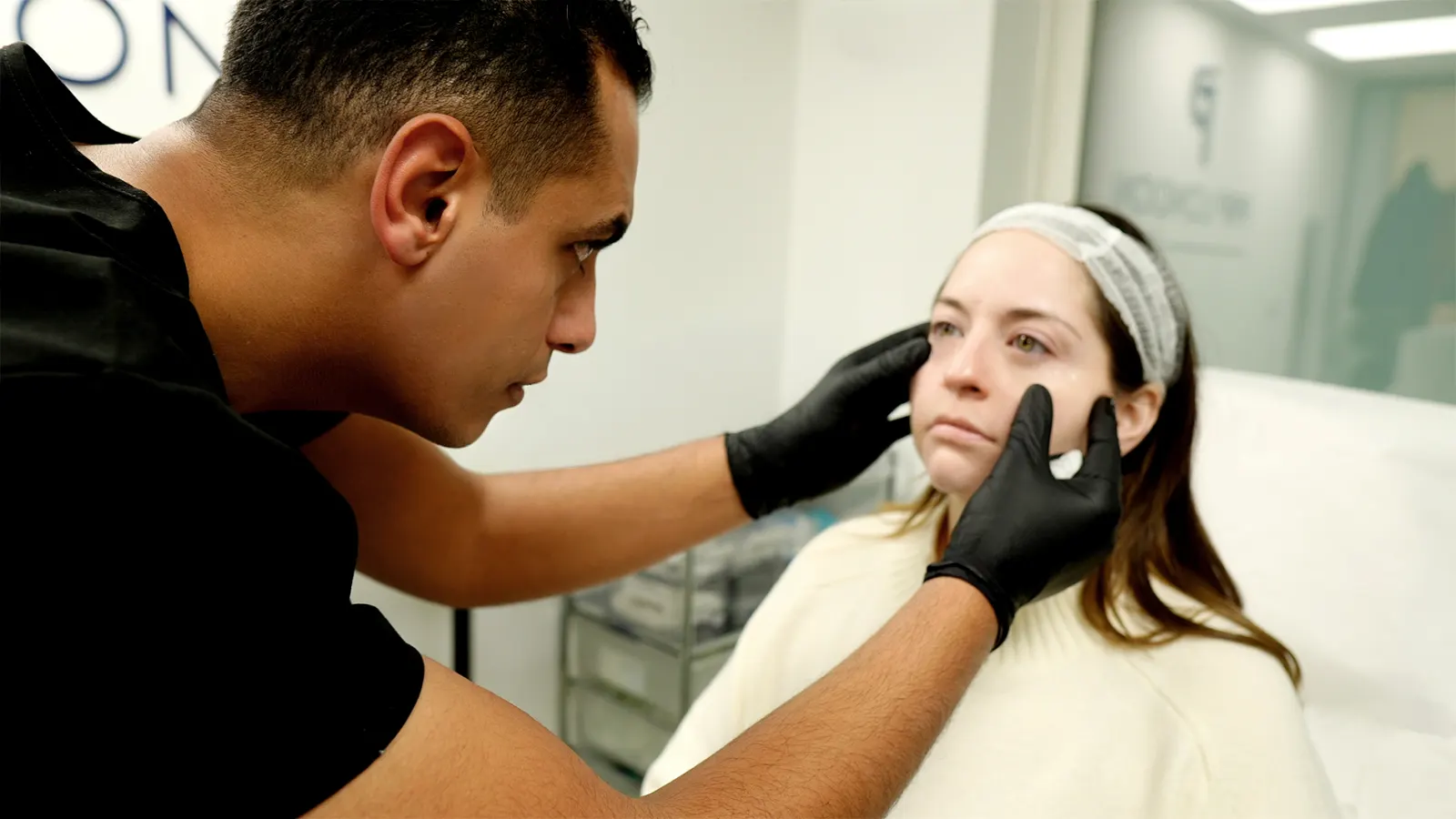
Understanding cheek fillers side effects is an important part of making an informed decision. A 2023 meta-analysis of 19 randomised controlled trials (Colon et al.) quantified adverse event rates for HA fillers by facial region, confirming that the mid-face (cheek) carries a favourable safety profile compared to other injection sites.
Common Side Effects
The most frequently reported side effects following cheek filler treatment are swelling, bruising, tenderness and mild erythema. These are expected inflammatory responses to injection and typically resolve within 3-14 days. Swelling tends to peak at 24-48 hours post-treatment — this is the normal cheek filler swelling timeline.
Cheek Filler Swelling Stages
Patients frequently search for cheek filler swelling stages. The typical progression is: Day 1-2: peak swelling with some firmness; Day 3-5: swelling begins subsiding noticeably; Day 7: most swelling resolved; Day 14: final result visible. Sleeping slightly elevated and applying cool compresses can accelerate resolution.
Bruising
Cheek filler bruising occurs in a proportion of patients, particularly when needle technique is used near vascular areas. Our use of cannula for broader mid-cheek distribution significantly reduces bruising risk. Any bruising typically resolves within 7-14 days and can be covered with concealer after 24 hours.
Lumps and Nodules
Palpable lumps are uncommon with correct injection technique and appropriate product selection. If cheek filler lumps do occur, they usually resolve spontaneously within 2-4 weeks as the filler integrates with surrounding tissue. Persistent nodules can be treated with massage, hyaluronidase dissolution, or in rare cases, aspiration.
Filler Migration
Patients sometimes ask about cheek filler migration. True migration is very rare with modern cross-linked HA fillers placed at the correct tissue depth. The systematic evidence confirms that when filler is placed submuscularly near the zygoma and subcutaneously in the lower cheek, it remains well-localised. MRI studies (Master et al., 2024) confirm HA persistence at the original injection site for years.
Serious Complications
Vascular occlusion is extremely rare but represents the most serious potential complication of any injectable filler. Our doctors are trained in vascular anatomy mapping, aspiration technique, and emergency hyaluronidase protocols. The clinic maintains emergency reversal supplies on-site at all times.