PRP facial with microneedling treatment for skin rejuvenation at PRP London Clinic, Cavendish Square, London

PRP Facial London: Vampire Facial with Medical Microneedling

GMC-registered doctors combining Rein PRP™ growth factors with SkinPen microneedling for evidence-based skin rejuvenation at 33 Cavendish Square, London W1G.

Duration

60m

Sessions

3

Price From

£400

Downtime

1-3 Days

Key Benefits

  • Dual mechanism: microneedling collagen induction + PRP growth factor delivery
  • 2.97x higher odds of significant improvement vs microneedling alone (meta-analysis)
  • 100% autologous — uses your body's own growth factors, no synthetic products
  • Treats acne scars, fine lines, texture, pores, dullness, and sun damage
  • Safe for all Fitzpatrick skin types (I–VI)
  • Performed by three GMC-registered doctors, not therapists
  • Two advanced PRP systems: Rein PRP™ and MCT Plasma
  • Minimal downtime — 1–3 days redness, return to routine quickly

Common Target Areas

Face Neck Décolletage Hands

PRP Facial with Microneedling: Evidence-Based Skin Rejuvenation in London

The PRP facial london at PRP London Clinic combines two clinically-validated modalities — Platelet-Rich Plasma therapy and medical-grade microneedling — into a single, synergistic skin rejuvenation treatment. Often called a vampire facial london, this procedure uses concentrated growth factors from your own blood, delivered through thousands of precision-controlled micro-channels created by the SkinPen device, to stimulate collagen synthesis, accelerate cellular turnover, and improve skin texture from within.

Our prp microneedling london treatments are performed exclusively by GMC-registered doctors using the Rein PRP™ System (93–97% platelet recovery) and the MCT Plasma System (photobiomodulation-enhanced PRP). Located at 33 Cavendish Square, London W1G, our dedicated medical aesthetic clinic provides a private, clinical environment for patients seeking measurable improvements in skin quality.

A 2022 meta-analysis of 14 controlled studies (472 patients) confirmed that microneedling combined with PRP is significantly more effective than microneedling alone — with 2.97 times higher odds of achieving greater than 50% clinical improvement. This evidence base underpins our treatment approach, combining the controlled dermal injury of microneedling with the regenerative capacity of autologous PRP.

This procedure is part of our comprehensive Guide to Acne Scars & Uneven Skin Texture.

Your Skin Rejuvenation Team

Every PRP facial london session is performed by a GMC-registered doctor from our clinical team — Dr Bruno Amendola (GMC: 4346629), Dr Mohamed Nafei (GMC: 7520509), and Dr Reem Nouri (GMC: 6149512). Our doctors follow standardised skin rejuvenation treatment protocols developed through shared clinical workflows, ensuring consistent outcomes regardless of which physician performs your procedure. Never a nurse, technician, or non-medical practitioner.

What a PRP Facial Treats: Clinical Applications

The Science Behind the Vampire Facial

The term vampire facial — popularised by media — refers to a medical procedure that applies concentrated platelet-rich plasma to the skin via microneedling channels. When PRP enters the dermis through these micro-channels, it releases a cascade of growth factors (PDGF, VEGF, EGF, TGF-β) that activate fibroblasts, stimulate neocollagenesis, and promote angiogenesis. This biological response drives measurable improvements in skin quality over the following weeks and months.

Conditions Treated

  • Acne scars — atrophic scarring (ice pick, boxcar, rolling types) responds to the combined collagen-induction of microneedling and PRP's growth factor delivery. Published meta-analysis data shows 2.97x higher odds of significant improvement versus microneedling alone
  • Fine lines and early wrinkles — PRP-stimulated collagen synthesis and dermal remodelling soften fine lines, particularly around the eyes, mouth, and forehead
  • Uneven skin texture — the controlled micro-injury combined with PRP accelerates cellular turnover, replacing damaged surface cells with healthier, more uniform skin
  • Dull, tired complexion — PRP promotes angiogenesis (new blood vessel formation), improving oxygen and nutrient delivery to the skin for a more radiant appearance
  • Enlarged pores — collagen remodelling around pore structures can reduce visible pore size over a treatment course
  • Sun damage and photoageing — a 2024 review confirmed PRP provides significant protection against UV-induced damage and enhances repair of photoaged skin

Histological Evidence

Biopsy studies have demonstrated an 89.05% improvement in collagen optical density following PRP treatment — nearly double the control group — providing objective, histological evidence for PRP's collagen-stimulating mechanism beyond subjective assessment.

Technique & Products: The PRP Facial Protocol

The prp facial london combines two synergistic modalities — medical-grade microneedling and concentrated PRP — in a single session. Understanding what makes our approach distinct:

Microneedling Device

We use professional-grade microneedling devices with sterile, single-use cartridges. Needle depth is adjusted by zone: 0.5–1.0mm for delicate periorbital areas, 1.0–1.5mm for cheeks and forehead, and up to 2.0mm for acne scarring. This creates thousands of controlled micro-channels that serve dual purposes — triggering collagen induction therapy AND creating pathways for PRP absorption.

PRP Preparation

Your PRP is prepared using the Rein PRP™ System (93–97% platelet recovery) or MCT Plasma (photobiomodulation-enhanced). The gel-free density-gradient technology eliminates contaminants found in standard separator-gel kits, producing a purer concentrate for topical application to micro-needled skin.

Application Technique

PRP is applied topically immediately after microneedling — the micro-channels remain open for approximately 15–20 minutes, allowing growth factors (PDGF, VEGF, TGF-β, EGF) to penetrate deep into the dermis. This is fundamentally different from injecting PRP — the microneedling creates thousands of delivery points rather than a limited number of injection sites.

Treatment Areas

The protocol covers the full face as standard. Neck, décolletage, and hands can be treated in the same session for comprehensive prp skin rejuvenation london. Areas of specific concern (acne scars, deep lines) receive additional passes at greater depth.
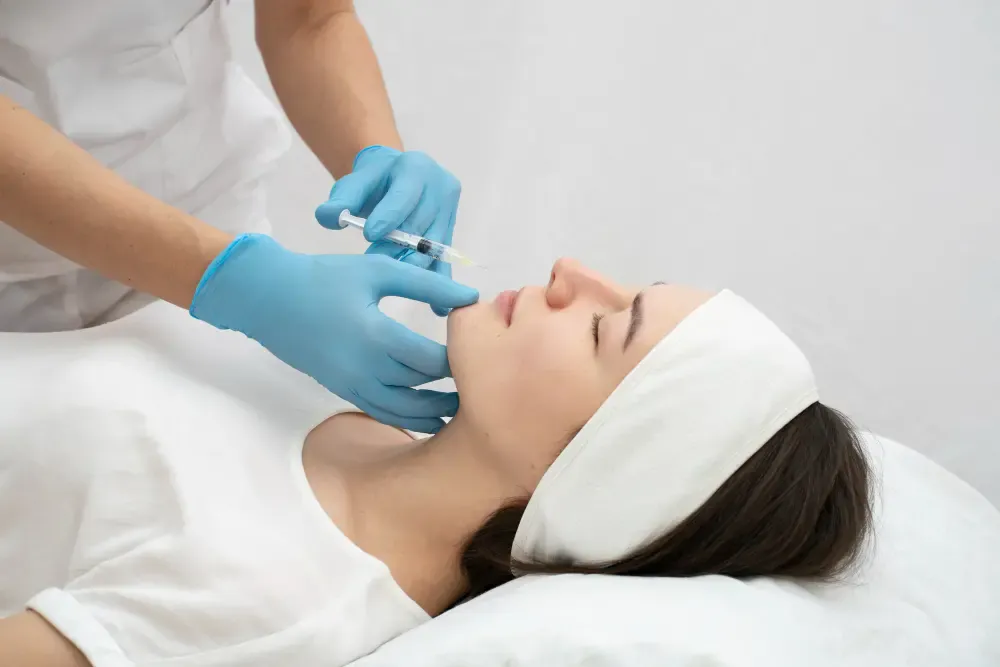

Step-by-Step: The PRP Facial Protocol

Our GMC-registered doctors follow a precise 6-step protocol for every prp skin rejuvenation london treatment.

1

Consultation & Skin Assessment

Your doctor examines your skin under clinical lighting, discusses your concerns and goals, reviews your medical history, and confirms suitability for combined PRP and microneedling treatment.

2

Blood Draw

A small blood sample (15–20ml) is drawn from your arm using sterile vacuum-sealed phlebotomy equipment to ensure maximum cell viability for PRP processing.

3

PRP Processing

Your blood is centrifuged in the Rein PRP™ System (850 G for 8 minutes) or MCT Plasma System to isolate a concentrated platelet-rich plasma with 4–6x baseline platelet levels.

4

Topical Anaesthesia

A medical-grade topical numbing cream is applied to your face for 20–30 minutes before the procedure begins, ensuring comfort throughout the microneedling process.

5

SkinPen Microneedling

Your doctor performs precision microneedling across the treatment area using the SkinPen device at clinically appropriate depths (typically 0.5–1.5mm for facial skin), creating thousands of controlled micro-channels.

6

PRP Application

Concentrated PRP is applied topically during and immediately after microneedling, allowing growth factors to penetrate the open micro-channels and reach the dermal layer for maximum regenerative effect.

Unhappy with a Previous Facial Treatment?

We regularly see patients at PRP London Clinic who are disappointed with results from PRP facials or microneedling treatments performed elsewhere. Common issues include:

  • Minimal or no visible improvement — often due to low-quality PRP preparation with inadequate platelet recovery, or cosmetic-grade microneedling devices that do not create sufficient dermal penetration
  • Uneven results — caused by inconsistent needling depth, improper device technique, or PRP applied too late after microneedling when channels have already begun closing
  • Prolonged redness or irritation — may indicate overly aggressive needling depth without adequate clinical assessment of skin thickness and type
  • No difference from standalone microneedling — suggests the PRP quality was too low to add meaningful benefit, or preparation methods degraded the growth factor content

The quality of your PRP preparation is the single most important variable in treatment outcome. Our Rein PRP™ System achieves 93–97% platelet recovery — meaning virtually all available growth factors are captured and delivered to your skin. If you have had a disappointing vampire facial experience elsewhere, we offer honest assessment and evidence-based retreatment options.

PRP Facial vs Other Skin Rejuvenation Options

FactorPRP Facial (with Microneedling)Chemical PeelsLaser ResurfacingStandalone Microneedling
MechanismCollagen induction + autologous growth factor deliveryChemical exfoliation of superficial skin layersThermal ablation and remodelling of dermal tissueCollagen induction via controlled micro-injury only
Procedure time60 minutes20–30 minutes30–60 minutes30–45 minutes
Downtime1–3 days (redness)1–7 days (depending on peel depth)5–14 days (significant redness, peeling)1–2 days (redness)
Acne scar efficacy2.97x higher odds of >50% improvement vs microneedling alone (meta-analysis)Limited — superficial peels have minimal impact on atrophic scarsGood for select scar types; risk of post-inflammatory changesEffective, but less so without PRP growth factor enhancement
Suitable for darker skinYes — low risk of post-inflammatory hyperpigmentationMedium/deep peels carry significant risk for Fitzpatrick IV–VIHigher risk of hyperpigmentation in darker skin typesYes — low risk of pigment changes
Collagen stimulationDual mechanism (micro-injury + growth factors)Moderate (chemical stimulation)Strong (thermal remodelling)Single mechanism (micro-injury only)
Allergy/rejection riskVirtually zero — uses your own blood (autologous)Chemical sensitivity possibleN/A (light/heat based)Virtually zero
Sessions recommended3 sessions, 4–6 weeks apart3–6 sessions, 2–4 weeks apart1–3 sessions, 4–8 weeks apart3–6 sessions, 4–6 weeks apart

PRP Facial Cost London

PRP facial london price at PRP London Clinic starts from £400 per session. We recommend a course of 3 sessions spaced 4–6 weeks apart for optimal collagen remodelling and skin texture improvement, with maintenance treatments every 6–12 months.

Your consultation includes a comprehensive skin assessment, treatment plan discussion, and transparent pricing before you commit. The prp facial cost depends on the preparation system used (Rein PRP™ or MCT Plasma) and the extent of the treatment area. There are no hidden fees — the quoted price includes PRP preparation, the SkinPen microneedling procedure, and all aftercare instructions.

For patients searching for vampire facial cost london — the PRP facial and vampire facial are the same treatment. The price is identical regardless of which name you use when booking.

Safety of PRP Facial with Microneedling

The prp facial treatment has an excellent safety profile, underpinned by two key factors: the autologous nature of PRP (using your own blood eliminates allergy and rejection risks) and the use of FDA-cleared, CE-marked microneedling equipment with sterile single-use cartridges.

Expected Post-Treatment Effects

  • Redness — similar to moderate sunburn, typically lasting 1–3 days. This is the normal inflammatory response that initiates the collagen remodelling cascade
  • Mild swelling — possible in the first 24–48 hours, particularly around the under-eye area if treated
  • Pinpoint bleeding — occurs during treatment and resolves within hours. This is expected and indicates adequate needling depth
  • Skin tightness or dryness — may occur for 2–3 days as the skin heals and renews

Safety Measures

  • Every treatment is performed by a GMC-registered doctor — not a therapist or technician
  • SkinPen cartridges are single-use and disposed of after each patient
  • PRP is prepared from your own blood in a closed, sterile system
  • Full medical history review and contraindication screening before every treatment
  • No synthetic fillers, foreign proteins, or animal-derived products are used

The 2022 meta-analysis of 14 studies found no significant increase in severe adverse events when PRP was added to microneedling, confirming the combination does not meaningfully elevate the risk profile beyond standalone microneedling.

PRP Facial Aftercare Instructions

First 24–48 Hours

  • Do not wash your face for the first 6 hours — allow the PRP to absorb fully
  • Avoid touching, rubbing, or picking at the treated skin
  • Do not apply make-up, retinoids, AHAs, BHAs, or vitamin C serums
  • Avoid strenuous exercise, saunas, steam rooms, and hot baths
  • Do not take anti-inflammatory medications (ibuprofen, aspirin) — these can blunt the regenerative inflammatory response
  • Use only a gentle, fragrance-free cleanser and hydrating moisturiser when you resume cleansing
  • Apply broad-spectrum SPF 50 if going outdoors

First 2 Weeks

  • Continue using SPF 50 daily — your skin is more photosensitive during the healing phase
  • Avoid active skincare ingredients (retinol, glycolic acid, salicylic acid) for 7–10 days
  • Do not have other facial treatments (chemical peels, laser) during this period
  • Mild dryness or light flaking is normal — do not exfoliate manually; let the skin shed naturally
  • Stay well hydrated to support the skin renewal process

Follow-Up Schedule

Your next session is typically scheduled 4–6 weeks after treatment. A course of 3 sessions builds cumulative collagen remodelling. Results continue to improve for 3–6 months after the final session as new collagen matures. Maintenance treatments every 6–12 months help sustain the improvements long-term.

Is a PRP Facial Right for You?

Ideal CandidateMay Need an Alternative Approach
Concerns about fine lines, skin texture, or dullnessSeeking significant wrinkle correction (may benefit from dermal fillers or Botox)
Acne scarring (atrophic — ice pick, boxcar, rolling)Active acne breakout (treat acne first, then address scarring)
Enlarged pores and uneven skin toneDeep surgical scars or keloid scarring tendency
Healthy platelet count and no blood disordersPlatelet dysfunction or active anticoagulant therapy
Willing to commit to 3 sessions for optimal resultsExpecting dramatic results from a single treatment
All Fitzpatrick skin types (I–VI)Currently using isotretinoin or within 6 months of stopping
Seeking a natural, autologous approach with no synthetic productsPregnant or breastfeeding
Sun-damaged or photoaged skin seeking renewalActive herpes simplex (cold sores) in the treatment zone

Contraindications for PRP Facial Treatment

PRP facial with microneedling is not suitable for all patients. The following conditions require consideration before treatment can proceed:

  • Active acne or skin infection — microneedling over active lesions risks spreading bacteria and worsening breakouts. The infection must be fully resolved first
  • Active cold sores (herpes simplex) — microneedling can trigger viral reactivation and spread. Prophylactic antiviral medication may be prescribed if you have a history of cold sores
  • Current isotretinoin (Roaccutane) use — this medication thins the skin and impairs healing. Treatment is contraindicated during use and for 6 months after stopping
  • Platelet disorders or anticoagulant therapy — conditions affecting platelet function or blood clotting require medical review before PRP treatment
  • Active eczema, psoriasis, or dermatitis in the treatment area — microneedling over inflamed skin can exacerbate these conditions
  • Keloidal scarring tendency — patients who form keloid scars require careful assessment, as microneedling creates controlled skin injury
  • Pregnancy or breastfeeding — as a precautionary measure, treatment is deferred until after breastfeeding is complete
  • Active malignancy — growth factors may theoretically stimulate cancerous cell activity
  • Recent sunburn or chemical peel — the skin must be intact and non-compromised before microneedling

Clinical Disclaimer

PRP facial with microneedling is a biological medical procedure. Individual results vary based on age, skin condition, lifestyle factors, and individual healing capacity. PRP therapy aims to stimulate your body's own regenerative processes — it cannot guarantee identical outcomes for every patient, and results are cumulative over a course of treatments. A professional consultation with one of our GMC-registered doctors is required to set realistic expectations and confirm suitability.

The clinical evidence cited on this page is drawn from peer-reviewed medical literature and represents study-level findings. Individual patient outcomes may differ from published study averages.

Last medical review: March 2026.

PRP Facial Treatment in London W1

PRP London Clinic is located at 33 Cavendish Square, London W1G 0PW — in the heart of London's medical district, moments from Oxford Circus and Bond Street stations. Our dedicated clinical premises provide a private, professional environment for your prp facial london treatment.

Whether you are searching for a vampire facial london in central London or travelling from further afield, our Cavendish Square location is easily accessible by tube, bus, and car. The clinic is a 2-minute walk from Oxford Circus station (Victoria and Bakerloo lines) and a 5-minute walk from Bond Street station (Central, Jubilee, and Elizabeth lines).

Book Your PRP Facial Consultation

Ready to improve your skin texture, reduce acne scarring, or restore a healthier, more radiant complexion? Book a consultation with one of our three GMC-registered doctors at PRP London Clinic. We will assess your skin, confirm suitability for combined prp microneedling london treatment, and create a personalised plan with transparent pricing — no obligation and no hidden costs.

Myths vs Facts

M

A vampire facial is a cosmetic gimmick with no real science behind it.

F

False. The PRP facial is supported by peer-reviewed evidence. A 2022 meta-analysis of 14 controlled studies (472 patients) demonstrated microneedling with PRP produces 2.97 times higher odds of significant clinical improvement compared with microneedling alone, with 4.15 times higher patient satisfaction.

M

PRP facials produce instant, visible results after one session.

F

No. Collagen remodelling is a biological process that occurs over weeks and months. Most patients notice initial texture improvement at 2–4 weeks, with progressive results building over 3–6 months. A course of 3 sessions is recommended for optimal cumulative effect.

M

A PRP facial is extremely painful.

F

Medical-grade topical anaesthetic cream is applied for 20–30 minutes before the procedure, making it very tolerable. Most patients describe the sensation as mild prickling or warmth rather than pain. The SkinPen device's adjustable depth allows the doctor to tailor the treatment to your comfort level.

M

PRP facials are not safe for darker skin tones.

F

Incorrect. PRP facial with microneedling is suitable for all Fitzpatrick skin types (I–VI). Unlike laser resurfacing and medium-depth chemical peels, the combination carries a low risk of post-inflammatory hyperpigmentation, making it one of the safer skin rejuvenation options for patients with darker skin.

M

Any PRP preparation produces the same results.

F

Not true. PRP quality varies dramatically depending on the preparation system. Our Rein PRP™ System achieves 93–97% platelet recovery — far higher than many commercial systems. Low-quality PRP with inadequate platelet concentration will deliver inferior results regardless of the microneedling technique.

M

A home dermaroller with a PRP serum gives the same results as a clinical treatment.

F

False. Home dermarollers create inconsistent, angled micro-channels at superficial depths and are not sterile medical devices. Clinical microneedling with the SkinPen creates uniform, vertical channels at precisely controlled depths, combined with fresh, autologous PRP — not a bottled serum.

PRP Facial (with Microneedling) Cost

TreatmentPrice
PRP Facial (with Microneedling)

Single Session. Course of 3 recommended for optimal medical-grade results.

£400per treatment
PRP Facial (incl Under Eye) with Microneedling

Single session PRP facial treatment including under-eye area with microneedling.

£500per treatment
PRP + Mesotherapy Facial Combination

Per session. Combines PRP growth factors with mesotherapy vitamins and hyaluronic acid for enhanced skin rejuvenation and a natural glow.

£450per treatment
MCT Plasma Facial (with Microneedling)

Per session. Photobiomodulation-enhanced platelet therapy (MCT Plasma) with medical microneedling. Course of 3 recommended.

£500per treatment

Prices are indicative. Please book a consultation for a personalised quote.

Frequently Asked Questions

PRP facial london cost at PRP London Clinic starts from £400 per session. We recommend a course of 3 sessions for optimal collagen remodelling. Your consultation includes a full skin assessment and transparent pricing with no hidden fees. The quoted price covers PRP preparation, SkinPen microneedling, and aftercare instructions. Multi-session packages may be available — ask during your consultation.
A vampire facial is the popular name for a PRP facial with microneedling. The treatment involves drawing a small blood sample, processing it to concentrate the platelets and growth factors, then applying this Platelet-Rich Plasma to the face through micro-channels created by a medical microneedling device. The name comes from the use of the patient's own blood. Despite the dramatic name, it is a well-established medical procedure supported by peer-reviewed clinical evidence.
Medical-grade topical anaesthetic cream is applied to your face for 20–30 minutes before the procedure begins. Most patients describe the sensation during microneedling as mild prickling or gentle vibration rather than significant pain. The SkinPen device allows your doctor to adjust the needle depth to your comfort level. Patients consistently report the treatment is far more tolerable than they expected. Any discomfort is temporary and subsides quickly once the procedure is complete.
Expect 1–3 days of visible redness, similar to moderate sunburn. Most patients find the redness has largely settled by day 2–3, and make-up can typically be applied from 24 hours post-treatment if needed. Mild dryness or light flaking may occur as the skin renews over the following week. Most patients return to their normal routine within 1–2 days. Strenuous exercise should be avoided for 24–48 hours.
We recommend a course of 3 sessions spaced 4–6 weeks apart for optimal results. This allows cumulative collagen remodelling across consecutive treatment cycles. Each session builds on the regenerative response initiated by the previous one. Results continue to improve for 3–6 months after the final session. Maintenance treatments every 6–12 months help sustain the improvements long-term. Your doctor will advise on the ideal protocol during your consultation.
Initial improvements in skin texture and radiance are typically noticeable within 2–4 weeks as the early collagen remodelling response begins. More significant improvements in fine lines, acne scarring, and pore size develop progressively over 3–6 months as new collagen matures and the dermal structure remodels. Results are cumulative — each session builds on the last, which is why a 3-session course is recommended.
Yes. PRP facial with microneedling is suitable for all Fitzpatrick skin types (I–VI), including darker skin tones. Because PRP is autologous (from your own blood) and microneedling does not involve heat or light energy, the risk of post-inflammatory hyperpigmentation is significantly lower than with laser resurfacing or medium-depth chemical peels. This makes it one of the safer skin rejuvenation options for patients with melanin-rich skin.
Vampire facial cost uk varies considerably depending on the clinic, the PRP preparation system used, and whether a qualified doctor performs the treatment. At PRP London Clinic, our vampire facial cost london starts from £400 per session, which includes GMC-registered doctor delivery, medical-grade Rein PRP™ preparation (93–97% platelet recovery), and FDA-cleared SkinPen microneedling.
Standalone microneedling stimulates collagen through controlled micro-injury alone. A PRP facial adds concentrated growth factors from your own blood to this process — delivered directly into the micro-channels while they are open. The 2022 meta-analysis of 14 studies showed the combination produces 2.97 times higher odds of achieving greater than 50% clinical improvement compared with microneedling alone. The PRP provides the biological building blocks that amplify the collagen response.
Yes — acne scarring is one of the strongest clinical indications for PRP facial with microneedling. The meta-analysis evidence specifically focused on acne scar treatment, demonstrating 2.97x higher odds of significant improvement and 4.15x higher patient satisfaction when PRP was combined with microneedling versus microneedling alone. Atrophic scars (ice pick, boxcar, and rolling types) respond particularly well to the dual collagen-induction and growth factor mechanism.
If you are in or near central London, PRP London Clinic at 33 Cavendish Square, London W1G 0PW is a 2-minute walk from Oxford Circus station and 5 minutes from Bond Street station. We are a dedicated medical aesthetic clinic with three GMC-registered doctors performing PRP facials. We regularly treat patients travelling from across London and the wider UK for our specialist PRP treatments.
We recommend avoiding make-up for at least 24 hours after treatment to allow the micro-channels to close and the PRP to be fully absorbed. From 24 hours onwards, you can apply mineral-based or non-comedogenic make-up if needed. Avoid heavy, oil-based foundations for the first 48 hours. Your doctor will provide detailed aftercare instructions specific to your skin type and treatment depth.
We use two CE/MDR-certified medical-grade systems: the Rein PRP™ System, which achieves 93–97% platelet recovery at optimised centrifugation settings (850 G for 8 minutes), and the MCT Plasma System, which enhances PRP through photobiomodulation and thermal biomodulation. Both systems produce clinical-grade platelet concentrations significantly above baseline. Your doctor will recommend the appropriate system during your consultation.
PRP facial with microneedling offers a middle ground: more effective than superficial chemical peels for scarring and texture, with significantly less downtime and lower risk of hyperpigmentation than laser resurfacing. It is particularly advantageous for darker skin types where laser and deep peels carry higher pigmentation risks. Unlike chemical peels, PRP actively delivers growth factors that stimulate collagen production rather than relying solely on chemical exfoliation.

Clinical Evidence & Scientific References

Kang & Lu (2022): Combined Effect of Microneedling and PRP for Acne Scars — A Meta-Analysis

B.K. Kang, X.R. Lu · Frontiers in Medicine, 2022PMID: 35237616

Supports: Meta-analysis of 4 randomised and 10 split-face controlled studies (472 patients) demonstrating microneedling combined with PRP is significantly more effective than microneedling alone for acne scars — 2.97x higher odds of >50% clinical improvement (P<0.001, I²=0%) and 4.15x higher patient satisfaction (P<0.001). No significant increase in severe adverse events.

Limitations: Majority of included studies were split-face non-randomised designs (10 of 14). Focused specifically on acne scars rather than broader skin rejuvenation outcomes. Moderate heterogeneity (I²=53%) in patient satisfaction analysis.

View on PubMed

Abuaf et al. (2016): Histologic Evidence of New Collagen Formulation Using PRP

O.K. Abuaf, H. Yildiz, H. Baloglu, M.E. Bilgili, H.A. Simsek, B. Dogan · Annals of Dermatology, 2016PMID: 27904271

Supports: Biopsy results demonstrated an 89.05% improvement in collagen optical density following PRP treatment, nearly double the control group — providing histological evidence for PRP's collagen-stimulating mechanism.

Limitations: Small sample size typical of histological studies. Single-centre design. Collagen density measured at one time point — long-term sustained collagen production not assessed.

View on PubMed

Lam et al. (2024): Use of PRP for Skin Rejuvenation — Review

A. Lam, E. Ranjan, S. Guttman-Yassky, R. Ahn · Skin Research and Technology, 2024PMID: 38650371

Supports: Comprehensive 2024 review confirming significant enhancements in skin pore size, texture, wrinkle reduction, and protection against UV damage with PRP therapy — validating PRP's broad skin rejuvenation benefits.

Limitations: Narrative review rather than systematic review with meta-analysis. Heterogeneity in PRP preparation protocols across reviewed studies.

View on PubMed

Gupta et al. (2019): PRP Efficacy in Hair Restoration and Facial Aesthetics — Systematic Review and Meta-analysis

A.K. Gupta, S.G. Versteeg, J. Rapaport, A.K. Hausauer, N.H. Shear, V. Piguet · Journal of Cutaneous Medicine and Surgery, 2019PMID: 30606055

Supports: Systematic review and meta-analysis demonstrating 3 monthly PRP injections exhibit significantly greater efficacy over placebo for hair density in androgenetic alopecia (mean difference: 25.61 hairs/cm², P=0.02). Also found 2-4 PRP sessions combined with traditional therapies can minimise acne scarring and improve aesthetic outcomes — supporting PRP's broad application across hair and facial rejuvenation.

Limitations: Studies used half-head design which may have influenced results due to systemic PRP effects. Data for non-hair indications (scarring, facial burns, ageing skin) are less robust in design. Focused on mild AGA — less evidence for advanced hair loss stages.

View on PubMed

*PRP London Clinic provides these references for educational purposes. Our Clinical Board regularly reviews emerging peer-reviewed literature to ensure our protocols align with the latest advancements in regenerative medicine.

Ready to Get Started?

Book your consultation today and take the first step towards your transformation.

Verified Clinical Reputation

Verified

"Cannot recommend this clinic enough, excellent location and an absolutely brilliant doctor. Everything was explained so clearly to me and the consultation was very thorough. The advice and aftercare has also been brilliant. I will be back for my future appointments, Thankyou!"

Ruby K

19 Jan 2026

Verified

"I had Sylfirm X treatment and I’m really happy with the results. After just one session, I noticed a clear improvement in my face. The clinic is clean, professional, and very welcoming, and Dr. Nafei is kind and skilled."

Norin Hanifi

19 Jan 2026

Verified

"I was quite nervous about getting something done but the team made me feel completely at ease. From the moment I walked in, the atmosphere was so calming and professional, they explained every step of the process and answered all my questions. I’m already seeing great results and have already booked my next appointment!"

Dominique Heslop

13 Jan 2026

Verified

"I recently had a PRF treatment done and the results are incredible. The entire team from start to finish was second to none. As an anxious client they took their time to explain thoroughly the procedure and aftercare."

lloyda221

06 Jan 2026

Verified

"I had an excellent PRF treatment and really happy with the results. I found the doctor highly professional and knowledgable. I was explained the PRF treatment and process throughly. The expertise was amazing and really happy with the results. I would highly recommend this clinic."

Mane Authority

06 Jan 2026

Verified

"It was easy to book. All necessary information shared before and after the treatment. Very affordable."

Victor Contreras Guerra

4 months ago

Verified

"I haven't come here yet but wow the clinic is so lucky to have Mo as part of their team. His advice and genuine care is unmatched. I hope PRP London Clinic is looking after him well. If I come it'll be because of his excellent advice"

A A

5 months ago

Verified

"I visited the clinic today. I would like to thank you for your professionalism and best care you have provided me. I was but nervous but it was great. See you soon"

harris jan

3 months ago

Independent Patient Feedback

Read all verified stories →

Medical Suitability Note

As a GMC-regulated practice, a mandatory consultation is required for all new patients to assess suitability and clinical need. This treatment may not be appropriate for everyone. All procedures are performed by GMC-registered doctors whose credentials can be verified on the official GMC register.

Clinical Technology & Equipment

Medical Device

Rein PRP™ System

by Rein PRP

Manufacturer Info →

CE Class IIB certified medical preparation system using 3.13% Sodium Citrate for high-yield (4-6x) autologous platelet recovery. Manufactured in ISO Class 8 cleanroom environments.

Certifications

CE Class IIB (Notified Body 2195) NB 0476 (Kiwa Cermet Italy) ISO 13485:2016 MDR 2017/745

Technical Specifications

Platelet Recovery Rate
93-97%
Centrifugation Protocol
850 G for 8 minutes
Anticoagulant
1ml Sodium Citrate 3.13% Ph. Eur.

Clinical Applications

Androgenetic Alopecia Skin Rejuvenation Acne Scars Orthopaedic Joint Pain

Contraindications

Platelet Dysfunction Syndrome Critical Thrombocytopenia Sepsis Malignancy (Cancer) Chronic Liver Pathology
Medical Device

MCT System (Meta Cell Technology)

by MCT

Manufacturer Info →

CE/MDR-certified dual-function medical device providing both Advanced PRP (MCT Plasma) and autologous injectable exosomes. Uses photobiomodulation (blue light) and thermal biomodulation to enhance platelet performance, boost growth factor release, and stimulate autologous exosome production from the patient's own cells.

Certifications

CE/MDR Certified Autologous (Patient-Derived) CLINIPRO Group Company

Technical Specifications

MCT Plasma Mechanism
Photobiomodulation + Thermal Biomodulation of PRP for sustained growth factor release and reduced pro-inflammatory cytokines
MCT Exosome Source
Autologous — photothermal conditioning stimulates exosome release from patient's own cells and platelets
ATP Enhancement
Photothermal biomodulation stimulates cellular metabolism and enhances ATP synthesis
Platelet Activation
Reduces VASP, increases p-38 phosphorylation; cold priming facilitates reactivity post-injection
Procedure Benefit
Cold temperature delays clot formation, producing less dense plasma for improved patient comfort

Clinical Applications

Androgenetic Alopecia Skin Rejuvenation Hair Restoration Facial Anti-Ageing

Official Resources

This technical specification is provided for informational purposes only. All medical devices and substances are used exclusively by GMC-registered practitioners at PRP London Clinic. Individual results may vary.