Kabakci et al. (2024): Morphometric analysis of the effects of high molecular weight sodium hyaluronate and amino acids mixture on face rejuvenation
Ayse Gül Kabakci, Çağlar Cengizler, Dilek Eren, Memduha Gülhal Bozkir · Journal of Cosmetic Dermatology, 2024PMID: 38590269
Supports: Independently evaluates the exact six-amino-acid cluster (glycine, L-proline, L-leucine, L-lysine HCl, L-valine, L-alanine) combined with high molecular weight sodium hyaluronate — the same composition as the Sunekos HY6AA formulation. Morphometric and digital image analysis on women aged 30–55 demonstrated significant facial hydration increase on both sides of the face, plus measurable reductions in gonion angle, bitragion breadth, bigonion breadth and marionette wrinkle scale. Authors conclude the HA + amino acid mixture safely and effectively enhances facial skin quality through combined mechanical and chemical stimulation.
Limitations: Single-arm observational design without a randomised control group; cohort size and full inter-rater reliability detail not specified in the abstract. Assessment is short-term (post-injection morphometric snapshot) with no longitudinal durability data presented, and evaluation is limited to the mid-face and jawline rather than the periorbital area where Sunekos Performa is also commonly used clinically.
View on PubMed →Kabakci et al. (2023): Assessing the Rejuvenation Effectiveness of a Hyaluronic Acid and Amino Acid Mixture in the Periorbital Region
Ayse Gul Kabakci, Dursun Murat Bozkır, Çağlar Cengizler, Dilek Sire Eren, Memduha Gülhal Bozkır · Clinical, Cosmetic and Investigational Dermatology, 2023PMID: 37051585
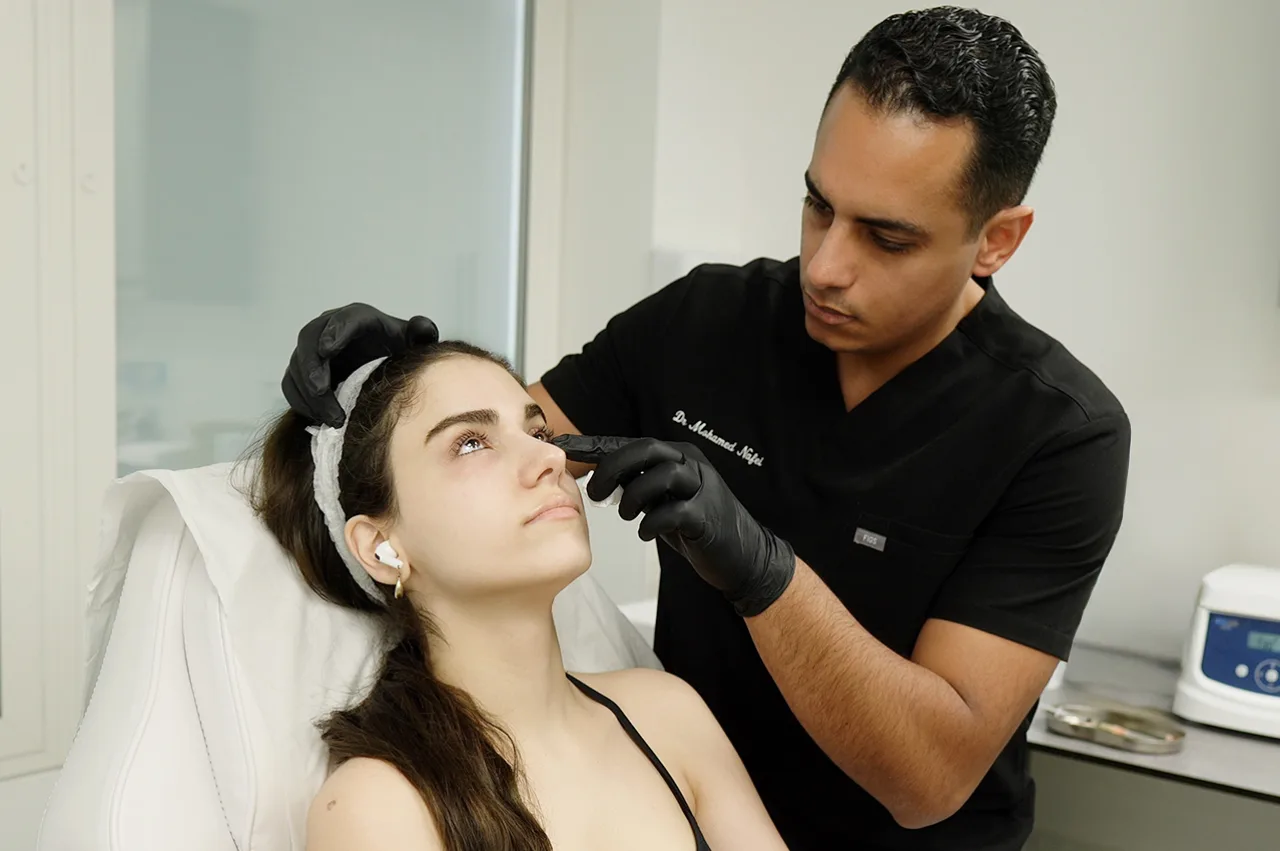
Supports: Periorbital-specific clinical study of an injectable hyaluronic acid and amino acid mixture in 23 women aged 30–55 — the exact anatomical area where Sunekos Performa is used clinically for under-eye rejuvenation. Three injection sessions at 15-day intervals produced statistically significant improvements in dark-circle scores (photonumeric scale) and periorbital wrinkles (Fitzpatrick classification) measured one month after the third session. Anatomical measurements showed measurable increases in both upper- and lower-eyelid height bilaterally, indicating volumetric and structural improvement in the periorbital region. Authors conclude HA + amino acid mixtures are appropriate for periorbital rejuvenation in this age group.
Limitations: High study attrition: 35 women were recruited but only 23 completed all sessions and measurements, limiting generalisability. The trial was single-arm with no control or sham group, follow-up was limited to one month after the final session with no longer-term durability data, and outcomes were assessed using validated but still observer-rated photonumeric scales rather than objective imaging biomarkers. Cohort was exclusively female and limited to ages 30–55.
View on PubMed →Bukhari et al. (2018): Hyaluronic acid, a promising skin rejuvenating biomedicine: A review of recent updates and pre-clinical and clinical investigations on cosmetic and nutricosmetic effects
Syed Nasir Abbas Bukhari, Nur Liyana Roswandi, Muhammad Waqas, Haroon Habib, Fahad Hussain, Shahzeb Khan, Muhammad Sohail, Nor Amlizan Ramli, Hnin Ei Thu, Zahid Hussain · International Journal of Biological Macromolecules, 2018PMID: 30287361
Supports: Comprehensive critical review of pre-clinical and clinical evidence for hyaluronic acid in skin rejuvenation — the foundational biomolecule in Sunekos formulations. Authors synthesise data demonstrating HA's role in soft tissue augmentation, improved skin hydration, collagen and elastin stimulation, and facial volume restoration, alongside its anti-wrinkle, anti-nasolabial fold and tear trough rejuvenation effects. Establishes the mechanistic rationale that underpins HA-based injectables, including the fibroblast stimulation and ECM remodelling claims relevant to Sunekos's HY6AA formulation.
Limitations: This is a narrative review rather than a systematic review or meta-analysis, so individual study quality is not formally graded and pooled effect sizes are not provided. The review covers HA broadly across multiple formulations (gels, creams, intradermal fillers, autologous fat gels, lotions, serums, implants) rather than the specific HA + amino acid combination used in Sunekos, so it provides background mechanistic support but not direct product-level evidence. Published 2018 — does not capture more recent HA-amino-acid combination data.
View on PubMed →Colon et al. (2023): Adverse Events Reported From Hyaluronic Acid Dermal Filler Injections to the Facial Region: A Systematic Review and Meta-Analysis
Jessica Colon, Sophia Mirkin, Patrick Hardigan, Matthew J Elias, Robin J Jacobs · Cureus, 2023PMID: 37261136
Supports: Systematic review and meta-analysis of 19 randomised controlled trials drawn from Cochrane Central, Embase, MEDLINE and Web of Science evaluating adverse events from hyaluronic acid injectables in the facial region. Provides quantified, high-level-of-evidence data on the AE categories patients should be informed about prior to any HA-based injectable: swelling, pain, erythema, bruising, lumps and bumps, firmness, tenderness, itching and skin discoloration. Findings confirm that adverse events are predominantly mild and transient and emphasise the importance of structured informed consent — directly supporting the safety disclosure model used at our clinic.
Limitations: The included RCTs evaluated crosslinked HA dermal fillers (e.g. Juvederm, Restylane), not non-crosslinked HA + amino-acid skin boosters such as Sunekos. Crosslinked filler product mass and rheology typically produce a higher rate of lumps, firmness and palpable nodules than non-crosslinked boosters, so the absolute AE frequencies reported are an upper-bound estimate when applied to Sunekos. AE rates are reported by anatomical site (nasolabial fold versus midface, perioral, lip) rather than the periorbital area where Sunekos Performa is commonly used clinically, and long-term safety data (>12 months) is not captured.
View on PubMed →*PRP London Clinic provides these references for educational purposes. Our Clinical Board regularly reviews emerging peer-reviewed literature to ensure our protocols align with the latest advancements in regenerative medicine.