Mesotox & Micro Botox in London
GMC-registered doctors | Intradermal microdosing for pore refinement, oil control and glass skin quality | 33 Cavendish Square
Duration
30-45m30-45 mins
Sessions
1-3 (monthly for course)1-3 (monthly for course)
Price From
£295£295
Downtime
Minimal — mild redness 24hrsMinimal — mild redness 24hrs
Key Benefits
- Visible pore size reduction across the full face
- Effective sebum and oil production control
- Improved skin texture and smoothness — the glass skin effect
- No muscle relaxation or restriction of facial expression
- Minimal downtime — mild redness resolving within 24 hours
- Consultation-led approach with GMC-registered doctors only
- Can be combined with standard anti-wrinkle treatment in the same session
- Evidence-based technique supported by systematic review and meta-analysis
Common Target Areas
Mesotox & Micro Botox Treatment at PRP London Clinic
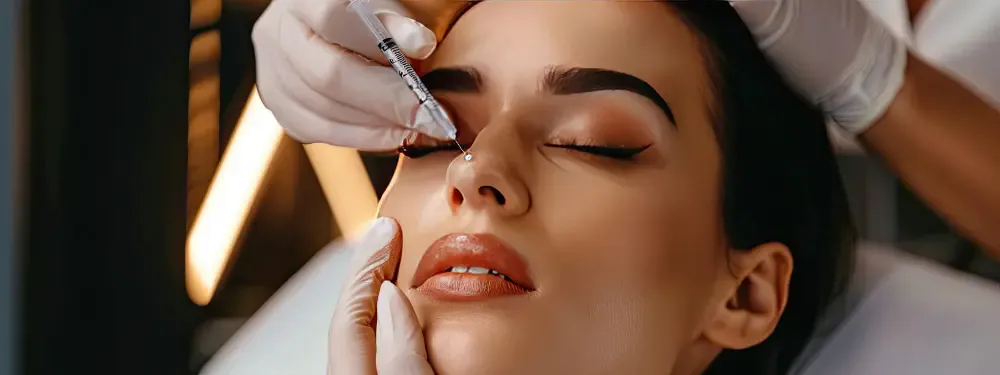
Mesotox london treatment at PRP London Clinic uses intradermal microdosing — a fundamentally different technique from standard muscle-relaxing injections. Rather than targeting the muscles beneath the skin, mesotox (also known as micro botox, microtox, mesobotox, or skin botox) delivers dilute botulinum toxin into the superficial dermis in a grid pattern across the face, targeting the sebaceous glands, sweat glands, and erector pili muscles that control pore size and oil production.
The result is a skin refinement treatment that improves skin texture, reduces visible pores, controls excess sebum, and creates the smooth, luminous appearance often described as glass skin — all without paralysing the underlying facial muscles or restricting natural expression. A 2024 systematic review of intradermal botulinum toxin confirmed positive effects on sebum production, pore size, erythema, skin texture, and elasticity across multiple clinical studies.
At PRP London Clinic, 33 Cavendish Square, London W1G, every mesotox london session is performed by a GMC-registered doctor using a consultation-led, evidence-based approach. This treatment sits within our comprehensive anti-wrinkle treatment programme but serves an entirely different clinical purpose — skin quality enhancement rather than wrinkle reduction.
This procedure is part of our comprehensive Guide to Dynamic Wrinkles & Expression Lines.
Your Doctors for Mesotox in London
Every mesotox london consultation and treatment at PRP London Clinic is performed by a GMC-registered doctor. Our medical team includes Dr Bruno Amendola (GMC: 4346629), who holds an international postgraduate qualification in aesthetic medicine and Save Face accreditation with particular expertise in intradermal skin quality techniques; Dr Mohamed Nafei (GMC: 7520509), whose PgDip in Aesthetic Medicine and PgDip in Endocrinology inform a holistic understanding of sebaceous gland function and skin botox london protocols; Dr Reem Nouri (GMC: 6149512), whose MBBS, DRCOG, and advanced aesthetic medicine training enable precise micro botox london delivery with natural-looking skin refinement; and Dr Mohammad Akbar (GMC: 5206673), our Founder and Medical Director, a Fellow of the Royal College of Surgeons of Edinburgh whose surgical background ensures the highest clinical standards across every mesotox procedure we perform.
Intradermal vs Intramuscular: How Mesotox Works
The Intradermal Approach
Standard anti-wrinkle injections deliver botulinum toxin intramuscularly — directly into the facial muscles to reduce contraction and soften dynamic wrinkles. Mesotox takes a completely different approach. The product is diluted and injected intradermally — into the superficial layer of the skin itself — at multiple points across the face. At this shallow depth, the botulinum toxin acts on the structures within the dermis rather than the muscles beneath it.
How Microdoses Affect Sebaceous Glands and Pore Size
The dermis contains sebaceous glands (which produce oil), eccrine sweat glands, and erector pili muscles (the tiny muscles attached to hair follicles that affect pore appearance). When dilute botulinum toxin is delivered intradermally, it reduces the activity of these structures. Sebaceous gland output decreases, leading to reduced oiliness and shine. The erector pili muscles relax, causing the pore openings to appear smaller and smoother. A 2024 systematic review and meta-analysis of 10 studies (5 RCTs and 5 prospective cohorts) confirmed that intradermal botox produced positive effects on sebum production, pore size, erythema index, facial wrinkles, skin texture, and elasticity.
Skin Texture and Elasticity
Beyond oil control and pore reduction, intradermal microdosing has been shown to improve overall skin texture and elasticity. The effect is a refined, smoother skin surface — often described as the glass skin treatment effect. Because the treatment targets the dermis rather than the muscle layer, facial expression and movement remain completely unaffected. You will not experience the muscle relaxation or movement restriction associated with conventional anti-wrinkle treatment.
What Mesotox Does Not Treat
Mesotox is a skin quality treatment, not a wrinkle treatment. It will not reduce dynamic wrinkles such as forehead lines, frown lines, or crow's feet — these require standard intramuscular injection. For patients with both skin quality concerns and dynamic wrinkles, mesotox can be combined with conventional upper face anti-wrinkle treatment in the same session.
Mesotox Treatment Technique
Dilution and Preparation
The treating doctor prepares a more dilute solution than that used for standard intramuscular injections. This specific dilution ensures the product spreads across the dermal layer at each injection point without penetrating to the muscle plane beneath. The dilution ratio is calibrated for each patient based on skin thickness, oil production level, and treatment area.
Micro-Injection Grid Technique
The product is delivered using a series of superficial micro-injections arranged in a systematic grid pattern across the treatment area. Typically, 30 to 60 individual injection points are placed across the face, spaced approximately 1 cm apart. Each injection deposits a tiny volume of the diluted product into the superficial dermis. The grid approach ensures even distribution across the entire treatment zone for uniform skin refinement.
Treatment Areas
Common treatment zones include the forehead, cheeks, nose, chin, and jawline. The full face is most frequently treated to achieve a consistent, all-over skin quality improvement. The technique can also be applied to the neck and decolletage for patients seeking skin texture refinement in these areas.
Comfort and Duration
Topical anaesthetic cream is applied for 20–30 minutes before treatment to minimise discomfort. The micro-injections themselves use ultra-fine needles and are well tolerated by most patients. The full treatment takes approximately 30–45 minutes including preparation time.
Your Mesotox Treatment Journey
Here is what to expect during your mesotox london appointment at PRP London Clinic, from consultation through to aftercare.
Consultation and Skin Assessment
Your GMC-registered doctor assesses your skin quality, pore size, oil production, and overall complexion. Medical history is reviewed and realistic outcomes are discussed. There is no obligation to proceed.
Treatment Planning
Based on your assessment, the doctor determines the appropriate dilution, number of injection points, and treatment zones. If mesotox can be combined with other treatments such as upper face anti-wrinkle injections, this is discussed.
Skin Preparation
The treatment area is cleansed thoroughly and topical anaesthetic cream is applied. You rest comfortably for 20–30 minutes while the numbing takes effect.
Mesotox Micro-Injection
The doctor delivers the diluted product via superficial micro-injections in a systematic grid pattern across the face. Typically 30 to 60 injection points are placed, each depositing a precise microdose into the superficial dermis.
Post-Treatment Review
The treated area is reviewed immediately after the procedure. A gentle soothing product is applied and detailed aftercare instructions are provided.
Aftercare Guidance
You receive specific instructions on avoiding makeup for 12 hours, using gentle skincare, and sun protection. Mild redness is expected and typically resolves within 24 hours.
Follow-Up Assessment
A review appointment evaluates your response over the following weeks. Results develop progressively as sebaceous gland activity reduces and skin texture refines. Further sessions are discussed if a course is recommended.
Mesotox Retreatment and Maintenance
Unlike standard anti-wrinkle injections where correction may involve adjusting muscle balance, mesotox is primarily a skin quality treatment where retreatment is the main follow-up option. If your initial session produced a partial improvement, a further session can be scheduled four weeks later to build on the effect. Most patients achieve optimal skin refinement with one to three sessions spaced monthly.
For patients who have had mesotox or similar intradermal treatments elsewhere and felt the results were underwhelming, our doctors can assess your skin and advise whether a different dilution ratio, injection density, or treatment area coverage could improve your outcome. A consultation fee applies and is payable regardless of whether retreatment is recommended.
Mesotox vs Other Skin Quality Treatments
Patients considering mesotox often compare it against other approaches to skin quality improvement. The table below outlines the key clinical differences.
| Factor | Mesotox / Micro Botox | Standard Anti-Wrinkle Injection | Chemical Peels | Microneedling |
|---|---|---|---|---|
| Primary target | Sebaceous glands, pores, skin texture | Facial muscles (dynamic wrinkles) | Epidermal renewal, pigmentation | Collagen stimulation, scarring |
| Injection depth | Intradermal (superficial dermis) | Intramuscular (deep) | Topical application | Dermal micro-channels |
| Pore size reduction | Yes — directly targets pore structures | No | Mild (surface smoothing) | Mild (collagen tightening) |
| Oil/sebum control | Yes — reduces sebaceous gland activity | No | Temporary only | No |
| Muscle relaxation | None — does not affect facial muscles | Yes — relaxes targeted muscles | None | None |
| Downtime | Minimal — mild redness 24 hours | Minimal — bruising possible | 2–7 days (peeling, redness) | 2–5 days (redness, sensitivity) |
| Results duration | 3–4 months | 3–6 months | 4–8 weeks | Cumulative with course |
| Best for | Oily skin, enlarged pores, skin texture, glass skin | Forehead lines, frown lines, crow's feet | Pigmentation, dullness, superficial texture | Scarring, deeper texture, collagen loss |
| Starting cost | From £295 | From £300 | From £150 per session | From £250 per session |
Mesotox can be combined with any of the above treatments. It is particularly effective alongside standard upper face anti-wrinkle treatment for patients who want both wrinkle reduction and skin quality improvement in a single appointment.
Mesotox Cost London
Patients asking about mesotox cost london will find our pricing reflects the expertise of a GMC-registered doctor performing every session, the use of premium prescription-only products, and the clinical setting of a dedicated medical aesthetic clinic at 33 Cavendish Square. Micro botox cost london at PRP London Clinic starts from £295 per session.
The cost depends on the treatment area and the number of injection points required. Full face mesotox typically requires more product than targeted zone treatments. Course pricing may be available for patients committing to the recommended series of one to three sessions. A detailed treatment plan with transparent pricing is provided during your consultation before any commitment.
Mesotox Safety and Side Effects
The safety profile of botulinum toxin for cosmetic use is well-established. A meta-analysis of 32 randomised controlled trials involving 9,669 patients confirmed an acceptable overall safety profile, with injection site reactions occurring at similar rates to placebo. While most safety data relates to standard intramuscular injection, the intradermal microdosing technique used in mesotox typically involves lower total doses distributed across a wider area, which may further reduce the risk of systemic effects.
Common Side Effects
The following are expected and resolve without intervention:
- Mild redness: Pinpoint erythema at injection sites, typically resolving within 24 hours
- Minor swelling: Slight puffiness across the treated area, subsiding within 24–48 hours
- Pinpoint marks: Tiny needle marks at injection sites, fading within hours
- Mild bruising: At individual injection points, resolving within 3–5 days
- Skin tenderness: Temporary sensitivity in the treated area
Rare Side Effects
- Headache: Uncommon with intradermal technique; typically resolves within 24–48 hours
- Temporary skin texture irregularity: Extremely rare; resolves as product integrates
- Allergic reaction: Very rare; treated immediately on-site
Clinic Safety Protocols
All mesotox treatments at PRP London Clinic are performed by GMC-registered doctors following standardised dilution and injection protocols. Emergency equipment and resuscitation facilities are available on-site at all times. A thorough pre-treatment medical assessment ensures suitability before any procedure is undertaken.
Mesotox Aftercare
First 12–24 Hours
- Avoid applying makeup for at least 12 hours following treatment
- Use only gentle, fragrance-free cleanser and moisturiser
- Do not touch, rub, or massage the treated area
- Avoid strenuous exercise, saunas, steam rooms, and hot baths
- Limit alcohol consumption
- Avoid direct sun exposure and apply SPF 50+ if going outdoors
First Two Weeks
- Continue using gentle, non-active skincare (avoid retinoids, AHAs, BHAs, and vitamin C serums for 48 hours)
- Results develop progressively — sebum reduction and pore refinement typically become noticeable within 2–4 weeks
- Do not have facials, chemical peels, or aggressive exfoliation for 2 weeks
- Attend your review appointment to assess skin response
Mesotox aftercare is notably minimal compared to many skin treatments. Most patients experience only mild redness lasting a few hours and can return to their normal routine the following day.
Am I Suitable for Mesotox?
| Ideal Candidate | May Need an Alternative Approach |
|---|---|
| Enlarged pores and oily or combination skin seeking refinement | Primarily concerned with deep wrinkles (standard anti-wrinkle treatment is more appropriate) |
| Seeking improved skin texture, smoothness, and a glass skin effect | Severe acne scarring requiring collagen remodelling (microneedling or RF microneedling may be better suited) |
| Excess sebum production causing shine and makeup breakdown | Active cystic acne requiring dermatological treatment first |
| Wanting skin quality enhancement without muscle relaxation or expression change | Expecting dramatic structural change or volume restoration (dermal fillers may be needed) |
| Comfortable with a maintenance schedule every 3–4 months | Seeking a permanent one-time solution |
| Good general health with no neuromuscular conditions | Pregnant, breastfeeding, or with contraindications to botulinum toxin |
| Realistic expectations following thorough consultation | Unrealistic goals or unwillingness to attend a medical consultation |
Mesotox Contraindications
Your suitability for mesotox is determined during your medical consultation. The following conditions are contraindications:
- Neuromuscular disorders — myasthenia gravis, Lambert-Eaton syndrome, amyotrophic lateral sclerosis
- Pregnancy or breastfeeding — treatment is not administered during pregnancy or lactation
- Allergy or hypersensitivity — known allergy to botulinum toxin or any formulation excipients
- Active skin infection or inflammation — any infection, active acne flare, or dermatitis in the treatment area must be resolved first
- Bleeding disorders — including patients on anticoagulant therapy (discussed on a case-by-case basis)
- Recent skin procedures — chemical peels, laser resurfacing, or microneedling within the previous 2 weeks
- Certain medications — aminoglycoside antibiotics, muscle relaxants, or other medications that may interact
If you are unsure whether any of these apply to you, your consulting doctor will review your full medical history and advise accordingly. If mesotox is not suitable, your doctor will recommend the most appropriate alternative treatment for your skin quality goals.
Medical Disclaimer
This page is intended for informational and educational purposes only. The content does not constitute medical advice, diagnosis, or a recommendation for any specific treatment. Mesotox involves a prescription-only medicine that can only be prescribed by a qualified medical professional following a face-to-face assessment. Individual results vary based on skin type, oil production, treatment area, and adherence to aftercare protocols. All medical treatments carry risks, which will be discussed in full during your consultation. This content was last reviewed on 2 April 2026 by the medical team at PRP London Clinic.
Mesotox Near You in Central London
PRP London Clinic is located at 33 Cavendish Square, London W1G 0PW, in the heart of Marylebone — one of London's most established medical districts. Our clinic is a short walk from Oxford Circus (Central, Victoria, and Bakerloo lines), Bond Street (Central and Jubilee lines), and Regent's Park (Bakerloo line). If you are searching for mesotox london or micro botox london with GMC-registered doctors, convenient central access, and a consultation-led approach, PRP London Clinic delivers specialist skin refinement london treatment in a dedicated medical aesthetic setting.
Book Your Mesotox Consultation
Ready to refine your skin texture, reduce pore size, and achieve a smoother, healthier complexion? Book a consultation with one of our GMC-registered doctors at PRP London Clinic to discuss whether mesotox or micro botox is the right approach for your skin quality goals. Whether you are exploring glass skin treatment options for the first time or seeking a more effective alternative to topical skincare, our medical team is here to help you make an informed decision.
Myths vs Facts
Mesotox is just the same as regular anti-wrinkle injections delivered differently.
False. Mesotox uses a fundamentally different injection depth (intradermal vs intramuscular), dilution ratio, and injection pattern. Standard anti-wrinkle treatment targets muscles to reduce wrinkles; mesotox targets the dermis to improve skin quality, reduce pore size, and control oil production. The clinical mechanism and outcomes are entirely distinct.
Mesotox freezes your face like standard anti-wrinkle treatment.
No. Because mesotox is injected into the superficial skin layer rather than into the muscles, it does not affect muscle movement or facial expression in any way. You will not experience the muscle relaxation, stiffness, or restricted expression that can occur with intramuscular injection. Your face moves completely naturally after mesotox.
Mesotox is only useful for treating wrinkles.
Mesotox is not a wrinkle treatment at all. Its primary indications are pore size reduction, sebum control, skin texture improvement, and overall skin refinement. A 2024 systematic review confirmed its positive effects on sebum production, pore size, erythema, and skin elasticity — none of which are wrinkle-related concerns.
Intradermal injections across the face are extremely painful.
Most patients describe mesotox as more comfortable than standard anti-wrinkle injections. The needles are ultra-fine and the injections are superficial. With topical anaesthetic cream applied beforehand, the sensation is a series of tiny pinpricks. The procedure is well tolerated by the majority of patients.
You see the full results of mesotox immediately after treatment.
No. Unlike standard anti-wrinkle injections that show initial effects within days, mesotox results develop gradually over 2 to 4 weeks as the intradermal botulinum toxin progressively reduces sebaceous gland activity and pore prominence. Full results are typically apparent by week four.
Any practitioner can perform mesotox — it does not require medical training.
Mesotox involves a prescription-only medicine that must be prescribed and administered by a qualified medical professional following a face-to-face assessment. The technique requires precise knowledge of dilution ratios, injection depth, and facial anatomy. At PRP London Clinic, all mesotox is performed exclusively by GMC-registered doctors.
Frequently Asked Questions
Mesotox (also called micro botox, microtox, or mesobotox) is an intradermal microdosing technique where dilute botulinum toxin is injected into the superficial skin layer rather than into the muscles. It targets sebaceous glands, pore-controlling muscles, and sweat glands to improve skin texture, reduce pore size, and control oil production — without affecting facial expression or muscle movement.
Standard anti-wrinkle injections are delivered intramuscularly to relax the facial muscles that cause dynamic wrinkles. Mesotox is injected intradermally — into the skin itself — at a more dilute concentration across many more injection points. It targets skin quality (pores, oil, texture) rather than muscle activity. The two can be performed together for patients who want both wrinkle reduction and skin refinement.
Mesotox cost london at PRP London Clinic starts from £295 per session. The final price depends on the treatment area and the number of injection points required. Full face treatment requires more product than targeted zones. Course pricing may be available for the recommended series of one to three sessions. A detailed quote is provided during your consultation.
Most patients find mesotox well tolerated. Topical anaesthetic cream is applied for 20–30 minutes before treatment. The micro-injections use ultra-fine needles and are superficial, so the sensation is milder than standard intramuscular injections. Patients typically describe a series of tiny pinpricks rather than deep discomfort.
Mesotox results typically last 3 to 4 months. The effects are not permanent because the botulinum toxin gradually wears off and sebaceous gland activity returns to its baseline level. Most patients schedule maintenance sessions every 3–4 months. With regular treatment, some patients report that results become progressively more sustained over time.
Mesotox is ideal for patients with enlarged pores, oily or combination skin, excessive sebum production, or those seeking an overall improvement in skin smoothness and radiance. It is particularly popular among patients looking for the glass skin treatment effect — a clear, poreless, luminous complexion. It is not designed for wrinkle reduction — patients with dynamic lines should consider standard upper face anti-wrinkle treatment instead or in combination.
Yes. A 2024 systematic review of intradermal botulinum toxin confirmed positive effects on pore size reduction. By relaxing the erector pili muscles attached to hair follicles and reducing sebaceous gland output, mesotox causes the pore openings to appear smaller and smoother. The effect develops over 2–4 weeks following treatment.
Yes. One of the primary mechanisms of mesotox is reducing sebaceous gland activity. When dilute botulinum toxin is delivered intradermally, it decreases oil production in the treated area, reducing shine and helping makeup last longer. This makes it an effective clinical option for patients with persistently oily skin that has not responded adequately to topical treatments.
Unlike standard anti-wrinkle injections that show effects within 3–5 days, mesotox results develop more gradually. Most patients begin to notice pore refinement and reduced oiliness within 2 to 4 weeks as the intradermal botulinum toxin progressively reduces sebaceous gland activity. Full results are typically apparent by week four.
Botulinum toxin is one of the most extensively studied aesthetic treatments. A meta-analysis of 9,669 patients confirmed an acceptable safety profile. Mesotox uses lower total doses than standard intramuscular injection, distributed across many superficial points. Side effects are typically limited to mild redness and pinpoint marks that resolve within 24 hours. All treatments at PRP London Clinic are performed by GMC-registered doctors with emergency equipment available on-site.
All mesotox london consultations and treatments are performed exclusively by GMC-registered doctors — never nurses, beauticians, or non-medical practitioners. Our team includes Dr Bruno Amendola, Dr Mohamed Nafei, Dr Reem Nouri, and Dr Mohammad Akbar (Medical Director and Fellow of the Royal College of Surgeons of Edinburgh).
Yes. Mesotox is frequently combined with standard anti-wrinkle injections in the same appointment — the mesotox addresses skin quality while the intramuscular injections target dynamic wrinkles. It can also be combined with dermal fillers for volume, or scheduled alongside microneedling (with appropriate spacing between sessions) for comprehensive skin rejuvenation.
The glass skin treatment refers to achieving a smooth, poreless, luminous complexion that appears translucent and dewy — like glass. Mesotox is one of the most effective clinical approaches to achieving this effect because it directly targets the two main barriers to glass skin: enlarged pores and excess oil production. By reducing sebaceous gland activity and pore prominence at a dermal level, mesotox creates the refined, even skin surface that defines the glass skin look.
Yes. Micro botox, mesotox, microtox, mesobotox, and skin botox are all names for the same intradermal microdosing technique. The terminology varies by region and practitioner preference, but the clinical approach is identical: dilute botulinum toxin delivered into the superficial dermis in a grid pattern to improve skin quality, reduce pores, and control oil — without affecting muscle movement.
Clinical Evidence & Scientific References
Camargo (2021): Botulinum toxin type A for facial wrinkles
Cristina Pires Camargo, Jun Xia, Caroline S Costa, Rolf Gemperli, Maria Dc Tatini, Max K Bulsara, Rachel Riera · Cochrane Database of Systematic Reviews, 2021PMID: 34224576
Supports: Cochrane review confirming botulinum toxin efficacy and safety.
Limitations: Focused on intramuscular injection for wrinkles rather than intradermal skin quality applications.
View on PubMed →Gostimir (2022): Safety of Botulinum Toxin A Injections for Facial Rejuvenation: A Meta-Analysis of 9,669 Patients
Mišo Gostimir, Victor Liou, Michael K Yoon · Ophthalmic Plastic and Reconstructive Surgery, 2022PMID: 35353777
Supports: Acceptable safety profile for botulinum toxin across cosmetic indications.
Limitations: Focused on standard intramuscular injection rather than intradermal microdosing.
View on PubMed →Rahman (2024): Intradermal Botulinum Toxin A on Skin Quality and Facial Rejuvenation: A Systematic Review and Meta-analysis
Eqram Rahman, Parinitha Rao, Wolfgang Philipp-Dormston, William Richard Webb, Patricia E Garcia, Sotirios Ioannidis, Nicola Kefalas, Albina Kajaia, Lisa Friederich, Nanze Yu, Keming Wang, Apul Parikh, Ada R T Almeida, Jean D A Carruthers, Alastair Carruthers, Ash Mosahebi, Woffles Wu, Greg Goodman · Plastic and Reconstructive Surgery - Global Open, 2024PMID: 39185380
Supports: Systematic review of 10 studies (5 RCTs, 5 prospective cohorts, 153 participants) showing positive effects of intradermal botulinum toxin on sebum production, pore size, erythema index, facial wrinkles, skin texture and elasticity, and overall facelift.
Limitations: Only 153 participants total. All outcomes failed to reach required information size in trial sequential analysis. No improvement demonstrated in skin hydration. More high-quality research needed.
View on PubMed →*PRP London Clinic provides these references for educational purposes. Our Clinical Board regularly reviews emerging peer-reviewed literature to ensure our protocols align with the latest advancements in regenerative medicine.
Quick Links
Our Medical Team
Your treatment will be performed by one of our qualified medical professionals

Dr Mohamed Nafei
GMC: 7520509GMC-registered doctor with 10+ years experience. Expert in PRP, exosomes, and ad...
Profile
Dr Reem Nouri
GMC: 6149512GMC-registered doctor with nearly 20 years of medical experience including 10+ y...
Profile
Dr Bruno Amendola
GMC: 4346629Highly sought-after aesthetic physician with decades of medical experience, inte...
Profile
Dr Mohammad Akbar
GMC: 5206673FRCS (Edinburgh) Fellow of the Royal College of Surgeons with extensive experien...
Scroll to see all
Ready to Get Started?
Book your consultation today and take the first step towards your transformation.
Book ConsultationVerified Clinical Reputation
Ruby K
19 Jan 2026
Norin Hanifi
19 Jan 2026
Dominique Heslop
13 Jan 2026
lloyda221
06 Jan 2026
Mane Authority
06 Jan 2026
Victor Contreras Guerra
4 months ago
A A
5 months ago
harris jan
3 months ago
Independent Patient Feedback
Read all verified stories →Medical Suitability Note
As a GMC-regulated practice, a mandatory consultation is required for all new patients to assess suitability and clinical need. This treatment may not be appropriate for everyone. All procedures are performed by GMC-registered doctors whose credentials can be verified on the official GMC register.