Non-surgical facelift treatment at PRP London Clinic, 33 Cavendish Square
Back to Treatments
Non-Surgical Facelift (Liquid Facelift / 8-Point Lift)

Non-Surgical Facelift London: Liquid Facelift & 8-Point Lift

Doctor-administered dermal filler treatment strategically placed at key facial points to lift, restore volume, and rejuvenate — without surgery, general anaesthesia, or extended downtime

Duration

45-60m

Sessions

1 Session

Downtime

None — Resume Activities Immediately

Key Benefits

  • Comprehensive facial rejuvenation without surgery, general anaesthesia, or extended downtime
  • Immediate visible results with full effect at 2-4 weeks post-treatment
  • Addresses multiple concerns simultaneously: volume loss, jowls, sagging, and contour deficiency
  • Fully reversible — hyaluronic acid fillers can be dissolved with hyaluronidase if needed
  • Performed exclusively by GMC-registered physicians with advanced injectable expertise
  • Natural-looking results that restore youthful proportions without an "overdone" appearance
  • Customisable treatment — volume and zones tailored to each patient's unique anatomy
  • Minimal recovery time — most patients return to normal activities within 1-3 days

Common Target Areas

Cheeks & Mid-Face Nasolabial Folds (Smile Lines) Marionette Lines Pre-Jowl Sulcus Jawline Chin Oral Commissure (Mouth Corners) Lower Face Contour

What Is a Non-Surgical Facelift? London's Expert Approach to Facial Rejuvenation

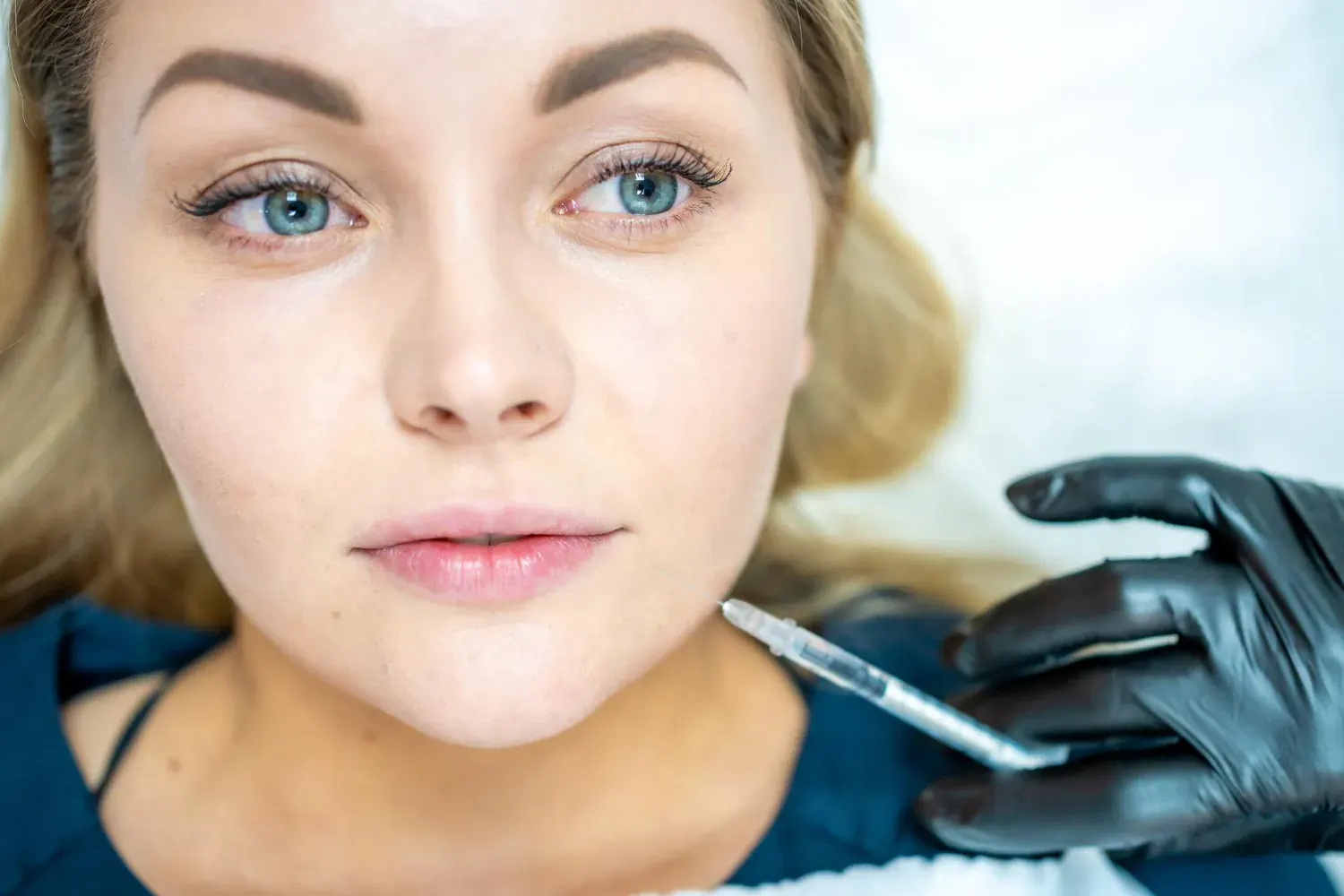
A non-surgical facelift — also known as a liquid facelift or 8-point facelift — is a comprehensive dermal filler treatment that restores facial volume, lifts sagging tissue, and redefines contours without surgery, general anaesthesia, or extended recovery. Unlike a surgical facelift that physically tightens skin and underlying muscle, this facelift non-surgical procedure uses strategically placed hyaluronic acid fillers at eight key anatomical points across the mid-face and lower face to recreate the structural support that naturally diminishes with age.

At PRP London Clinic, 33 Cavendish Square, London W1G 0PW, non-surgical facelift London treatments are led by Dr Bruno Amendola — a GMC-registered physician with over 25 years of medical experience whose signature 8-point facelift technique has become one of the clinic's most sought-after procedures. The treatment can be performed during a lunch break with no downtime — patients can resume normal activities immediately.

Whether you are searching for a liquid facelift London clinic, comparing non-surgical facelift cost options, or evaluating whether the 8-point facelift is the right alternative to surgery for your concerns, this page provides comprehensive clinical information to support your decision.

Led by Dr Bruno Amendola: Specialist in Facial Contouring

Non-surgical facelift london is performed exclusively by Dr Bruno Amendola (GMC: 4346629), whose advanced training in facial contouring and over 25 years of clinical experience make him uniquely qualified for this procedure. Never a nurse, technician, or non-medical practitioner.

Non-Surgical Facelift Before and After: Real Patient Results

Real patient transformations from PRP London Clinic demonstrating the results achievable with the 8-point facelift and liquid facelift technique. All treatments below were performed by Dr Bruno Amendola (GMC: 4346629) at our 33 Cavendish Square clinic. Results shown are from consenting patients and are representative of typical outcomes — individual results may vary.

8-Point Facelift

5ml Non-Surgical Facelift: 2ml Juvéderm Voluma on cheeks using needle technique for precise periosteal volumisation, plus 2ml Voluma on jawline and 1ml Volift on marionette lines using cannula technique. Result shown immediately after treatment — nasolabial lines resolved with a visibly fresher, lifted appearance across the mid and lower face. Performed by Dr Bruno Amendola (GMC: 4346629) at PRP London Clinic.

Liquid Facelift

Liquid Facelift with PDO Threads: 2ml Juvéderm Voluma on cheeks using needle technique, 2ml Voluma on jawline, and 1ml on nasolabial lines — combined with 8 PDO threads around the jawline for enhanced mechanical lift and collagen stimulation. A combination approach delivering both immediate volumisation and progressive tissue tightening. Performed by Dr Bruno Amendola (GMC: 4346629) at PRP London Clinic.

How Does a Non-Surgical Facelift Work? The 8-Point Technique Explained

The Science of Age-Related Volume Loss

Facial ageing is not simply about skin laxity. Research demonstrates that the face ages in three dimensions: bone resorption (particularly at the maxilla and mandible), fat pad descent and atrophy, and soft tissue laxity. The result is a predictable pattern of volume loss at the cheeks and mid-face, combined with tissue descent that creates jowls, nasolabial folds, and marionette lines.

A non-surgical facelift addresses these changes by restoring volume at the structural foundation — the deep fat compartments and periosteal level — rather than simply filling individual lines. When volume is replaced at the correct depth and location, overlying tissue is lifted and repositioned, recreating the facial scaffolding that existed in youth.

The 8-Point Facelift: Strategic Injection Sites

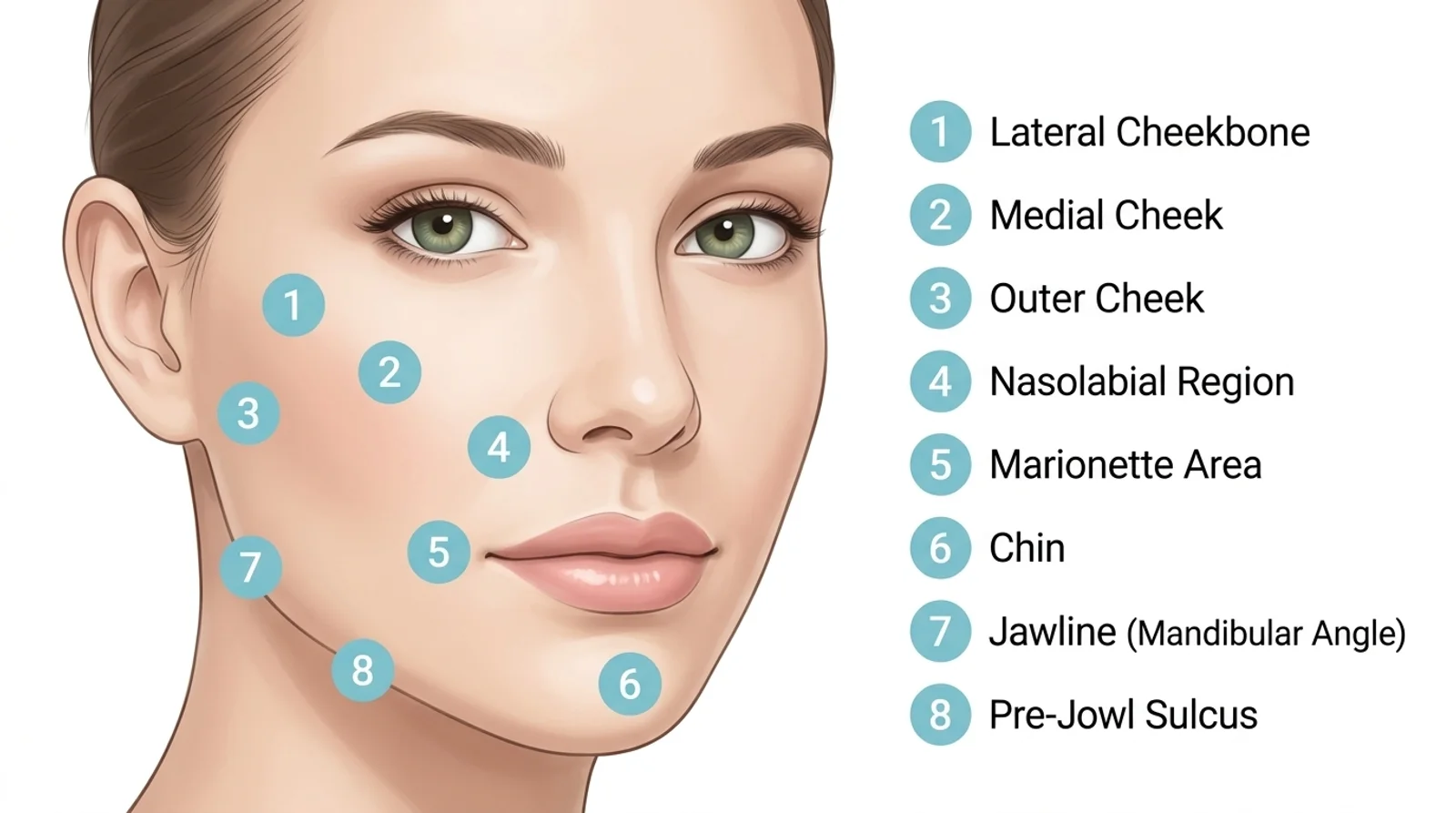
8-point facelift injection points diagram showing the 8 strategic dermal filler placement sites on the mid-face and lower face for non-surgical facelift treatment
The 8 strategic injection points of the non-surgical facelift, targeting the mid-face and lower face for comprehensive lift and rejuvenation.

The 8-point facelift technique targets eight key anatomical points across the mid-face and lower face, each chosen for its mechanical leverage in producing lift and rejuvenation. The 8 points are concentrated on the areas where volume restoration creates the greatest lifting effect:

  • Point 1 — Lateral Cheekbone: Restores malar projection and lifts the mid-face, reducing nasolabial fold depth. Deep periosteal placement for maximum structural support.
  • Point 2 — Medial Cheek: Addresses the submalar hollow, restoring youthful cheek convexity and fullness to the mid-face.
  • Point 3 — Outer Cheek: Volumises the lateral cheek to support the mid-face and create a smooth transition to the jawline.
  • Point 4 — Nasolabial Region: Softens the nose-to-mouth lines by supporting the tissue from beneath rather than simply filling the crease.
  • Point 5 — Marionette Area: Lifts the oral commissure (corner of the mouth) and reduces the downturned, sad appearance created by marionette lines.
  • Point 6 — Chin: Projects and lengthens the chin to improve profile harmony and lower face proportions.
  • Point 7 — Jawline (Mandibular Angle): Defines and sharpens the mandibular border at the angle of the jaw, counteracting the loss of jawline definition that accompanies ageing.
  • Point 8 — Pre-Jowl Sulcus: Fills the indentation in front of the jowl to restore a smooth jawline transition and reduce the appearance of jowling.

Liquid Facelift: The Comprehensive Approach

The term liquid facelift is often used interchangeably with non-surgical facelift, though it more specifically refers to the use of injectable dermal fillers (typically hyaluronic acid) to achieve facelift-like results. At PRP London Clinic, our liquid facelift London protocol focuses on these core 8 points across the mid-face and lower face — the areas where volume restoration creates the most significant lifting and rejuvenating effect. The sophistication of the technique involves receiving multiple injections on each side of the face, offering a more complete solution compared to individual dermal filler treatments.

Why Volume Restoration Creates Lift

A common misconception about the non-surgical facelift is that it simply "fills wrinkles." In reality, the primary mechanism is architectural. By restoring deep structural volume at the cheekbone, the overlying malar fat pad is lifted back to its youthful position. This in turn reduces the nasolabial fold depth, lifts the jowl tissue, and improves jawline definition — all from a single, strategically placed bolus of filler. This cascading effect is why the 8-point facelift achieves comprehensive rejuvenation with relatively modest volumes of product.

Your Non-Surgical Facelift: Products, Technique, and What to Expect

The liquid facelift at PRP London Clinic uses exclusively premium, CE-marked hyaluronic acid fillers from established pharmaceutical manufacturers. The specific products selected depend on the anatomical zone and the degree of volumisation required:

  • Juvederm Voluma (Allergan): A firm, highly cohesive HA gel designed for deep volumisation of the cheeks, chin, and jawline. Provides structural lift and projection.
  • Juvederm Volift (Allergan): A medium viscosity gel ideal for the nasolabial folds, marionette lines, and areas where a softer, more flexible product is required.

All fillers used contain integrated lidocaine for patient comfort during injection. The 8-point facelift uses high-quality dermal fillers to restore volume to the mid-face and lower face, combatting the soft tissue loss associated with the ageing process. It offers a more complete solution compared to individual dermal filler treatments.

The procedure itself takes 45 to 60 minutes and can be performed during a lunch break. There is no downtime — patients can resume normal activities immediately.

Step-by-Step: The Non-Surgical Facelift Process

Understanding the full non-surgical facelift procedure helps patients feel prepared and confident. Here is what to expect at each stage of your treatment at PRP London Clinic:

1

Comprehensive Facial Assessment and Consultation

Dr Bruno conducts a detailed three-dimensional facial analysis, examining volume loss patterns, skin quality, and bone structure from multiple angles. Your medical history is reviewed, and a personalised treatment plan is created mapping which of the 8 points will be addressed based on your specific anatomy.

2

Treatment Planning and Product Selection

Based on your anatomy and goals, Dr Bruno selects the optimal filler products for each zone. He explains the recommended volume, expected outcomes, and what to expect during and after the procedure.

3

Pre-Treatment Preparation

The face is thoroughly cleansed and mapped with treatment markings. Topical anaesthetic cream is applied to the treatment areas for comfort during the procedure.

4

Mid-Face Volumisation (Cheek Points)

Treatment begins with deep periosteal placement at the cheekbones to restore malar projection. Multiple cheek points are addressed to create mid-face lift and restore youthful convexity.

5

Lower Face Restoration (Nasolabial, Marionette, Jawline, Chin)

The nasolabial folds, marionette lines, pre-jowl sulcus, jawline, and chin are treated in sequence. Dr Bruno uses his refined technique to maximise lift and minimise bruising across the lower face.

6

Symmetry Assessment and Refinement

After all 8 points are treated, Dr Bruno assesses the face from multiple angles — front, oblique, and profile — comparing left and right sides. Fine adjustments are made to ensure balanced, symmetrical results.

7

Aftercare Briefing and Follow-Up Scheduling

You receive detailed aftercare instructions. Results are visible immediately, with the filler settling over 2-3 days to give a natural result. A review appointment is available if any minor adjustments are needed.

Non-Surgical Facelift Correction: Addressing Previous Treatment

We regularly see patients at PRP London Clinic who have had a liquid facelift or 8-point facelift performed elsewhere and are unhappy with the results. Common issues include overfilling (particularly in the cheeks creating a "pillow face" appearance), asymmetric placement, filler migration, unnatural proportions, or an overall result that looks "done" rather than naturally rejuvenated.

Because hyaluronic acid fillers are reversible with hyaluronidase (an enzyme that dissolves HA), correction is possible. Dr Bruno can assess the existing filler placement, dissolve problem areas where necessary, and re-treat with his refined technique to achieve the natural, balanced result you originally sought. This correction process may be staged across multiple appointments to allow for tissue settling between dissolution and re-treatment.

If you are researching non-surgical facelift reviews or liquid facelift reviews after an unsatisfactory experience elsewhere, a consultation with Dr Bruno provides an honest assessment of what correction can achieve for your specific situation.

Non-Surgical Facelift vs Surgical Facelift vs Other Treatments

Understanding how the non-surgical facelift compares to alternatives helps patients make informed decisions. The following comparison covers the most commonly considered options:

FeatureNon-Surgical Facelift (Liquid / 8-Point)Surgical Facelift (Rhytidectomy)Thread LiftSculptra Bio-Stimulation
Procedure typeInjectable dermal fillers at strategic facial pointsSurgical excision, SMAS tightening, skin redrapingBarbed PDO or PLLA threads inserted subcutaneouslyPoly-L-Lactic Acid injected to stimulate collagen
AnaesthesiaTopical + filler contains lidocaineGeneral anaesthesia or IV sedationLocal anaesthesiaTopical + product mixed with lidocaine
Procedure time60-90 minutes3-6 hours45-60 minutes45-60 minutes per session
DowntimeNone — resume activities immediately2-4 weeks; full recovery 3-6 months5-7 days swelling1-3 days per session
Results visibleImmediate (final result at 2-4 weeks)Visible once swelling resolves (3-6 months)Immediate but subtleGradual over 3-6 months
Longevity12-18 months5-10 years6-12 monthsUp to 25 months
ReversibilityYes — hyaluronidase dissolves HA fillerNo — surgical results are permanentPartially — threads dissolve over timeNo — collagen stimulation is gradual and non-reversible
Best forVolume loss, jowls, facial contour, comprehensive rejuvenationSignificant skin laxity, advanced ageingMild laxity, preventative liftingCollagen depletion, skin quality, gradual volumisation
Typical cost£1,200£8,000-£15,000+£1,500-£3,000£550 per session (2-3 sessions)

For patients asking do non-surgical facelifts work, the answer depends entirely on the nature of the concern. Volume loss, contour deficiency, and moderate tissue descent respond exceptionally well to the 8-point facelift. Patients with significant skin excess or advanced laxity may ultimately be better served by surgery — and Dr Bruno will advise honestly during your consultation if this is the case.

Non-Surgical Facelift Cost London: Treatment Pricing

The non-surgical facelift cost is straightforward at PRP London Clinic. The 8-point facelift is a comprehensive, fixed-price treatment covering all 8 injection points across the mid-face and lower face.

8-Point Lift: £1,200

This price includes the consultation, all premium dermal filler products, topical anaesthesia, and the complete 8-point treatment. There are no hidden charges. The 8-point facelift is a lower cost and safer alternative to a surgical facelift, delivering immediate visible results with no downtime.

For patients comparing liquid facelift cost London or non-surgical facelift cost options, we encourage evaluating the practitioner's qualifications, the quality of products used, and the comprehensiveness of aftercare rather than price alone.

Non-Surgical Facelift Safety, Side Effects, and Risk Management

The safety profile of dermal filler treatments is well-established when performed by trained, experienced medical practitioners using premium CE-marked products. However, patients considering a non-surgical facelift should understand both common and rare risks:

Common Side Effects (Expected and Temporary)

  • Bruising: Occurs in approximately 30-50% of patients. Usually mild, resolving within 5-10 days. More likely in patients taking aspirin, ibuprofen, or fish oil supplements.
  • Swelling: Localised oedema is expected, particularly in the lips and periorbital area. Most swelling resolves within 3-7 days.
  • Tenderness: Mild tenderness at injection sites for 2-5 days.
  • Redness: Temporary erythema at entry points, typically resolving within 24-48 hours.

Uncommon Side Effects

  • Asymmetry: Minor asymmetry may be apparent before swelling fully resolves. This is assessed and addressed at the 2-4 week follow-up.
  • Lumpiness: Palpable irregularities can occasionally occur, particularly with firmer volumising fillers. Gentle massage usually resolves this within the first 2 weeks.
  • Delayed swelling or nodules: Rare inflammatory reactions can occur weeks to months after treatment.

Rare but Serious Risks

  • Vascular occlusion: Extremely rare but the most serious potential complication of any facial filler treatment. Occurs if filler compresses or is inadvertently injected into a blood vessel. Dr Bruno's use of cannula technique for high-risk zones, aspiration before injection, and slow injection speed significantly mitigates this risk. Emergency dissolution protocols and hyaluronidase are always available in the treatment room.

All risks are discussed thoroughly during your consultation. Detailed written consent is obtained before any treatment proceeds.

Non-Surgical Facelift Aftercare and Recovery

Immediately After Treatment

There is no downtime following the 8-point facelift. Results are visible immediately, and patients can resume normal activities straight away. About two to three days after the procedure, the filler will settle to give a natural result.

  • Avoid touching or pressing the treated areas for the first few hours
  • Avoid strenuous exercise for 24 hours
  • Avoid alcohol consumption for 24 hours
  • Take paracetamol if needed for any mild discomfort — avoid aspirin and ibuprofen as these increase bruising

First 2 Weeks

  • Avoid dental procedures for 2 weeks
  • Avoid facials, chemical peels, microneedling, and laser treatments for 2 weeks
  • Avoid extreme heat or cold exposure
  • Do not apply heavy pressure to the treated areas
  • Makeup can be applied after 12 hours using clean brushes
  • Mild bruising, if present, can be concealed with mineral-based colour corrector

Long-Term Maintenance

Results from the 8-point facelift last up to 18 months. For patients maintaining their liquid facelift results long-term, a maintenance session can be booked when results begin to fade.

Am I Suitable for a Non-Surgical Facelift?

The non-surgical facelift achieves excellent results for a wide range of patients, but it is not suitable for everyone. The following comparison helps you assess whether you are likely to be a good candidate:

Ideal CandidateMay Need an Alternative Approach
Age 30-65 with moderate volume lossVery advanced volume loss with significant skin excess
Early to moderate jowl formationSevere jowling with significant skin laxity requiring surgical excision
Loss of cheekbone definition and mid-face flatnessPrimary concern is loose neck skin ("turkey neck")
Deepening nasolabial folds and marionette linesHistory of severe allergic reactions to HA fillers
Desire for natural-looking rejuvenation without surgeryUnrealistic expectations for surgical-level results from injectables
Cannot take extended time off work for surgical recoveryPrevious permanent filler in the treatment area
Seeking comprehensive improvement rather than single-area treatmentActive skin conditions or infections at injection sites
Good general health with no contraindicationsPregnant, breastfeeding, or planning pregnancy imminently

During your consultation, Dr Bruno provides an honest assessment of what the 8-point facelift can realistically achieve for your individual anatomy. If he believes a different approach would serve you better — including referral to a surgical colleague — he will advise accordingly.

Contraindications: Who Should Not Have a Non-Surgical Facelift?

The following conditions are absolute or relative contraindications for non-surgical facelift treatment with dermal fillers:

  • Active skin infection: Any active bacterial, viral, or fungal infection at or near the intended injection sites must be fully resolved before treatment.
  • Allergy to hyaluronic acid or lidocaine: Patients with known hypersensitivity to HA or amide-type local anaesthetics cannot undergo this treatment.
  • Pregnancy and breastfeeding: Injectable treatments are not administered to pregnant or breastfeeding women as a precautionary measure.
  • Bleeding disorders: Patients with haemophilia or other coagulopathies, or those taking therapeutic-dose anticoagulants (warfarin, DOACs), require careful assessment and may not be suitable.
  • Autoimmune conditions: Certain autoimmune disorders — particularly those affecting connective tissue (e.g., systemic lupus erythematosus, scleroderma) — may increase the risk of inflammatory reactions.
  • Previous permanent fillers: Silicone or other non-resorbable fillers in the treatment area significantly increase the risk of complications and granuloma formation.
  • Active herpes simplex: An active cold sore outbreak requires treatment to be postponed. Prophylactic antiviral medication may be recommended for patients with a history of recurrent herpes simplex.
  • Recent dental work: Treatment should be delayed for 2 weeks following dental procedures to reduce infection risk.

All contraindications are screened during your consultation. If you are uncertain about any medical condition or medication, please discuss this with Dr Bruno before booking.

Medical Disclaimer

This information is provided for educational purposes and does not constitute medical advice. Individual results vary depending on anatomy, skin quality, age, lifestyle factors, and the degree of volume loss. All medical treatments carry inherent risks, and dermal filler procedures are no exception. The information on this page has been clinically reviewed by Dr Bruno Amendola (GMC: 4346629). Last clinical review: March 2026.

A comprehensive in-person consultation is required before any treatment to assess suitability, discuss realistic expectations, and obtain informed consent. No treatment will be performed without this assessment.

Non-Surgical Facelift Near Me: PRP London Clinic, Cavendish Square

PRP London Clinic is located at 33 Cavendish Square, London W1G 0PW — in the heart of Marylebone, directly adjacent to Harley Street and within a 5-minute walk of Oxford Circus and Bond Street Underground stations. Our Central London location makes us accessible from across London and the Home Counties for patients seeking an expert non-surgical facelift near me.

Whether you are searching for a liquid facelift London specialist, the best non-surgical facelift London clinics, or an 8-point facelift performed by an experienced, GMC-registered physician, we invite you to experience the difference that genuine medical expertise makes. Our consultation process is thorough, unhurried, and focused entirely on understanding your goals and creating a treatment plan that delivers natural, harmonious results.

We welcome patients from across London — including Mayfair, Kensington, Chelsea, Knightsbridge, Notting Hill, St John's Wood, Canary Wharf, Hampstead, Islington, and the City — as well as patients travelling from outside London specifically for specialist treatment.

Book Your Non-Surgical Facelift Consultation

Ready to explore whether a non-surgical facelift, liquid facelift, or 8-point facelift is right for you? Book a consultation with Dr Bruno Amendola or one of our specialist physicians at PRP London Clinic. During your appointment, you will receive a comprehensive facial assessment, an honest discussion of what treatment can achieve for your specific anatomy, a personalised treatment plan, and transparent pricing with no hidden costs.

To book, visit our online booking portal or call the clinic directly. Consultations are available at our 33 Cavendish Square, London W1G 0PW location.

Watch Video

Myths vs Facts

M

A non-surgical facelift will make me look overfilled or 'done'.

F

When performed by an experienced physician using appropriate volumes and correct injection depths, the 8-point facelift produces natural-looking rejuvenation — not the overfilled appearance associated with poorly performed treatments. The goal is to restore your own facial structure, not create artificial volume.

M

The liquid facelift is just the same as getting multiple areas of filler done separately.

F

The non-surgical facelift is a planned, holistic treatment where each injection point is chosen for how it interacts with and enhances the others. Treating areas in isolation often produces disconnected results, whereas the 8-point approach creates harmonious, comprehensive improvement.

M

Non-surgical facelifts are only for older patients.

F

Patients from their early 30s onwards can benefit from the liquid facelift. Early intervention with smaller volumes can prevent the visible signs of volume loss from progressing, and many younger patients seek subtle structural enhancement rather than correction of established ageing.

M

The results are permanent and will look unnatural as you age.

F

Hyaluronic acid fillers are naturally metabolised by the body over 12-18 months. Results fade gradually, meaning your appearance evolves naturally over time. Maintenance sessions allow you to adjust the treatment as your face continues to change.

M

A non-surgical facelift is extremely painful.

F

All premium dermal fillers used at PRP London Clinic contain integrated lidocaine anaesthetic. Combined with topical numbing cream applied before treatment, most patients describe the sensation as mild pressure with occasional brief discomfort — far less than the surgical alternative.

M

You need weeks of recovery after a liquid facelift.

F

Most patients experience 1-3 days of mild swelling and potential bruising. The majority return to work and social activities the next day, with any residual bruising easily concealed with mineral makeup. Compare this to the 2-4 week recovery from surgical facelift.

Frequently Asked Questions

A non-surgical facelift is a comprehensive injectable treatment using dermal fillers strategically placed at key anatomical points across the face to restore volume, lift sagging tissue, and redefine facial contours — without surgery, general anaesthesia, or extended downtime. It is also known as a liquid facelift or 8-point facelift depending on the specific technique used.
The non-surgical facelift cost at PRP London Clinic ranges from £900 for a targeted 3-4 ml treatment to £2,100+ for a comprehensive 7-8 ml full restoration. The price depends on the volume of premium filler required and the number of facial zones treated. All pricing includes the consultation, products, anaesthesia, and follow-up review.
Results from a liquid facelift using hyaluronic acid fillers typically last 12 to 18 months, depending on the specific products used, the treatment areas, your metabolism, and lifestyle factors. Maintenance sessions with smaller volumes (typically 2-3 ml) can extend and refresh results indefinitely.
The 8-point facelift is a specific dermal filler technique that targets eight strategically chosen anatomical points across the mid-face and lower face: lateral cheekbone, medial cheek, outer cheek, nasolabial region, marionette area, chin, jawline (mandibular angle), and pre-jowl sulcus. Each point is selected for its mechanical leverage in producing lift and volumisation, creating comprehensive facial rejuvenation from a structured, systematic approach.
Yes — when performed by a skilled physician with proper anatomical understanding and quality products, the non-surgical facelift is clinically effective for restoring facial volume, lifting mild to moderate jowling, and rejuvenating facial contours. Studies demonstrate high patient satisfaction rates and measurable improvement in facial ageing parameters. However, it is not a replacement for surgical facelift in cases of significant skin excess.
A liquid facelift uses injectable dermal fillers to restore volume and create lift through volumisation. A surgical facelift physically tightens the underlying SMAS layer and removes excess skin. The liquid approach offers immediate results, minimal downtime (1-3 days vs 2-4 weeks), full reversibility, and lower cost — but is better suited to volume loss and moderate laxity rather than significant skin excess.
For patients with age-related volume loss, mid-face descent, early jowling, and loss of facial contour, the liquid facelift offers excellent value — delivering visible, comprehensive rejuvenation in a single session with minimal downtime. Patient satisfaction studies report high satisfaction rates with natural-looking outcomes. The decision depends on your specific concerns, expectations, and anatomy, which Dr Bruno assesses during consultation.
Absolutely. The non-surgical facelift for men is increasingly popular. Male facial ageing follows the same patterns of volume loss and tissue descent, though treatment is adapted for masculine facial proportions — emphasising angular jawline definition, strong chin projection, and subtle cheek enhancement rather than the softer contours typically desired in female patients. Liquid facelift for men results should look refreshed, not feminised.
The 8-point facelift is a comprehensive treatment at a fixed price of £1,200. The total volume of filler used is tailored to your individual anatomy and degree of volume loss. Dr Bruno assesses the appropriate volume during your consultation and adjusts placement across the 8 points to achieve the optimal result for your specific facial structure.
The best non-surgical facelift for jowls combines deep volumisation at the cheekbones (which lifts the overlying tissue and reduces jowl descent) with targeted treatment at the pre-jowl sulcus and jawline. The 8-point technique addresses jowling from both above (mid-face lift) and below (jawline redefinition), producing significant improvement in jawline definition.
Yes. The non-surgical facelift combines well with anti-wrinkle injections (Botox) for dynamic lines, Sculptra for long-term collagen stimulation, polynucleotide injections for skin quality improvement, and energy-based devices such as RF microneedling for skin tightening. Dr Bruno can recommend a phased treatment programme combining modalities for optimal results.
Most patients experience 1-3 days of mild swelling and potential bruising. The majority return to work and normal activities the following day. Strenuous exercise should be avoided for 48 hours. Any bruising typically resolves within 5-10 days and can be concealed with mineral makeup from 12 hours post-treatment.
When performed by a trained, experienced medical practitioner using CE-marked hyaluronic acid fillers, the non-surgical facelift has a well-established safety profile. The most common side effects are temporary bruising, swelling, and tenderness. Serious complications such as vascular occlusion are extremely rare, and the use of cannula technique, aspiration, and slow injection speed — as practised at PRP London Clinic — further reduces this risk.
Yes — this is one of the key advantages of the liquid facelift over surgical alternatives. Hyaluronic acid fillers can be dissolved at any time using hyaluronidase, an enzyme that breaks down HA rapidly and safely. This means that if you are unhappy with any aspect of the result, it can be partially or fully reversed — an option not available with surgery or bio-stimulators like Sculptra.

Clinical Evidence & Scientific References

de Maio M. (2018): Myomodulation with Injectable Fillers: An Innovative Approach to Addressing Facial Muscle Movement

M. de Maio · Aesthetic Plastic Surgery, 2018PMID: 29549406

Supports: Introduces the concept of myomodulation — using strategically placed HA fillers to modulate facial muscle movement by addressing structural deficiencies that affect muscle stability and interaction. Provides a biomechanical framework considering synergistic/antagonistic muscle group balance. Demonstrates how filler placement can rebalance abnormal muscle activity and restore youthful facial appearance, underpinning the 8-point non-surgical facelift technique.

Limitations: Level V evidence (expert opinion with case illustrations). No controlled clinical data or quantitative outcome measures. Conceptual framework requiring further clinical validation.

View on PubMed

Cotofana S. et al. (2016): The Anatomy of the Aging Face: A Review

S. Cotofana, A.A.M. Fratila, T.L. Schenck, W. Redka-Swoboda, I. Zilinsky, T. Pavicic · Facial Plastic Surgery, 2016PMID: 27248022

Supports: Comprehensive review of age-related morphological changes across all facial layers: bone, ligaments, muscles, fat, and skin. Establishes that ageing occurs at different onset and speed across structures, individuals, and ethnic groups. Supports rationale for deep structural volumisation at multiple facial points rather than superficial wrinkle filling, underpinning multi-point lift approaches.

Limitations: Narrative review, not a clinical study. No quantitative data on treatment outcomes. Focuses on Caucasian anatomy predominantly; ethnic variation acknowledged but not fully characterised.

View on PubMed

Raspaldo H. (2008): Volumizing Effect of a New Hyaluronic Acid Sub-Dermal Facial Filler: A Retrospective Analysis Based on 102 Cases

H. Raspaldo · Journal of Cosmetic and Laser Therapy, 2008PMID: 18788032

Supports: Retrospective analysis of 102 patients (93 female, 9 male; mean age 51.27) receiving Voluma HA sub-dermal filler in the midface. Investigator Global Aesthetic Improvement assessment showed most patients 'much' or 'very much' improved at 1 month and 6-18 months. Volume loss assessment confirmed most patients maintained stage 1-2 (normal/slight ptosis) at 6-18 months. Patient efficacy rated 'very good' or 'good' in most cases.

Limitations: Retrospective single-centre study. No control group. Combination treatment with botulinum toxin acknowledged but not isolated. Further methodologically rigorous studies needed to establish Voluma performance alone and in combination.

View on PubMed

Sundaram H. et al. (2016): Global Aesthetics Consensus: Hyaluronic Acid Fillers and Botulinum Toxin Type A — Recommendations for Combined Treatment and Optimizing Outcomes in Diverse Patient Populations

H. Sundaram, S. Liew, M. Signorini, A.V. Braz, S. Fagien, A. Swift, K.L. De Boulle, H. Raspaldo, A.R. Trindade de Almeida, G. Monheit · Plastic and Reconstructive Surgery, 2016PMID: 27119917

Supports: Multinational expert consensus (Global Aesthetics Consensus Group) establishing combined HA filler + botulinum toxin as standard of care. Recommends patient-tailored approach considering physiologic/chronologic age, ethnically associated facial morphotypes, and sex/culture-based aesthetic ideals. Lower toxin dosing to modulate (not paralyse) muscles indicated where volume deficits influence muscular activity. Focus on aesthetic units rather than isolated rhytides optimises results. Emerging objective is facial harmonisation rather than rejuvenation.

Limitations: Level V evidence (consensus/expert opinion). Recommendations reflect combined use of specific Hylacross/Vycross HA products. Longitudinal outcome data from combined treatments still limited.

View on PubMed

de Maio M. (2021): MD Codes: A Methodological Approach to Facial Aesthetic Treatment with Injectable Hyaluronic Acid Fillers

M. de Maio · Aesthetic Plastic Surgery, 2021PMID: 32445044

Supports: Introduces MD Codes system — specific anatomical subunits for HA filler injection, each specifying target depth, delivery tool (needle/cannula), technique (aliquot, bolus, fanning), and minimum product volume for visible results. Algorithms focus on reducing unfavourable facial attributes (saggy, tired, sad, angry) and enhancing positive ones (attractive, younger, contoured, feminine/masculine). Provides a universal symbolic language reducing variability in injection technique. Three case studies illustrate application for sagginess, tiredness, and sadness.

Limitations: Level IV evidence. Case-study-based illustration (3 cases only). No controlled comparison with non-systematic approaches. Developed by a single author; independent validation studies needed.

View on PubMed

*PRP London Clinic provides these references for educational purposes. Our Clinical Board regularly reviews emerging peer-reviewed literature to ensure our protocols align with the latest advancements in regenerative medicine.
Ready to Get Started?

Book your consultation today and take the first step towards your transformation.

Verified Clinical Reputation

Verified

"Cannot recommend this clinic enough, excellent location and an absolutely brilliant doctor. Everything was explained so clearly to me and the consultation was very thorough. The advice and aftercare has also been brilliant. I will be back for my future appointments, Thankyou!"

Ruby K

19 Jan 2026

Verified

"I had Sylfirm X treatment and I’m really happy with the results. After just one session, I noticed a clear improvement in my face. The clinic is clean, professional, and very welcoming, and Dr. Nafei is kind and skilled."

Norin Hanifi

19 Jan 2026

Verified

"I was quite nervous about getting something done but the team made me feel completely at ease. From the moment I walked in, the atmosphere was so calming and professional, they explained every step of the process and answered all my questions. I’m already seeing great results and have already booked my next appointment!"

Dominique Heslop

13 Jan 2026

Verified

"I recently had a PRF treatment done and the results are incredible. The entire team from start to finish was second to none. As an anxious client they took their time to explain thoroughly the procedure and aftercare."

lloyda221

06 Jan 2026

Verified

"I had an excellent PRF treatment and really happy with the results. I found the doctor highly professional and knowledgable. I was explained the PRF treatment and process throughly. The expertise was amazing and really happy with the results. I would highly recommend this clinic."

Mane Authority

06 Jan 2026

Verified

"It was easy to book. All necessary information shared before and after the treatment. Very affordable."

Victor Contreras Guerra

4 months ago

Verified

"I haven't come here yet but wow the clinic is so lucky to have Mo as part of their team. His advice and genuine care is unmatched. I hope PRP London Clinic is looking after him well. If I come it'll be because of his excellent advice"

A A

5 months ago

Verified

"I visited the clinic today. I would like to thank you for your professionalism and best care you have provided me. I was but nervous but it was great. See you soon"

harris jan

3 months ago

Independent Patient Feedback

Read all verified stories →

Medical Suitability Note

As a GMC-regulated practice, a mandatory consultation is required for all new patients to assess suitability and clinical need. This treatment may not be appropriate for everyone. All procedures are performed by GMC-registered doctors whose credentials can be verified on the official GMC register.

Clinical Technology & Equipment

Regenerative Substance

Juvéderm® Hyaluronic Acid Dermal Fillers

by Juvéderm

Manufacturer Info →

Premium cross-linked hyaluronic acid dermal filler range with VYCROSS® technology for smooth, long-lasting facial volumisation and contouring.

Certifications

CE Marked Medical Device VYCROSS® Technology

Technical Specifications

Active Ingredient
Cross-linked Hyaluronic Acid
Technology
VYCROSS® (smooth gel consistency)

Clinical Applications

Lip Augmentation Cheek Enhancement Chin Augmentation Non-Surgical Rhinoplasty 8-Point Non-Surgical Facelift Nasolabial and Marionette Lines

Official Resources

Regenerative Substance

Restylane® Hyaluronic Acid Dermal Fillers

by Restylane

Manufacturer Info →

Stabilised hyaluronic acid dermal filler range using NASHA® and OBT™ technology for natural-looking facial volumisation, contouring, and skin rejuvenation.

Certifications

CE Marked Medical Device NASHA® / OBT™ Technology

Technical Specifications

Active Ingredient
Stabilised Hyaluronic Acid
Technology
NASHA® (Non-Animal Stabilised Hyaluronic Acid) / OBT™ (Optimal Balance Technology)

Clinical Applications

Lip Augmentation Cheek Enhancement Chin Augmentation Non-Surgical Rhinoplasty 8-Point Non-Surgical Facelift Nasolabial and Marionette Lines

Official Resources

Regenerative Substance

Revolax® Hyaluronic Acid Dermal Fillers

by Revolax

Manufacturer Info →

High-purity, cross-linked hyaluronic acid dermal filler range manufactured using advanced Bio-Cell technology for smooth injection and natural results.

Certifications

CE Marked Medical Device KFDA Approved

Technical Specifications

Active Ingredient
Cross-linked Hyaluronic Acid
Purity
High-purity (Bio-Cell Technology)

Clinical Applications

Lip Augmentation Cheek Enhancement Chin Augmentation Non-Surgical Rhinoplasty 8-Point Non-Surgical Facelift Nasolabial and Marionette Lines

Official Resources

This technical specification is provided for informational purposes only. All medical devices and substances are used exclusively by GMC-registered practitioners at PRP London Clinic. Individual results may vary.