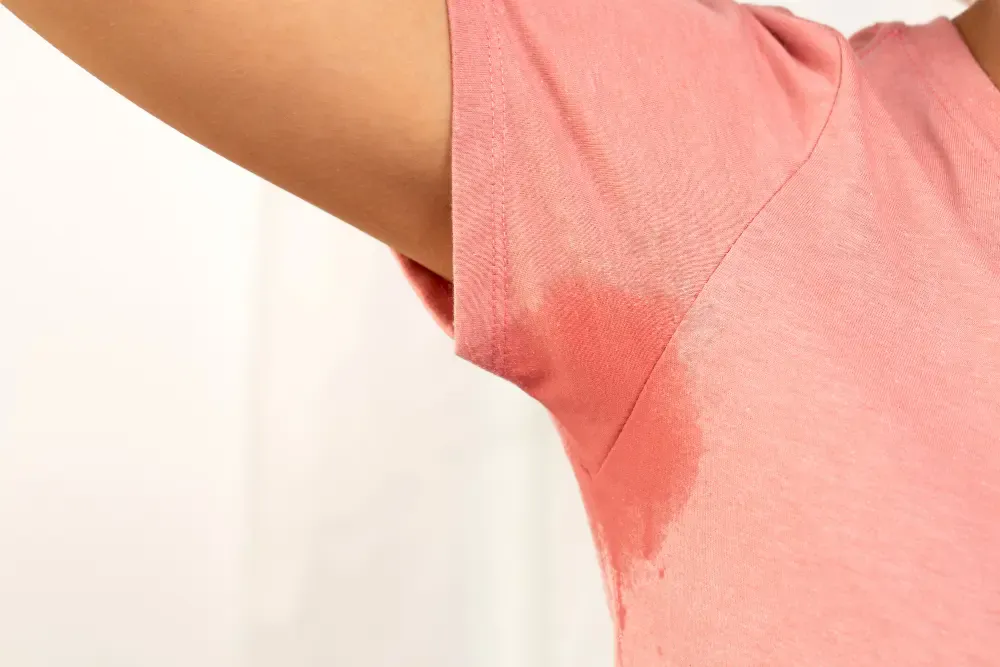
Hyperhidrosis Treatment in London
GMC-registered doctors | Evidence-based treatment for excessive sweating | Medical consultation at 33 Cavendish Square
Duration
30-45m30-45 mins
Sessions
1 (review at 2-4 weeks)1 (review at 2-4 weeks)
Price From
£500£500
Downtime
NoneNone
Key Benefits
- Clinically proven reduction in excessive sweating
- No downtime — resume normal activities immediately
- Results within 2–7 days, lasting 4–9 months
- Performed exclusively by GMC-registered doctors
- Targets only the treated area without affecting overall thermoregulation
- Fully reversible — effects wear off naturally if discontinued
- Evidence-based treatment supported by meta-analysis of 904 patients
- Procedure takes just 30–45 minutes
Common Target Areas
Hyperhidrosis Treatment at PRP London Clinic
Excessive sweating treatment London at PRP London Clinic addresses hyperhidrosis as a genuine medical condition, not a cosmetic inconvenience. Primary hyperhidrosis affects an estimated 1–3% of the population, causing uncontrollable sweating that significantly impacts daily life, professional confidence, and emotional wellbeing. As a specialist treatment within our anti-wrinkle treatment programme, botulinum toxin injections provide a clinically proven solution for patients who have not responded adequately to topical antiperspirants or other conservative measures.
This page is dedicated to hyperhidrosis treatment London — a medically indicated procedure that temporarily blocks the chemical signals responsible for activating sweat glands. Whether your excessive sweating affects your underarms, palms, or other areas, our GMC-registered doctors provide a thorough consultation and personalised treatment plan at 33 Cavendish Square, London W1G. If you are searching for effective underarm botox London delivered by experienced medical professionals, PRP London Clinic offers evidence-based care in a discreet clinical setting.
This procedure is part of our comprehensive Guide to Excessive Sweating (Hyperhidrosis).
Your Doctors for Hyperhidrosis Treatment in London
Every hyperhidrosis treatment London consultation and procedure at PRP London Clinic is carried out by a GMC-registered doctor with specialist training in injectable techniques. Our team includes Dr Bruno Amendola (GMC: 4346629), who holds an international postgraduate qualification in aesthetic medicine and Save Face accreditation with extensive experience in both cosmetic and medical applications of botulinum toxin; Dr Mohamed Nafei (GMC: 7520509), whose postgraduate training in aesthetic medicine and endocrinology provides valuable insight into the hormonal factors that can contribute to excessive sweating; Dr Reem Nouri (GMC: 6149512), who combines general practice expertise with advanced aesthetic training for precise, comfortable treatment delivery; and Dr Mohammad Akbar (GMC: 5206673), our Founder and Medical Director and Fellow of the Royal College of Surgeons of Edinburgh, whose surgical background ensures the highest clinical standards across every hyperhidrosis London treatment we provide.
Understanding Hyperhidrosis and Excessive Sweating
What Is Primary Hyperhidrosis?
Hyperhidrosis is a medical condition characterised by sweating that exceeds the body's normal thermoregulatory requirements. Primary hyperhidrosis — the most common form — occurs without an identifiable underlying cause and typically begins in adolescence or early adulthood. It is driven by overactivity of the eccrine sweat glands, which are concentrated in areas such as the underarms (axillae), palms, soles, and forehead. Unlike secondary hyperhidrosis, which may result from medications, hormonal conditions, or systemic illness, primary hyperhidrosis is localised, symmetrical, and present for at least six months.
Eccrine Gland Overactivity
The eccrine glands responsible for excessive sweating are innervated by the sympathetic nervous system through the neurotransmitter acetylcholine. In patients with hyperhidrosis, these glands respond excessively to normal stimuli — including stress, heat, and physical activity — producing sweat volumes far beyond what is needed for temperature regulation. Botulinum toxin works by temporarily blocking the release of acetylcholine at the nerve-gland junction, effectively reducing sweat output in the treated area for several months.
Impact on Quality of Life
Hyperhidrosis London patients frequently describe significant social, professional, and emotional consequences. Visible sweat patches, damp handshakes, and the need to change clothing multiple times daily can lead to social withdrawal, reduced confidence, and avoidance of professional or personal interactions. Research consistently shows that hyperhidrosis has a measurable impact on quality of life comparable to conditions such as psoriasis and chronic dermatitis — yet many patients wait years before seeking treatment, unaware that effective medical options exist.
Why Botulinum Toxin Works for Sweating
A meta-analysis of 12 randomised controlled trials involving 904 patients demonstrated that botulinum toxin injection significantly reduces sweat production compared with placebo in primary axillary hyperhidrosis, with fewer side effects compared to alternative treatments. The mechanism is distinct from its cosmetic use in wrinkle treatment: rather than relaxing muscles, the toxin blocks acetylcholine release at eccrine gland nerve endings, suppressing the signal that triggers sweat production. This targeted action means treatment reduces sweating only in the injected area without affecting the body's overall ability to regulate temperature.
What Happens During Hyperhidrosis Treatment
Your underarm botox London appointment begins with a medical consultation. The treating doctor takes a full medical history, assesses the severity and distribution of your sweating, and confirms that primary hyperhidrosis is the likely diagnosis. In some cases, a starch-iodine test may be used to map the precise area of maximal sweat production, ensuring accurate injection placement.
Treatment involves a series of small, superficial injections spaced approximately 1–2 cm apart across the affected area. For axillary hyperhidrosis treatment, this typically involves 15–20 injection points per underarm using ultra-fine needles. The procedure targets the dermis — the skin layer where eccrine glands reside — rather than the deeper muscle tissue targeted in cosmetic treatments. Topical anaesthetic or ice may be applied beforehand to maximise comfort.
The entire armpit botox London procedure takes approximately 30–45 minutes, including consultation and treatment. There is no downtime, and you can return to normal activities immediately. Most patients notice a significant reduction in sweating within 2–7 days, with full effect achieved by two weeks. A review appointment at 2–4 weeks confirms the response and determines whether any touch-up injections are required.
Your Hyperhidrosis Treatment Journey
Book Your Consultation
Schedule an appointment online or by phone at PRP London Clinic, 33 Cavendish Square, London W1G 0PW. Allow approximately 30–45 minutes for your initial consultation and treatment if proceeding on the same day.
Medical Assessment
Your GMC-registered doctor reviews your medical history, assesses the severity and pattern of your excessive sweating, rules out secondary causes, and confirms your suitability for treatment.
Sweat Mapping
If required, a starch-iodine test is performed to identify the precise areas of maximal sweat gland activity. This ensures accurate, targeted injection placement for optimal results.
Personalised Treatment Plan
Based on the assessment, your doctor explains the treatment approach, expected outcomes, potential risks, and provides a transparent pricing breakdown. There is no obligation to proceed.
Treatment
If proceeding, the doctor administers a series of superficial injections across the affected area using ultra-fine needles. Topical anaesthetic or ice is available for comfort. Treatment takes approximately 20–30 minutes.
Post-Treatment Guidance
You receive aftercare instructions and can return to normal activities immediately. Avoid deodorant for 24 hours. Most patients notice reduced sweating within 2–7 days.
Review Appointment
A follow-up at 2–4 weeks assesses your response and determines whether any touch-up injections are needed to achieve optimal dryness across the treated area.
Retreatment and Adjustment for Hyperhidrosis
If you have received hyperhidrosis treatment at another clinic and experienced an inadequate response, PRP London Clinic offers a retreatment consultation. The most common reason for suboptimal results is insufficient dosing or inaccurate placement — missing key areas of sweat gland concentration can leave patches of persistent sweating.
Your doctor will assess the treated area, potentially using a starch-iodine test to identify residual zones of activity, and determine whether supplementary injections can improve the outcome. In cases where the previous treatment was recent and appropriately dosed, your doctor will provide an honest assessment of whether further intervention is likely to help or whether waiting for the current treatment to wear off is more appropriate. A consultation fee applies regardless of whether retreatment is recommended.
Hyperhidrosis Treatment Options Compared
| Factor | Botulinum Toxin Injections | Prescription Antiperspirants | Iontophoresis | Surgical Sympathectomy |
|---|---|---|---|---|
| Procedure time | 30–45 minutes | At-home application | 20–40 minutes per session | 1–2 hours under general anaesthetic |
| Downtime | None | None | None | 1–2 weeks recovery |
| Results onset | 2–7 days | Days to weeks (variable) | Several weeks of regular sessions | Immediate |
| Longevity | 4–9 months | Requires daily application | Requires ongoing sessions (2–4 per week initially) | Permanent |
| Best for | Moderate to severe axillary hyperhidrosis; fast, reliable results | Mild hyperhidrosis as first-line treatment | Palmar and plantar hyperhidrosis | Severe, treatment-resistant hyperhidrosis |
| Reversibility | Fully reversible — effects wear off naturally | Stops working when discontinued | Stops working when discontinued | Permanent and irreversible |
| Side effects | Mild bruising, temporary discomfort | Skin irritation, burning sensation | Tingling, skin dryness, mild discomfort | Compensatory sweating (up to 80%), nerve damage, Horner syndrome |
| Starting cost | From £500 | £10–£30 per prescription | £200–£500 for a home device | £5,000–£10,000+ |
Hyperhidrosis Treatment Cost in London
Hyperhidrosis treatment cost at PRP London Clinic starts from £500. The final price depends on the extent of the treatment area and the number of units required, which is determined during your consultation.
Factors affecting the cost of your underarm botox London treatment include:
- Treatment area size — larger areas of sweat gland activity require more injection points and higher unit counts
- Severity of hyperhidrosis — more severe cases may require higher doses for adequate sweat suppression
- Number of areas treated — underarms only versus multiple areas (palms, forehead)
- First treatment vs maintenance — initial treatments may require a full assessment fee; maintenance visits may be streamlined
A detailed quote is provided during your consultation based on your individual treatment plan. All pricing is transparent with no hidden fees. Consultation fees are deducted from the treatment cost if you proceed on the same day.
Safety Profile of Hyperhidrosis Treatment
The safety of botulinum toxin for hyperhidrosis treatment is well-supported by clinical evidence. A meta-analysis of 12 randomised controlled trials involving 904 patients with primary axillary hyperhidrosis confirmed that botulinum toxin injection significantly reduces sweat production compared with placebo, with fewer side effects compared to alternative treatment modalities. A broader meta-analysis of 9,669 patients confirmed an acceptable overall safety profile for botulinum toxin across multiple indications.
The most commonly reported side effects of armpit botox London include:
- Mild bruising or swelling at injection sites (resolves within days)
- Temporary localised discomfort during the injection process
- Localised redness or tenderness in the treated area
- Small areas of reduced sensation near injection points (temporary)
- Minor muscle weakness in adjacent muscles (rare and transient)
Compensatory sweating — increased sweating in untreated areas — is a recognised concern with surgical sympathectomy but is not a significant feature of localised botulinum toxin treatment. At PRP London Clinic, all hyperhidrosis botox London treatments are administered by GMC-registered doctors with precise injection technique targeting the dermal layer where eccrine glands reside. Every patient receives a thorough pre-treatment assessment and a review appointment at 2–4 weeks.
Aftercare Following Hyperhidrosis Treatment
First 24 Hours
- Avoid applying deodorant, antiperspirant, or any topical product to the treated area for 24 hours
- Avoid touching, rubbing, or massaging the injection sites
- Avoid strenuous exercise, saunas, steam rooms, and hot baths
- Limit alcohol consumption
- Do not shave the treated area for 24 hours
First Two Weeks and Beyond
- Most patients notice a significant reduction in sweating within 2–7 days
- Full effect is typically achieved by two weeks post-treatment
- You may resume using deodorant after 24 hours
- Normal daily activities, including work, can be resumed immediately
- Contact the clinic if you notice any unusual symptoms, persistent discomfort, or no improvement after two weeks
- Attend your scheduled review appointment at 2–4 weeks to assess response and determine whether any touch-up is needed
Your doctor will provide written aftercare instructions tailored to your specific treatment at the time of your appointment.
Who Is Suitable for Hyperhidrosis Treatment?
| Ideal Candidate for Hyperhidrosis Treatment | May Need an Alternative Approach |
|---|---|
| Adults with primary hyperhidrosis causing excessive underarm, palmar, or plantar sweating | Those whose sweating is secondary to an underlying medical condition (endocrine assessment may be needed first) |
| Patients who have tried prescription antiperspirants without adequate relief | Those who have not yet tried first-line topical treatments (your doctor may recommend these first) |
| Excessive sweating present for at least six months, impacting quality of life | Those with new-onset generalised sweating (may require investigation for secondary causes) |
| In good general health with no neuromuscular conditions | Those with myasthenia gravis, Lambert-Eaton syndrome, or similar conditions |
| Not pregnant or breastfeeding | Currently pregnant, breastfeeding, or planning pregnancy in the near term |
| Committed to maintenance every 4–9 months for sustained dryness | Seeking a permanent one-time solution (surgical options may be discussed) |
Contraindications for Hyperhidrosis Treatment
Your suitability for hyperhidrosis botox London treatment is determined during your medical consultation. The following conditions are contraindications:
- Neuromuscular disorders — myasthenia gravis, Lambert-Eaton syndrome, amyotrophic lateral sclerosis
- Pregnancy or breastfeeding — treatment is not administered during pregnancy or lactation
- Allergy or hypersensitivity — known allergy to botulinum toxin or any formulation excipients
- Active skin infection — any infection, folliculitis, or significant irritation at the proposed treatment site must be fully resolved
- Bleeding disorders — including patients on anticoagulant therapy (discussed on a case-by-case basis)
- Certain medications — aminoglycoside antibiotics, muscle relaxants, or other medications that may interact with botulinum toxin
- Secondary hyperhidrosis — if your sweating is caused by an underlying medical condition (e.g. thyroid disorder, diabetes, menopause), this must be investigated and managed before cosmetic treatment is appropriate
If you are unsure whether any of these apply to you, your consulting doctor will review your full medical history and advise accordingly. All treatment decisions prioritise patient safety.
Medical Disclaimer
This page is intended for informational and educational purposes only. The content does not constitute medical advice, diagnosis, or a recommendation for any specific treatment. Certain treatments described involve prescription-only medicines that can only be prescribed by a qualified medical professional following a face-to-face assessment. Individual results vary, and outcomes cannot be guaranteed. All medical treatments carry risks, which will be discussed in full during your consultation. This content was last reviewed on 2 April 2026 by the medical team at PRP London Clinic.
Hyperhidrosis Treatment Near You in Central London
PRP London Clinic is located at 33 Cavendish Square, London W1G 0PW, in the heart of Marylebone — one of London's most established medical districts. Our clinic is a short walk from Oxford Circus (Central, Victoria, and Bakerloo lines), Bond Street (Central and Jubilee lines), and Regent's Park (Bakerloo line). If you are searching for excessive sweating treatment London with GMC-registered doctors, convenient central access, and a consultation-led approach, PRP London Clinic provides specialist hyperhidrosis treatment London with thorough assessment, evidence-based treatment, and structured follow-up care.
Book Your Hyperhidrosis Consultation Today
Take the first step toward effective relief from excessive sweating. Book a consultation with one of our GMC-registered doctors at PRP London Clinic to receive a personalised assessment for underarm botox London and hyperhidrosis treatment. Whether your excessive sweating affects your underarms, palms, or other areas, our medical team provides expert evaluation and targeted treatment at 33 Cavendish Square.
Myths vs Facts
Hyperhidrosis treatment is only for severe cases — if you can manage with strong antiperspirant, you do not qualify.
Botulinum toxin treatment for hyperhidrosis is appropriate for anyone whose excessive sweating significantly impacts their quality of life, regardless of severity grading. Many patients who consider their sweating 'moderate' experience substantial improvement in confidence and daily comfort following treatment. Your suitability is assessed on an individual basis during consultation.
Botulinum toxin is a dangerous toxin that should not be injected into the body.
Botulinum toxin has been used safely in medicine for over 30 years across a wide range of conditions, including muscle spasticity, migraines, overactive bladder, and hyperhidrosis. A meta-analysis of over 9,600 patients confirmed an acceptable safety profile. The purified protein used in medical treatment is administered in extremely small, precisely controlled doses by qualified doctors — it bears no resemblance to the toxin in its natural form.
Hyperhidrosis treatment stops all sweating and is dangerous because your body cannot cool itself.
Treatment only reduces sweating in the specific injected area — typically the underarms. Your body retains its full capacity to regulate temperature through sweating elsewhere. The eccrine glands in the treated area represent a small fraction of the body's total sweat glands. There is no clinical evidence that localised treatment impairs thermoregulation.
Treating underarm sweating causes compensatory sweating in other areas of the body.
Compensatory sweating is a well-documented side effect of surgical sympathectomy (nerve surgery), where up to 80% of patients experience increased sweating in untreated areas. This is not a significant feature of localised botulinum toxin treatment. The mechanism is entirely different — botulinum toxin acts locally at the nerve-gland junction without affecting the sympathetic nervous system centrally.
Hyperhidrosis treatment only works for underarm sweating.
While axillary (underarm) hyperhidrosis is the most commonly treated area, botulinum toxin can also be used for palmar (hand), plantar (foot), and craniofacial (forehead, scalp) hyperhidrosis. The suitability and technique vary by area — for example, palmar treatment may require additional anaesthesia due to the sensitivity of the hands. Your doctor will discuss which areas can be treated during your consultation.
You should just use a stronger deodorant — hyperhidrosis is not a real medical condition.
Hyperhidrosis is a recognised medical condition with a measurable impact on quality of life. It is caused by overactivity of the sympathetic nervous system and eccrine sweat glands — not poor hygiene or inadequate antiperspirant use. Many patients with primary hyperhidrosis have already exhausted over-the-counter and prescription antiperspirants before seeking medical treatment. Botulinum toxin is an evidence-based, clinically validated intervention for this condition.
Frequently Asked Questions
Clinical Evidence & Scientific References
Camargo (2021): Botulinum toxin type A for facial wrinkles
Cristina Pires Camargo, Jun Xia, Caroline S Costa, Rolf Gemperli, Maria Dc Tatini, Max K Bulsara, Rachel Riera · Cochrane Database of Systematic Reviews, 2021PMID: 34224576
Supports: Cochrane review confirming botulinum toxin efficacy and safety across multiple indications.
Limitations: Focused on facial wrinkles rather than hyperhidrosis specifically.
View on PubMed →Gostimir (2022): Safety of Botulinum Toxin A Injections for Facial Rejuvenation: A Meta-Analysis of 9,669 Patients
Mišo Gostimir, Victor Liou, Michael K Yoon · Ophthalmic Plastic and Reconstructive Surgery, 2022PMID: 35353777
Supports: Meta-analysis confirming acceptable safety profile for botulinum toxin across cosmetic indications.
Limitations: Focused on facial rejuvenation rather than hyperhidrosis.
View on PubMed →Sun (2025): Efficacy and Safety of Botulinum Toxin Type A in Primary Axillary Hyperhidrosis: A Meta-analysis and Systematic Review
Jing Sun, Shuangyu Chen, Ting Yang, Liping Huang, Jing Tang, Yuebi Feng, Qiuyue Yu, Yu Wang, Yuanyuan Luo, Yao Tang, Lin Gao · Aesthetic Plastic Surgery, 2025PMID: 40500510
Supports: Meta-analysis of 12 RCTs (904 patients) showing BTX-A injection significantly reduces sweat production compared with placebo in primary axillary hyperhidrosis. BTX-A exhibited fewer side effects compared to other treatments.
Limitations: Comparable sweat reduction to other treatment modalities (not statistically superior). Pain scores comparable to other treatments. Heterogeneity across included studies.
View on PubMed →*PRP London Clinic provides these references for educational purposes. Our Clinical Board regularly reviews emerging peer-reviewed literature to ensure our protocols align with the latest advancements in regenerative medicine.
Quick Links
Our Medical Team
Your treatment will be performed by one of our qualified medical professionals

Dr Mohamed Nafei
GMC: 7520509GMC-registered doctor with 10+ years experience. Expert in PRP, exosomes, and ad...
Profile
Dr Reem Nouri
GMC: 6149512GMC-registered doctor with nearly 20 years of medical experience including 10+ y...
Profile
Dr Bruno Amendola
GMC: 4346629Highly sought-after aesthetic physician with decades of medical experience, inte...
Profile
Dr Mohammad Akbar
GMC: 5206673FRCS (Edinburgh) Fellow of the Royal College of Surgeons with extensive experien...
Scroll to see all
Ready to Get Started?
Book your consultation today and take the first step towards your transformation.
Book ConsultationVerified Clinical Reputation
Ruby K
19 Jan 2026
Norin Hanifi
19 Jan 2026
Dominique Heslop
13 Jan 2026
lloyda221
06 Jan 2026
Mane Authority
06 Jan 2026
Victor Contreras Guerra
4 months ago
A A
5 months ago
harris jan
3 months ago
Independent Patient Feedback
Read all verified stories →Medical Suitability Note
As a GMC-regulated practice, a mandatory consultation is required for all new patients to assess suitability and clinical need. This treatment may not be appropriate for everyone. All procedures are performed by GMC-registered doctors whose credentials can be verified on the official GMC register.