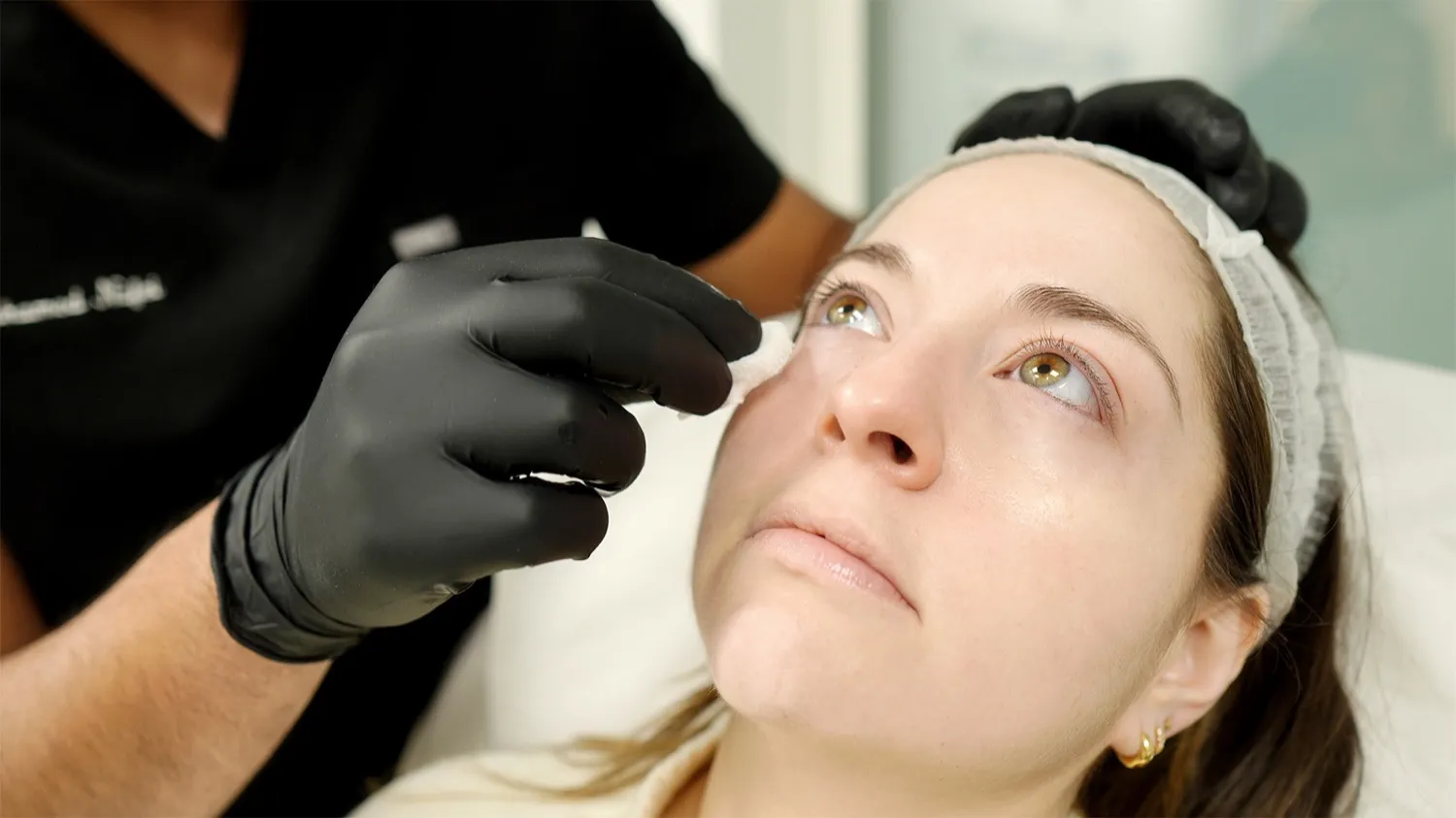
Dr Bruno Amendola performing chin filler treatment using micro-cannula technique at PRP London Clinic, 33 Cavendish Square

Chin Fillers London: Non-Surgical Augmentation & Profile Balancing

Medically led chin augmentation and jawline contouring by GMC-registered doctors at 33 Cavendish Square.

Duration

30-45m

Sessions

1 (maintenance at 12-18 months)

Price From

£360

Downtime

Minimal

Key Benefits

  • Immediate improvement in chin projection and facial profile balance.
  • Non-surgical and fully reversible with Hyaluronidase if needed.
  • Performed exclusively by GMC-registered doctors with advanced facial anatomy training.
  • Dr. Amendola's micro-cannula protocol reduces bruising and vascular risk.
  • High G-Prime fillers (Juvéderm Volux, Restylane Defyne) for long-lasting structural support.
  • Gender-specific contouring techniques for both masculine and feminine aesthetics.
  • Comprehensive correction service for botched or migrated chin filler from other clinics.

Common Target Areas

Chin (Mentum / Pogonion) Jawline (Mandibular Border) Mental Crease Pre-Jowl Sulcus Lower Face Profile

Reshape Your Profile Without Surgery

The chin is a cornerstone of facial proportion. Even a few millimetres of under-projection can alter how the nose appears, soften the jawline definition, and create the visual impression of submental fullness. At PRP London Clinic, we approach chin enhancement as a medical procedure rooted in anatomical assessment—not a cosmetic afterthought.

Our Clinical Board uses high-density hyaluronic acid fillers to restore or augment chin projection, correct asymmetry, and create harmonious profile balance. Every treatment begins with a structured facial analysis, including assessment against Ricketts' Aesthetic E-line, to determine the precise volume and vector of projection your anatomy requires.

Whether you are seeking subtle refinement with 1ml of chin filler or comprehensive lower-face restructuring combined with jawline contouring, our GMC-registered doctors deliver measurable, evidence-based results from our clinic at 33 Cavendish Square in the Harley Street medical district.

This procedure is part of our comprehensive Guide to Jowls & Lower Face Sagging.

Our Clinical Board: Medically Led Chin Augmentation

Every chin filler london session is performed by a GMC-registered doctor from our clinical team — Dr Bruno Amendola (GMC: 4346629), Dr Mohamed Nafei (GMC: 7520509), and Dr Reem Nouri (GMC: 6149512). Our doctors follow standardised treatment protocols developed through shared clinical workflows, ensuring consistent outcomes regardless of which physician performs your procedure. Never a nurse, technician, or non-medical practitioner.

Profile Balancing: The Science of Chin Proportioning

Effective chin augmentation is not guesswork—it is grounded in cephalometric analysis. Our Clinical Board uses Ricketts' Aesthetic E-line (a reference line drawn from the tip of the nose to the chin's most projecting point) as a diagnostic baseline for every patient. In an ideally balanced profile, the lower lip should sit approximately 2mm behind this line, while the upper lip rests roughly 4mm behind it.

When the chin is recessed (a condition known as microgenia), the E-line shifts forward, making the nose appear disproportionately large, the jawline appear weak, and submental fullness ('double chin') more pronounced—even in patients with a healthy BMI.

Chin Augmentation vs. Chin Shaping: Different Goals, Different Techniques

We distinguish between two core clinical objectives:

  • Chin Augmentation — Structural projection for patients with microgenia or a recessed chin. This typically requires 1.5–2.5ml of a high G-Prime filler (such as Juvéderm Volux) placed deep on the periosteum via cannula to simulate the effect of a chin implant without surgery.
  • Chin Shaping — Contour refinement for patients who want to achieve facial slimming, reduce a chin crease, or create a more tapered lower face. This may require only 0.5–1ml of a medium-density product placed more superficially.

The distinction matters because the filler rheology, injection depth, and cannula gauge differ significantly between the two goals. Our doctors assess each case individually and explain the treatment rationale before any injection takes place.

Male Chin Fillers: Masculine Jawline Contouring

Male aesthetics demand a fundamentally different approach to chin augmentation. The male ideal favours a wider mental distance (the horizontal breadth of the chin), a squared-off inferior border, and stronger anterior projection. This creates the characteristic 'masculine jaw' that signals facial strength—a stark contrast to the feminine 'V-taper' that narrows toward the chin point.

At PRP London Clinic, our doctors understand these dimorphic differences and adapt both the volume and vector of injection accordingly:

  • Wider Lateral Placement: Filler is deposited not only at the pogonion (chin tip) but also across the parasagittal zones to widen the chin base and create a squared contour.
  • Higher G-Prime Products: We use structurally rigid fillers such as Juvéderm Volux (G-Prime ≈600 Pa) to withstand the stronger muscular forces in the male lower face and resist gravitational migration.
  • Jawline Integration: Male chin augmentation is often combined with strategic jawline filler placement at the gonial angle to produce a continuous, defined mandibular border from ear to chin.

The result is a naturally masculine enhancement that avoids the 'overfilled' or feminised appearance that can occur when gender-specific anatomy is not accounted for. Dr. Amendola's portfolio includes numerous male chin and jawline transformations demonstrating this approach.

Technique, Products, and the Chin Filler Procedure

Our Clinical Board selects filler products and injection techniques based on each patient's anatomy, skin thickness, and treatment goals—not a one-size-fits-all protocol.

Filler Selection: Why G-Prime Matters

The chin requires fillers with high G-Prime (elastic modulus)—meaning they resist deformation under pressure and maintain structural projection over time. We primarily use:

  • Juvéderm Volux (Allergan) — The highest G-Prime filler in the Juvéderm range. Specifically designed for chin and jawline augmentation with excellent projection capacity and longevity of up to 18–24 months.
  • Restylane Defyne (Galderma) — XpresHAn Technology™ provides natural movement while maintaining structural support. Suitable for patients requiring moderate augmentation with a softer feel.

Needle vs. Cannula: When We Use Each

  • Needle (sharp-tip, 27G) — Used for precise point projection at the pogonion when the goal is maximum forward projection. Offers millimetre-level accuracy for targeted augmentation.
  • Micro-Cannula (25G blunt-tip) — Dr. Amendola's preferred approach for the majority of cases. The blunt tip navigates around blood vessels rather than through them, dramatically reducing the risk of vascular occlusion, intravascular injection, and bruising. Essential when blending the chin into the jawline.

The Procedure Step by Step

Following your consultation and facial analysis, the treatment area is cleansed and marked. Topical anaesthetic is applied for 15–20 minutes (though most HA chin fillers contain integrated lidocaine). The filler is then placed using a layered technique—deep periosteal boluses for structural projection, followed by superficial adjustments for contour refinement. The full procedure takes 30–45 minutes including numbing time.

Step-by-Step: Your Chin Filler Treatment

Our doctors follow a structured clinical protocol to ensure consistent, safe, and predictable results for every chin augmentation patient.

1

Facial Analysis & Consultation

Your doctor conducts a thorough assessment of your chin projection, jawline proportion, and overall facial balance using Ricketts' E-line analysis. Photographs are taken for treatment planning and progress tracking.

2

Treatment Planning & Consent

Based on the analysis, your doctor recommends a specific filler product, volume, and injection technique tailored to your anatomy and goals. Risks, expected outcomes, and aftercare are discussed in full before informed consent is taken.

3

Preparation & Anaesthesia

The chin area is cleansed with antiseptic solution and topical anaesthetic is applied for 15–20 minutes to ensure maximum comfort during the procedure.

4

Precision Filler Placement

Using micro-cannula or needle technique (as planned), your doctor places the filler in precise anatomical layers—deep periosteal boluses for structural projection, followed by superficial adjustments for contour refinement and symmetry correction.

5

Moulding, Assessment & Aftercare

The filler is gently moulded to achieve optimal contour. Your doctor reviews the result from multiple angles, comparing to baseline photographs. Detailed aftercare instructions are provided, and a follow-up appointment is arranged at 2–4 weeks.

Fixing Migrated or Botched Chin Filler

We understand that not every chin filler experience delivers the result you hoped for. At PRP London Clinic, we receive a significant number of patients seeking correction of unsatisfactory chin filler work performed at other clinics. Common issues we assess and treat include:

  • Filler Migration: HA filler that has drifted from the chin into the submental space or pre-jowl area, creating an unnatural contour or 'witch's chin' appearance.
  • Over-projection or Asymmetry: Excessive filler volume creating a disproportionate or unbalanced chin, or uneven placement resulting in visible asymmetry.
  • Nodule Formation: Palpable lumps from filler placed at incorrect tissue depths or products with inappropriate rheological properties for the chin.
  • Vascular Compromise Sequelae: Skin changes, scarring, or textural irregularities resulting from previous vascular events during poorly administered chin injections.

Our Correction Protocol

Revision cases begin with a thorough assessment, often including palpation mapping and, where clinically indicated, ultrasound to identify the volume and distribution of existing filler material.

Where dissolution is appropriate, we use Hyaluronidase (Hyalase)—an enzyme that selectively breaks down hyaluronic acid filler—to remove or reduce misplaced product. This is performed under controlled clinical conditions with precise dosing calculated from the estimated filler volume. Patients are typically reviewed at 2 weeks, after which re-treatment with correctly placed filler can be planned if desired.

Our doctors' extensive experience with chin anatomy means they understand not only how to place filler correctly, but also how to identify and resolve complications from previous treatments safely.

Chin Filler vs. Chin Implant: Making the Right Choice

One of the most common questions we receive is whether to choose non-surgical chin filler or a permanent surgical chin implant. The answer depends on your goals, tolerance for downtime, and desired longevity.

FactorChin Filler (Non-Surgical)Chin Implant (Surgical)
Procedure time30–45 minutes1–2 hours (general anaesthesia)
Downtime48–72 hours mild swelling2–4 weeks recovery
ReversibilityFully reversible with HyaluronidaseRequires surgical removal
Longevity12–24 monthsPermanent
Projection rangeUp to ~6mm anterior projectionUnlimited (custom implants)
Risk profileLower (no general anaesthesia, no incision)Higher (infection, nerve damage, implant displacement)
Ideal forMild–moderate augmentation, trialling a new profileSignificant augmentation, permanent result desired

Many of our patients choose chin filler as a 'trial run' before committing to surgical intervention—allowing them to visualise and live with their enhanced profile before making a permanent decision. Our Clinical Board can advise on which approach best suits your anatomy and goals.

Chin Filler Cost

Chin filler pricing at PRP London Clinic depends on the volume of product required and the complexity of the treatment plan. Factors that influence cost include:

  • Volume: Subtle chin refinement may require just 1ml, while structural augmentation for a recessed chin typically requires 1.5–2.5ml.
  • Product: Premium high G-Prime fillers such as Juvéderm Volux are specifically designed for this area and offer superior longevity.
  • Complexity: Revision cases or combined chin-and-jawline treatments may require additional product and time.

Current pricing is available on our pricing page. All treatment plans include a comprehensive consultation, the procedure itself, and a complimentary follow-up review at 2–4 weeks to assess results and make any necessary adjustments.

Safety Considerations for Chin Filler

The mental region contains the mental artery (a branch of the inferior alveolar artery) and the mental nerve, which exits through the mental foramen. Intravascular injection in this area can have serious consequences, which is why we consider chin augmentation a procedure that demands advanced anatomical knowledge.

Our safety measures include:

  • Micro-Cannula Protocol: Dr. Amendola's preferred blunt-tip cannula technique navigates around neurovascular structures rather than through them, dramatically reducing the risk of arterial occlusion or nerve injury.
  • Aspiration Testing: Where needle technique is used for precision projection, aspiration is performed before each bolus to check for intravascular placement.
  • Emergency Preparedness: All treatment rooms at 33 Cavendish Square are equipped with Hyaluronidase for immediate vascular rescue, along with the full complement of medical emergency equipment.
  • Slow Injection Technique: Filler is delivered in controlled, small-volume boluses with continuous tissue observation to detect any early signs of vascular compromise.

Our doctors' combined experience of thousands of chin and jawline treatments means they possess the anatomical expertise to deliver safe, predictable results—and the clinical training to manage the rare event of a complication immediately.

Am I a Good Candidate for Chin Filler?

Ideal CandidateMay Need an Alternative Approach
Mild to moderate chin recession (microgenia)Severe skeletal deficiency requiring surgical advancement (genioplasty)
Desire to improve facial profile balancePrimarily concerned with excess submental fat (Aqualyx/lipolysis may be more appropriate)
Seeking non-permanent, reversible enhancementWanting a permanent, one-time solution (chin implant)
Healthy adult with no active skin infectionsActive infection, cold sores, or inflammation in the treatment area
Realistic expectations about achievable projectionSeeking projection exceeding ~6mm (beyond what filler can reliably deliver)
Willing to maintain results with top-ups every 12–18 monthsNot willing to commit to periodic maintenance treatments

Clinical Disclaimer

Chin filler is a medical procedure that involves injection of a prescription-only substance. Individual results vary based on anatomy, skin quality, bone structure, and baseline proportions. While hyaluronic acid fillers are considered safe when administered by trained professionals, all injectable treatments carry inherent risks including bruising, swelling, infection, asymmetry, and rare but serious vascular complications. A professional consultation is required to determine suitability. All before-and-after photographs represent individual results and should not be interpreted as a guarantee of outcome.

Chin Filler Treatment at 33 Cavendish Square, London

Visit PRP London Clinic at 33 Cavendish Square, London W1G 0PW—in the Harley Street medical district—for your chin filler consultation. Our clinic is open 7 days a week, including late evenings and bank holidays, with appointments available at short notice.

Redefine Your Profile with Expert Chin Augmentation

Whether you are looking to correct a recessed chin, define your jawline, or achieve better facial balance, our Clinical Board is here to guide you through every step. Book a consultation at PRP London Clinic and discover what medically led chin augmentation can achieve for your profile.

Myths vs Facts

M

Chin fillers look obviously artificial and create a 'witch's chin' appearance.

F

When placed by an experienced doctor using the correct product and technique, chin filler produces subtle, proportionate enhancement. Over-projection and the 'witch's chin' effect are the result of poor technique or inappropriate product choice—not an inherent limitation of the treatment.

M

You need a chin implant for any meaningful improvement in chin projection.

F

Dermal fillers can deliver up to approximately 6mm of anterior projection—sufficient to correct mild to moderate microgenia and produce a visible transformation in facial profile. Many patients find that filler alone achieves their desired result without the risks and downtime of surgery.

M

Chin filler always migrates over time.

F

Filler migration in the chin is uncommon when high G-Prime products are placed at the correct tissue depth by a skilled practitioner. The chin's periosteum provides a stable foundation for structural filler, and products like Juvéderm Volux are specifically engineered to resist migration in high-movement areas.

M

1ml of chin filler is enough for everyone.

F

Volume requirements vary significantly depending on the degree of recession, gender-specific goals, and whether the treatment is a first session or a maintenance top-up. Some patients achieve their goals with 0.5–1ml, while others may need 2–3ml for meaningful structural augmentation. A proper facial assessment determines the right volume—not an arbitrary standard.

Chin Fillers Cost

TreatmentPrice
1 ml

For minor adjustments.

£360per treatment
2 ml

Common volume for subtle shaping.

£680per treatment
3 ml

For more noticeable projection.

£860per treatment

Prices are indicative. Please book a consultation for a personalised quote.

Frequently Asked Questions

Chin filler pricing at PRP London Clinic varies based on the volume of product needed and the complexity of treatment. Subtle refinement may require only 1ml, while structural augmentation for a recessed chin typically uses 1.5–2.5ml. Current pricing is available on our pricing page. All plans include a consultation, the procedure, and a complimentary follow-up review.
Chin fillers typically last 12–24 months, which is longer than many other facial filler treatments. This is because the chin is a relatively low-movement area, and the high G-Prime products we use (such as Juvéderm Volux) are specifically designed for structural longevity. Most patients return for a maintenance top-up at around 12–18 months.
It depends on your anatomy and goals. For patients seeking subtle definition or chin crease smoothing, 1ml may be sufficient. However, for meaningful projection improvement in cases of a recessed chin, 1.5–2.5ml is often required. During your consultation, our doctors will assess your facial proportions and recommend an appropriate volume. We always advise against under-treating if the result would be imperceptible.
Discomfort is generally minimal. We apply topical anaesthetic cream to the treatment area for 15–20 minutes before the procedure, and the HA fillers we use contain integrated lidocaine for comfort during injection. Most patients describe a feeling of pressure rather than pain. Dr. Amendola's micro-cannula technique also reduces discomfort compared to multiple needle punctures.
Chin filler does not directly remove submental fat (a 'double chin'). However, by increasing chin projection, it can significantly improve the cervicomental angle—the angle between the chin and neck—which visually reduces the appearance of submental fullness. For patients whose 'double chin' is an optical illusion caused by a recessed chin rather than excess fat, the results can be transformative.
Chin filler is a non-surgical, reversible treatment using injectable hyaluronic acid that lasts 12–24 months. A chin implant is a permanent surgical procedure performed under general anaesthesia. Filler is ideal for mild to moderate augmentation and for patients who want to trial a new profile before committing to surgery. Implants are suited to patients wanting significant, permanent projection. Our doctors can advise on which approach best suits your goals.
Yes. Hyaluronic acid chin fillers are fully reversible using an enzyme called Hyaluronidase (Hyalase), which breaks down the filler. This is one of the key advantages of HA fillers over permanent alternatives. At PRP London Clinic, we keep Hyaluronidase available in all treatment rooms as both a safety measure and a correction tool.
Chin filler is safe when performed by experienced, medically qualified practitioners with advanced anatomical knowledge. The primary risks relate to the mental artery and nerve in the treatment area. At PRP London Clinic, Dr. Amendola's micro-cannula protocol is specifically designed to reduce vascular risk. All our doctors are GMC-registered, trained in emergency management, and equipped with Hyaluronidase for immediate vascular rescue if needed.
We primarily use Juvéderm Volux by Allergan—the highest G-Prime (stiffness) filler in the Juvéderm range—specifically developed for chin and jawline augmentation. Its structural rigidity provides excellent projection and resists compression from surrounding muscles. For patients requiring a slightly softer result, Restylane Defyne offers an alternative with good structural support and natural movement. Product selection is based on your individual anatomy and goals.
Absolutely. Chin and jawline filler are frequently combined for comprehensive lower-face contouring. The chin provides forward projection while jawline filler at the mandibular angle provides lateral definition and width. This combination is particularly effective for male patients seeking a squared, masculine jawline, and for female patients wanting a more defined facial silhouette.
Our Clinical Board has extensive experience correcting chin filler complications including migration, asymmetry, over-projection, and nodule formation. The correction process begins with a thorough assessment to map existing filler distribution. Where appropriate, Hyaluronidase is used to dissolve misplaced product. After a healing period of approximately 2 weeks, re-treatment with correctly placed filler can be planned. Book a consultation to discuss your specific concerns.
Yes. Male chin augmentation typically focuses on widening the mental distance, squaring the inferior border, and creating stronger anterior projection for a masculine jaw profile. Female chin filler tends to focus on creating a narrower, V-shaped taper with refined projection for facial balance. Our doctors adapt their technique, product choice, and injection vectors to achieve gender-appropriate results.
Downtime is minimal. You can expect mild swelling for 48–72 hours, with possible light bruising that resolves within 5–7 days. Most patients return to work and social activities the same day or the following day. We advise avoiding strenuous exercise for 48 hours and sleeping with your head slightly elevated for the first two nights to minimise swelling.

Clinical Evidence & Scientific References

Signorini et al. (2016): Global Aesthetics Consensus – Avoidance and Management of Complications from Hyaluronic Acid Fillers

M. Signorini, S. Liew, H. Sundaram, K.L. De Boulle, G.J. Goodman, G. Monheit, Y. Wu, A.R. Trindade de Almeida, A. Swift, A.V. Braz · Plastic and Reconstructive Surgery, 2016PMID: 27219265

Supports: Multinational expert consensus (Global Aesthetics Consensus Group) providing evidence- and opinion-based recommendations for avoiding and managing HA filler complications. Confirms serious adverse events are rare; most reactions are mild and transient. Covers vascular infarction protocols, inflammatory reactions, nodules, granulomas, and skin discoloration management.

Limitations: Consensus-based (evidence + opinion), not a clinical trial. Focused on Hylacross and Vycross HA products specifically.

View on PubMed

Suwanchinda et al. (2018): The Layered Anatomy of the Jawline

A. Suwanchinda, C. Rudolph, C. Hladik, K.L. Webb, A. Custozzo, J. Muste, G. Schalet, H. Hamade, K. Frank, A. Patel, S. Cotofana · Journal of Cosmetic Dermatology, 2018PMID: 30091282

Supports: Cadaveric dissection study (N=72 specimens, 32 male/40 female) with MRI/CT imaging support. No major neurovascular structures found in subdermal or subcutaneous planes. Identified jowl deformity caused by loose platysma adherence posterior to mandibular ligament. Submental sulcus caused by osteo-cutaneous submental septum. Labiomandibular sulcus caused by change in subcutaneous fibro-connective arrangement. Supports subdermal and subcutaneous treatment options superficial to platysma.

Limitations: Cadaveric study (mean age 75.2 years, 99% Caucasian); findings may not fully represent younger or more diverse populations. Anatomical study only; no clinical treatment outcomes assessed.

View on PubMed

Schelke, Decates & Velthuis (2018): Ultrasound to Improve the Safety of Hyaluronic Acid Filler Treatments

L.W. Schelke, T.S. Decates, P.J. Velthuis · Journal of Cosmetic Dermatology, 2018PMID: 30084182

Supports: Demonstrates ultrasound as a safety tool for HA filler treatments: visualises previous filler deposits pre-treatment, enables vascular mapping, and identifies complications (dislocation, abscesses, vascular adverse events). Allows ultrasound-guided hyaluronidase injection directly into filler deposits for targeted complication management.

Limitations: Descriptive methodology paper, not a clinical trial. No quantitative safety outcome data or comparative analysis with non-ultrasound-guided treatments.

View on PubMed

*PRP London Clinic provides these references for educational purposes. Our Clinical Board regularly reviews emerging peer-reviewed literature to ensure our protocols align with the latest advancements in regenerative medicine.

Ready to Get Started?

Book your consultation today and take the first step towards your transformation.

Book Consultation

Verified Clinical Reputation

Verified

"Cannot recommend this clinic enough, excellent location and an absolutely brilliant doctor. Everything was explained so clearly to me and the consultation was very thorough. The advice and aftercare has also been brilliant. I will be back for my future appointments, Thankyou!"

Ruby K

19 Jan 2026

Verified

"I had Sylfirm X treatment and I’m really happy with the results. After just one session, I noticed a clear improvement in my face. The clinic is clean, professional, and very welcoming, and Dr. Nafei is kind and skilled."

Norin Hanifi

19 Jan 2026

Verified

"I was quite nervous about getting something done but the team made me feel completely at ease. From the moment I walked in, the atmosphere was so calming and professional, they explained every step of the process and answered all my questions. I’m already seeing great results and have already booked my next appointment!"

Dominique Heslop

13 Jan 2026

Verified

"I recently had a PRF treatment done and the results are incredible. The entire team from start to finish was second to none. As an anxious client they took their time to explain thoroughly the procedure and aftercare."

lloyda221

06 Jan 2026

Verified

"I had an excellent PRF treatment and really happy with the results. I found the doctor highly professional and knowledgable. I was explained the PRF treatment and process throughly. The expertise was amazing and really happy with the results. I would highly recommend this clinic."

Mane Authority

06 Jan 2026

Verified

"It was easy to book. All necessary information shared before and after the treatment. Very affordable."

Victor Contreras Guerra

4 months ago

Verified

"I haven't come here yet but wow the clinic is so lucky to have Mo as part of their team. His advice and genuine care is unmatched. I hope PRP London Clinic is looking after him well. If I come it'll be because of his excellent advice"

A A

5 months ago

Verified

"I visited the clinic today. I would like to thank you for your professionalism and best care you have provided me. I was but nervous but it was great. See you soon"

harris jan

3 months ago

Independent Patient Feedback

Read all verified stories →

Medical Suitability Note

As a GMC-regulated practice, a mandatory consultation is required for all new patients to assess suitability and clinical need. This treatment may not be appropriate for everyone. All procedures are performed by GMC-registered doctors whose credentials can be verified on the official GMC register.

Clinical Technology & Equipment

Regenerative Substance

Juvéderm® Hyaluronic Acid Dermal Fillers

by Juvéderm

Manufacturer Info →

Premium cross-linked hyaluronic acid dermal filler range with VYCROSS® technology for smooth, long-lasting facial volumisation and contouring.

Certifications

CE Marked Medical Device VYCROSS® Technology

Technical Specifications

Active Ingredient
Cross-linked Hyaluronic Acid
Technology
VYCROSS® (smooth gel consistency)

Clinical Applications

Lip Augmentation Cheek Enhancement Chin Augmentation Non-Surgical Rhinoplasty 8-Point Non-Surgical Facelift Nasolabial and Marionette Lines

Official Resources

Regenerative Substance

Restylane® Hyaluronic Acid Dermal Fillers

by Restylane

Manufacturer Info →

Stabilised hyaluronic acid dermal filler range using NASHA® and OBT™ technology for natural-looking facial volumisation, contouring, and skin rejuvenation.

Certifications

CE Marked Medical Device NASHA® / OBT™ Technology

Technical Specifications

Active Ingredient
Stabilised Hyaluronic Acid
Technology
NASHA® (Non-Animal Stabilised Hyaluronic Acid) / OBT™ (Optimal Balance Technology)

Clinical Applications

Lip Augmentation Cheek Enhancement Chin Augmentation Non-Surgical Rhinoplasty 8-Point Non-Surgical Facelift Nasolabial and Marionette Lines

Official Resources

Regenerative Substance

Revolax® Hyaluronic Acid Dermal Fillers

by Revolax

Manufacturer Info →

High-purity, cross-linked hyaluronic acid dermal filler range manufactured using advanced Bio-Cell technology for smooth injection and natural results.

Certifications

CE Marked Medical Device KFDA Approved

Technical Specifications

Active Ingredient
Cross-linked Hyaluronic Acid
Purity
High-purity (Bio-Cell Technology)

Clinical Applications

Lip Augmentation Cheek Enhancement Chin Augmentation Non-Surgical Rhinoplasty 8-Point Non-Surgical Facelift Nasolabial and Marionette Lines

Official Resources

This technical specification is provided for informational purposes only. All medical devices and substances are used exclusively by GMC-registered practitioners at PRP London Clinic. Individual results may vary.