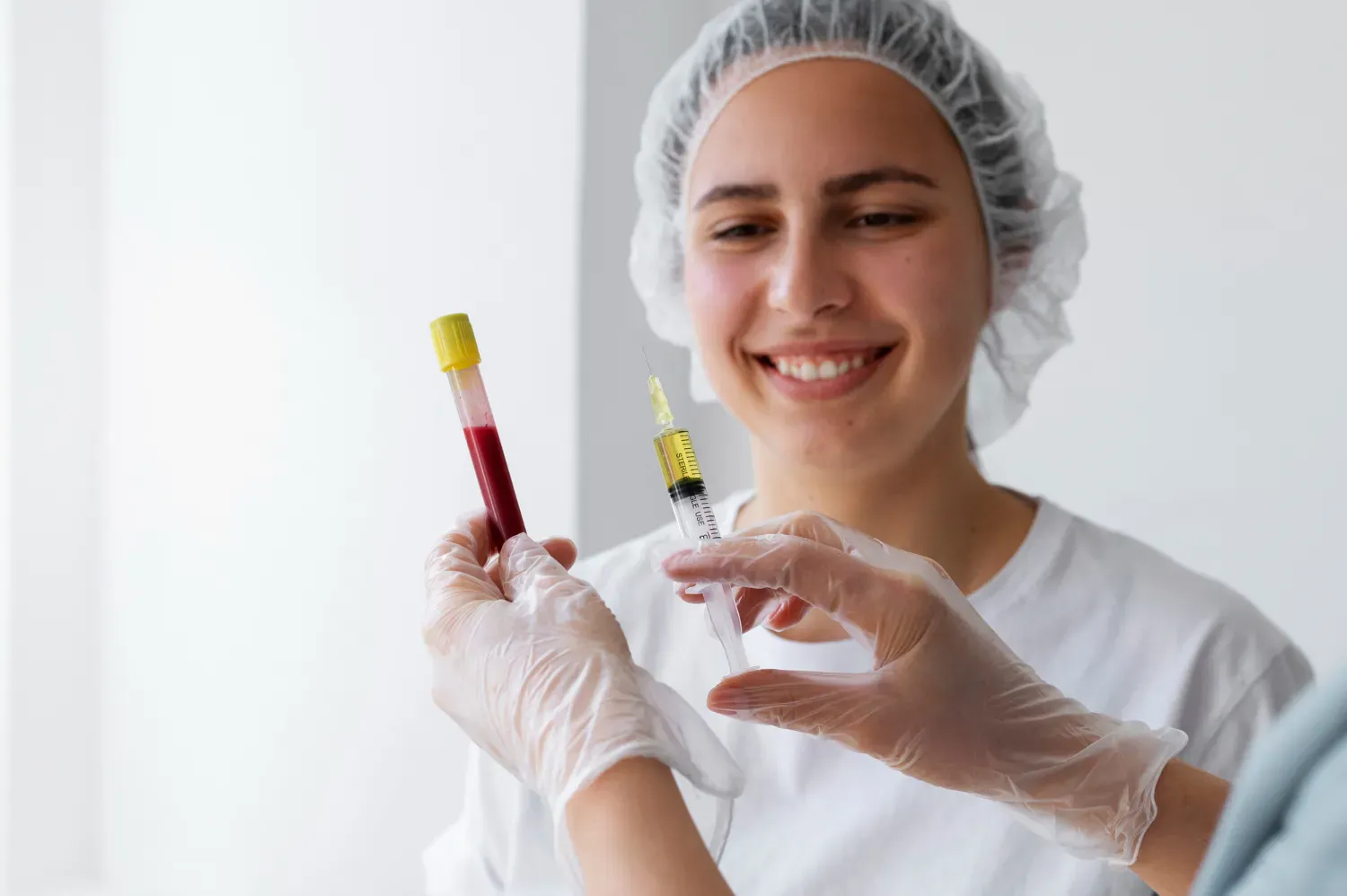



PRP therapy preparation using the Rein PRP system at PRP London Clinic, Cavendish Square, London

PRP Therapy London: Expert Platelet-Rich Plasma Treatments

GMC-registered doctors delivering advanced PRP therapy for hair, skin, beard, under-eye, and joint concerns at 33 Cavendish Square, London W1G.

Duration

45-60m

Sessions

Variable by Treatment

Price From

£295

Downtime

Minimal

Key Benefits

  • 100% autologous — uses your body's own growth factors
  • Delivered by three GMC-registered doctors
  • Two advanced systems: Rein PRP™ (93–97% recovery) and MCT Plasma
  • Versatile: treats hair, beard, skin, under-eyes, and joints
  • Minimal downtime with low risk of adverse reactions
  • Clinically evidenced across multiple medical specialties

Common Target Areas

Scalp (Hair Loss) Beard Area (Growth Enhancement) Face (Skin Rejuvenation) Under Eyes (Dark Circles & Hollows) Neck / Décolletage (Skin) Hands (Skin Rejuvenation) Joints (Knees, Shoulders, Hips, Elbows) Tendons / Ligaments

What Is PRP Therapy? London's Specialist Clinic

PRP therapy london patients trust begins with science: Platelet-Rich Plasma (PRP) concentrates the growth factors in your own blood to stimulate natural tissue repair and regeneration. At PRP London Clinic, 33 Cavendish Square, London W1G, our team of GMC-registered doctors uses two advanced preparation systems — the Rein PRP™ System (CE Class IIB, 93–97% platelet recovery) and the MCT Plasma System (CE/MDR-certified photobiomodulation) — to deliver platelet rich plasma london treatments tailored to each patient's clinical needs.

As a dedicated PRP clinic london, we offer PRP across five specialist applications. Explore our dedicated treatment pages for detailed information on each:

Your PRP Treatment Team

Every PRP therapy london session is performed by a GMC-registered doctor from our clinical team — Dr Bruno Amendola (GMC: 4346629), Dr Mohamed Nafei (GMC: 7520509), and Dr Reem Nouri (GMC: 6149512). Our doctors follow standardised platelet-rich plasma treatment protocols developed through shared clinical workflows, ensuring consistent outcomes regardless of which physician performs your procedure. Never a nurse, technician, or non-medical practitioner.

How PRP Works: The Science of Platelet-Rich Plasma

What Is Platelet-Rich Plasma?

Blood contains red cells, white cells, plasma, and platelets. Platelets carry hundreds of proteins called growth factors — including PDGF, TGF-β, VEGF, and EGF — that are essential for wound healing and tissue regeneration. PRP therapy concentrates these platelets to 4–6 times their normal blood levels, creating a powerful regenerative serum from your own biology.

The Growth Factor Cascade

When injected into a target area, the concentrated growth factors trigger a cascade of biological responses:

  • Cell proliferation — stimulates local stem cells and fibroblasts to multiply
  • Collagen synthesis — promotes new collagen and elastin formation in skin
  • Angiogenesis — forms new blood vessels to improve nutrient delivery
  • Anti-inflammatory modulation — reduces chronic inflammation in joints and tissues
  • Follicle activation — signals dormant hair follicles into the anagen (growth) phase

Why Preparation Quality Matters

A 2024 systematic review of 75 RCTs found a strong correlation (r=0.79) between proper temperature control during PRP preparation and clinical efficacy. This is why we invest in CE-certified, medical-grade systems rather than generic PRP kits — the preparation directly determines the therapeutic potency of your treatment.

The PRP Procedure: What to Expect

Regardless of the specific application (hair, skin, beard, eyes, or joints), the core PRP treatment process follows a consistent medical protocol:

  1. Consultation & assessment — your doctor reviews your medical history, examines the treatment area, and confirms PRP suitability
  2. Blood draw — a small sample (15–20ml) is taken from your arm, similar to a routine blood test
  3. Centrifugation — the sample is processed in the Rein PRP™ or MCT Plasma system to isolate and concentrate the platelet-rich fraction
  4. Area preparation — the treatment site is cleansed; topical or local anaesthetic is applied as needed
  5. PRP delivery — your doctor performs targeted micro-injections (or topical application for facial microneedling) into the treatment area
  6. Aftercare briefing — specific post-treatment instructions are provided for your application

The entire appointment typically takes 45–60 minutes. Most patients return to normal activities the same day.

Our PRP Systems: Rein PRP™ and MCT Plasma

Rein PRP™ System (CE Class IIB)

The Rein PRP System is our primary preparation platform — a CE Class IIB, ISO 13485:2016 certified medical device compliant with MDR 2017/745. Key specifications:

  • 93–97% platelet recovery rate — significantly higher than standard separator-gel kits
  • Sodium citrate anticoagulant (3.13% Ph. Eur.) — pharmaceutical-grade preservation
  • 850 G centrifugation for 8 minutes — optimised protocol for maximum yield
  • Gel-free density-gradient technology — eliminates contaminants for purer 'Liquid Gold'

MCT Plasma System (CE/MDR Certified)

For patients seeking advanced PRP, we also offer the MCT Plasma (Meta Cell Technology) system — a CE/MDR-certified dual-function device that enhances standard PRP through photobiomodulation (blue light) and thermal biomodulation:

  • Enhanced growth factor release — photothermal conditioning increases platelet activation markers (p-38 phosphorylation)
  • Reduced pro-inflammatory cytokines — cold priming produces less dense plasma for improved comfort
  • Autologous exosome stimulation — photothermal conditioning stimulates exosome release from the patient's own cells
  • ATP enhancement — stimulates cellular metabolism for sustained regenerative signalling

Your doctor will recommend the most appropriate system based on your clinical needs and treatment goals.

PRP Treatment Applications at Our London Clinic

Our prp london clinic offers PRP across five specialist treatment pathways. Each is delivered by the same team of GMC-registered doctors using our medical-grade preparation systems:

PRP for Hair Loss

Stimulates scalp follicles to reduce shedding and promote thicker, denser hair growth in androgenetic alopecia, PCOS-related thinning, traction alopecia, and post-transplant support.

PRP Hair Loss Treatment Details »

PRP for Beard Growth

Enhances density and fullness in the beard area by activating dormant follicles and improving vascularisation to patchy zones.

PRP Beard Growth Treatment Details »

PRP Facial (with Microneedling)

Combines medical-grade microneedling with PRP to boost collagen production, improve skin texture, reduce fine lines, and soften acne scars.

PRP Facial Treatment Details »

PRP for Under Eyes

Targets dark circles, crepey skin, and periorbital hollowing through regenerative growth factor delivery to the delicate tear trough area.

PRP Under Eyes Treatment Details »

PRP for Joints & Tendons

Intra-articular injections for osteoarthritis, tendinopathy, and soft tissue injuries — reducing pain, modulating inflammation, and promoting tissue repair.

PRP Joint Injection Details »

PRP Treatment Pricing

PRP therapy london prices at our clinic start from £295 per session. The exact cost depends on the specific treatment application, the preparation system used (Rein PRP™ or MCT Plasma), and whether combination protocols are appropriate.

We believe in transparent pricing with no hidden costs. Your consultation includes a full clinical assessment, discussion of expected outcomes, and a clear treatment plan with itemised pricing before you commit to any procedure.

See the pricing table below for a breakdown by treatment type, or visit each individual treatment page for detailed pricing information.

PRP vs Other Regenerative Treatments

FactorPRP TherapyExosomes TherapyDermal Fillers
SourceYour own blood (autologous)Lab-derived or autologous (MCT)Synthetic hyaluronic acid
MechanismGrowth factor stimulationCellular signalling moleculesVolume replacement
Allergic reaction riskVirtually zeroVery lowLow (but possible)
Results timelineGradual (weeks to months)Gradual (weeks to months)Immediate
Duration6–18 months6–12 months6–18 months
Best forTissue regeneration & repairEnhanced cellular renewalInstant volume & contouring
Can be combined?Yes — with exosomes, microneedling, fillersYes — with PRP, microneedlingYes — with PRP, polynucleotides

Is PRP Therapy Safe?

PRP therapy has an excellent safety profile because it uses your body's own biological material — an autologous treatment that virtually eliminates the risk of allergic reactions, rejection, or disease transmission. A 2024 systematic review of 75 randomised controlled trials (5,726 patients) confirmed PRP's safety across aesthetic and orthopaedic applications.

As with any injection-based treatment, temporary side effects may include:

  • Mild redness or swelling at injection sites (resolves within 24–48 hours)
  • Minor bruising (particularly in delicate areas like the under-eyes)
  • Temporary tenderness at injection points
  • Occasional pinpoint bleeding

All treatments are performed under sterile conditions by our GMC-registered doctors using single-use, CE-certified equipment. A full medical history review and contraindication screening is completed before every treatment.

PRP Aftercare: What to Do After Your Treatment

First 24–48 Hours

  • Avoid touching, rubbing, or applying pressure to the treated area
  • Skip strenuous exercise, saunas, and steam rooms
  • Do not apply makeup to the treated area for at least 6 hours (facial treatments)
  • Avoid anti-inflammatory medications (ibuprofen, aspirin) — these can interfere with the platelet-mediated healing response

First 2 Weeks

  • Protect the treated area from excessive sun exposure; use SPF 50 for facial treatments
  • Maintain good hydration to support the healing process
  • Follow any treatment-specific instructions provided by your doctor (e.g., activity modification for joints)

Follow-Up

Your doctor will schedule a follow-up review to assess your progress and discuss timing for subsequent sessions. Most PRP protocols recommend a course of 3 sessions spaced 4–6 weeks apart, followed by maintenance treatments as needed.

Is PRP Therapy Right for You?

Ideal CandidateMay Need an Alternative Approach
Seeking natural, autologous regenerative treatmentRequires immediate visible results (fillers may be more appropriate)
Early-to-moderate hair thinning with existing folliclesComplete baldness with no remaining follicles (transplant may be needed)
Healthy platelet count and no blood disordersPlatelet dysfunction, thrombocytopenia, or anticoagulant therapy
Mild-to-moderate joint pain or tendinopathySevere end-stage arthritis requiring surgical intervention
Wants to improve skin quality and texture naturallySeeking significant volume restoration (fillers or fat transfer preferred)
Committed to a course of 3 sessions for optimal resultsSeeking a single-session permanent solution

PRP Contraindications and Medical Considerations

PRP therapy is not suitable for everyone. The following conditions are absolute or relative contraindications that our doctors screen for during your consultation:

  • Platelet dysfunction syndrome or critical thrombocytopenia — PRP requires adequate platelet levels to be effective
  • Active malignancy (cancer) — growth factors may theoretically stimulate existing cancerous cells
  • Sepsis or active systemic infection — treatment should be deferred until resolved
  • Chronic liver disease — affects platelet production and function
  • Blood-thinning medication (warfarin, heparin, aspirin) — requires medical review and possible temporary adjustment
  • Pregnancy or breastfeeding — as a precautionary measure
  • Active skin infection at the proposed treatment site
  • Severe anaemia or haemoglobin disorders

If you have any of the above conditions, please disclose them during your consultation. In some cases, treatment may proceed with appropriate medical supervision or after the underlying condition is managed.

Clinical Disclaimer

PRP therapy is a biological medical procedure. Individual results vary based on age, genetics, baseline health, platelet count, and the specific condition being treated. While the Rein PRP™ system achieves a 93–97% platelet recovery rate and clinical evidence supports PRP's efficacy across multiple applications, PRP is a treatment to support natural regeneration — it is not a guaranteed cure for any condition. A professional consultation with our GMC-registered doctors is required to determine suitability and set realistic expectations.

Last medical review: March 2026.

PRP Therapy at 33 Cavendish Square, London W1G

PRP London Clinic is located at 33 Cavendish Square, London W1G 0PW — in the heart of London's medical district, moments from Oxford Circus and Bond Street stations. Our dedicated clinical premises provide a private, professional environment for all PRP therapy london treatments.

Whether you're searching for prp near me in central London or travelling from further afield for specialist PRP treatment, our Cavendish Square location is easily accessible by tube, bus, and car.

Book Your PRP Consultation

Ready to explore how platelet rich plasma can help your hair, skin, beard, under-eye, or joint concerns? Book a consultation with one of our three GMC-registered doctors at PRP London Clinic. We'll assess your suitability, explain your options, and create a personalised treatment plan.

Myths vs Facts

M

PRP therapy involves injecting someone else's blood.

F

False. PRP is 100% autologous — it uses only your own blood, drawn and processed immediately before your treatment. This virtually eliminates the risk of allergic reactions.

M

PRP results are permanent after one session.

F

PRP stimulates natural regeneration over time. Most protocols require a course of 3 sessions, with maintenance treatments recommended every 6–18 months to sustain benefits.

M

PRP is the same as stem cell therapy.

F

No. PRP uses concentrated platelets and their growth factors. Stem cell therapy involves actual stem cells — a different regenerative approach. However, MCT Plasma technology can stimulate autologous exosome release from your own cells.

M

All PRP kits produce the same results.

F

False. A 2024 systematic review found a strong correlation (r=0.79) between preparation quality (temperature control, centrifugation protocol) and clinical efficacy. This is why we use CE Class IIB certified systems rather than generic kits.

M

PRP is extremely painful.

F

Most patients report only minimal discomfort. Topical or local anaesthetic is applied before treatment, and our doctors use fine-gauge needles for precision and comfort.

M

PRP is just a cosmetic trend with no scientific backing.

F

PRP is supported by extensive clinical evidence. A 2024 PRISMA systematic review analysed 75 randomised controlled trials involving 5,726 patients across aesthetic and orthopaedic applications.

Frequently Asked Questions

PRP therapy (Platelet-Rich Plasma therapy) is a regenerative treatment that concentrates the growth factors in your own blood and delivers them to a target area — such as the scalp, face, or joints — to stimulate natural tissue repair. A small blood sample is drawn, processed in a centrifuge to concentrate the platelets, and the resulting PRP is injected into the treatment area.
PRP therapy london prices at PRP London Clinic start from £295 per session. The exact cost varies depending on the treatment application (hair, skin, beard, eyes, or joints), the preparation system used, and whether combination protocols are recommended. Transparent pricing is provided during your consultation.
PRP treatment has an excellent safety profile because it uses your body's own blood — virtually eliminating the risk of allergic reactions or rejection. Temporary side effects like mild redness, swelling, or bruising are possible but typically resolve within a few days. All treatments are performed by GMC-registered doctors under sterile conditions.
Most PRP protocols recommend a course of 3 sessions spaced 4–6 weeks apart for optimal results. The exact number depends on your specific treatment (hair, skin, beard, eyes, or joints) and your individual response. Maintenance sessions every 6–18 months are typically recommended.
PRP (Platelet-Rich Plasma) uses an anticoagulant during preparation to keep the plasma liquid, while PRF (Platelet-Rich Fibrin) is processed without anticoagulant, creating a fibrin matrix that releases growth factors over a longer period (up to 14 days). We offer both at our clinic using the Rein PRP™ and T-Lab® PRF systems respectively.
MCT Plasma (Meta Cell Technology) is an advanced PRP enhancement that uses photobiomodulation (blue light) and thermal biomodulation to boost growth factor release, reduce pro-inflammatory cytokines, and stimulate autologous exosome production from your own cells. It is CE/MDR certified and offers an upgraded option for patients seeking enhanced regenerative potential.
A typical PRP treatment session takes 45–60 minutes, including the blood draw, centrifugation, area preparation, and injection. You can usually return to normal activities the same day.
Results develop gradually as your body's regenerative processes respond to the concentrated growth factors. For hair treatments, initial changes (reduced shedding) may appear within 1–3 months, with fuller results at 6–12 months. For skin rejuvenation, initial improvements in glow and texture can be seen within weeks. Joint pain relief typically develops over 4–12 weeks.
Yes. PRP combines effectively with many other treatments including exosomes therapy, microneedling, polynucleotides, mesotherapy, and dermal fillers. Your doctor will discuss the most appropriate combination for your concerns during your consultation.
Most patients report only minimal discomfort. Topical anaesthetic cream is applied before facial, scalp, beard, and under-eye treatments, and local anaesthetic is used for joint injections. Our doctors use fine-gauge needles to minimise sensation during the procedure.
PRP is not suitable for patients with platelet disorders, active cancer, systemic infections, chronic liver disease, or those on anticoagulant medication without medical review. Pregnancy and breastfeeding are also contraindications. All patients undergo a full medical screening before treatment.
PRP therapy is generally not available on the NHS for aesthetic or hair loss indications. It is offered as a private medical treatment. At PRP London Clinic, we provide transparent private pricing starting from £295 per session with no hidden costs.

Clinical Evidence & Scientific References

Rahman et al. (2024): Systematic Review of PRP in Medical and Surgical Specialties

E. Rahman, P. Rao, H.N. Abu-Farsakh, C. Thonse, I. Ali, A.E. Upton, S.Y. Baratikkae, J.D.A. Carruthers, A. Mosahebi, N. Heidari, W.R. Webb · Journal of Clinical Medicine, 2024PMID: 39124838

Supports: 2024 PRISMA systematic review of 75 RCTs (5,726 patients) across aesthetics and orthopaedics. Found strong positive correlation (r=0.79) between proper temperature control during PRP preparation and efficacy, and moderate correlation (r=0.57) between initial platelet count assessment and outcomes — supporting the clinic's use of controlled, high-recovery PRP preparation systems.

Limitations: Identified significant variability in PRP preparation methods across studies, making direct comparison difficult. Proposed a new scoring system (WESS-PQR) to address inconsistencies, but this has not yet been widely adopted or validated independently.

View on PubMed

Zhang et al. (2023): PRP for Androgenetic Alopecia — Systematic Review and Meta-Analysis of RCTs

X. Zhang, Y. Ji, M. Zhou, X. Zhou, Y. Xie, X. Zeng, F. Shao, C. Zhang · Canadian Journal of Plastic Surgery, 2023PMID: 37533146

Supports: 2023 systematic review and meta-analysis of 9 RCTs (238 patients) demonstrating PRP significantly increases hair density at 3 and 6 months compared with placebo (P<.05) in androgenetic alopecia. No serious adverse reactions reported across studies.

Limitations: Relatively small total sample size (238 patients across 9 RCTs). PRP increased hair count and hair diameter vs baseline but without statistically significant difference vs placebo. Heterogeneity in PRP preparation protocols across included studies.

View on PubMed

Gupta et al. (2019): PRP Efficacy in Hair Restoration and Facial Aesthetics — Systematic Review and Meta-analysis

A.K. Gupta, S.G. Versteeg, J. Rapaport, A.K. Hausauer, N.H. Shear, V. Piguet · Journal of Cutaneous Medicine and Surgery, 2019PMID: 30606055

Supports: Systematic review and meta-analysis demonstrating 3 monthly PRP injections exhibit significantly greater efficacy over placebo for hair density in androgenetic alopecia (mean difference: 25.61 hairs/cm², P=0.02). Also found 2-4 PRP sessions combined with traditional therapies can minimise acne scarring and improve aesthetic outcomes — supporting PRP's broad application across hair and facial rejuvenation.

Limitations: Studies used half-head design which may have influenced results due to systemic PRP effects. Data for non-hair indications (scarring, facial burns, ageing skin) are less robust in design. Focused on mild AGA — less evidence for advanced hair loss stages.

View on PubMed

*PRP London Clinic provides these references for educational purposes. Our Clinical Board regularly reviews emerging peer-reviewed literature to ensure our protocols align with the latest advancements in regenerative medicine.

Ready to Get Started?

Book your consultation today and take the first step towards your transformation.

Verified Clinical Reputation

Verified

"Cannot recommend this clinic enough, excellent location and an absolutely brilliant doctor. Everything was explained so clearly to me and the consultation was very thorough. The advice and aftercare has also been brilliant. I will be back for my future appointments, Thankyou!"

Ruby K

19 Jan 2026

Verified

"I had Sylfirm X treatment and I’m really happy with the results. After just one session, I noticed a clear improvement in my face. The clinic is clean, professional, and very welcoming, and Dr. Nafei is kind and skilled."

Norin Hanifi

19 Jan 2026

Verified

"I was quite nervous about getting something done but the team made me feel completely at ease. From the moment I walked in, the atmosphere was so calming and professional, they explained every step of the process and answered all my questions. I’m already seeing great results and have already booked my next appointment!"

Dominique Heslop

13 Jan 2026

Verified

"I recently had a PRF treatment done and the results are incredible. The entire team from start to finish was second to none. As an anxious client they took their time to explain thoroughly the procedure and aftercare."

lloyda221

06 Jan 2026

Verified

"I had an excellent PRF treatment and really happy with the results. I found the doctor highly professional and knowledgable. I was explained the PRF treatment and process throughly. The expertise was amazing and really happy with the results. I would highly recommend this clinic."

Mane Authority

06 Jan 2026

Verified

"It was easy to book. All necessary information shared before and after the treatment. Very affordable."

Victor Contreras Guerra

4 months ago

Verified

"I haven't come here yet but wow the clinic is so lucky to have Mo as part of their team. His advice and genuine care is unmatched. I hope PRP London Clinic is looking after him well. If I come it'll be because of his excellent advice"

A A

5 months ago

Verified

"I visited the clinic today. I would like to thank you for your professionalism and best care you have provided me. I was but nervous but it was great. See you soon"

harris jan

3 months ago

Independent Patient Feedback

Read all verified stories →

Medical Suitability Note

As a GMC-regulated practice, a mandatory consultation is required for all new patients to assess suitability and clinical need. This treatment may not be appropriate for everyone. All procedures are performed by GMC-registered doctors whose credentials can be verified on the official GMC register.

Clinical Technology & Equipment

Medical Device

Rein PRP™ System

by Rein PRP

Manufacturer Info →

CE Class IIB certified medical preparation system using 3.13% Sodium Citrate for high-yield (4-6x) autologous platelet recovery. Manufactured in ISO Class 8 cleanroom environments.

Certifications

CE Class IIB (Notified Body 2195) NB 0476 (Kiwa Cermet Italy) ISO 13485:2016 MDR 2017/745

Technical Specifications

Platelet Recovery Rate
93-97%
Centrifugation Protocol
850 G for 8 minutes
Anticoagulant
1ml Sodium Citrate 3.13% Ph. Eur.

Clinical Applications

Androgenetic Alopecia Skin Rejuvenation Acne Scars Orthopaedic Joint Pain

Contraindications

Platelet Dysfunction Syndrome Critical Thrombocytopenia Sepsis Malignancy (Cancer) Chronic Liver Pathology
Medical Device

MCT System (Meta Cell Technology)

by MCT

Manufacturer Info →

CE/MDR-certified dual-function medical device providing both Advanced PRP (MCT Plasma) and autologous injectable exosomes. Uses photobiomodulation (blue light) and thermal biomodulation to enhance platelet performance, boost growth factor release, and stimulate autologous exosome production from the patient's own cells.

Certifications

CE/MDR Certified Autologous (Patient-Derived) CLINIPRO Group Company

Technical Specifications

MCT Plasma Mechanism
Photobiomodulation + Thermal Biomodulation of PRP for sustained growth factor release and reduced pro-inflammatory cytokines
MCT Exosome Source
Autologous — photothermal conditioning stimulates exosome release from patient's own cells and platelets
ATP Enhancement
Photothermal biomodulation stimulates cellular metabolism and enhances ATP synthesis
Platelet Activation
Reduces VASP, increases p-38 phosphorylation; cold priming facilitates reactivity post-injection
Procedure Benefit
Cold temperature delays clot formation, producing less dense plasma for improved patient comfort

Clinical Applications

Androgenetic Alopecia Skin Rejuvenation Hair Restoration Facial Anti-Ageing

Official Resources

This technical specification is provided for informational purposes only. All medical devices and substances are used exclusively by GMC-registered practitioners at PRP London Clinic. Individual results may vary.