Hand Ageing, Veins & Sun Spots
Understanding Hand Ageing: More Than Just 'Age Spots' Hands are the second-most exposed body part after the face and a key transmitter of social cues—yet they are often neglected in anti-ageing protocols. At PRP London Clinic, our Hand Rejuvenation pathways go beyond surface beauty.
Content Author & Reviewer
PRP London Clinic Medical Team
GMC-Registered Medical Professionals
Our team of GMC-registered medical professionals collaboratively review all medical content to ensure clinical accuracy and provide evidence-based information for patient education.




Last reviewed: August 20, 2026
Understanding Hand Ageing: More Than Just 'Age Spots'
A Medical-First Approach to Hand Aesthetics
Comprehensive Restoration: Volume, Texture & Pigment
Who Experiences This Condition?
Common in
- •Everyone—hand ageing is universal, though timing varies based on genetics and lifestyle
- •Those with high cumulative sun exposure (hands are constantly exposed to UV)
- •People who frequently wash hands or work with harsh chemicals/detergents
- •Individuals who have experienced significant weight loss (depletes hand fat)
- •Post-menopausal women (hormonal changes accelerate collagen loss)
- •Those with naturally thin skin or low subcutaneous fat
- •People who neglect sunscreen on hands (most common skincare oversight)
Factors Affecting Severity
- •Cumulative UV exposure—the primary driver of hand ageing
- •Genetics—some people are predisposed to earlier fat loss and skin thinning
- •Occupation—frequent hand washing, chemical exposure, manual labour
- •Smoking history—accelerates collagen degradation
- •Hormonal status—oestrogen decline affects skin thickness
- •Baseline fat distribution—naturally thin hands show veins earlier
- •Skincare habits—lack of SPF and moisturisation on hands
Clinical Visual Guide: Understanding Hand Changes
Educational guide only. Not for self-diagnosis. Suspicious lesions require professional assessment and potentially biopsy. Always consult a qualified medical professional.
Cosmetic Concerns (Benign)
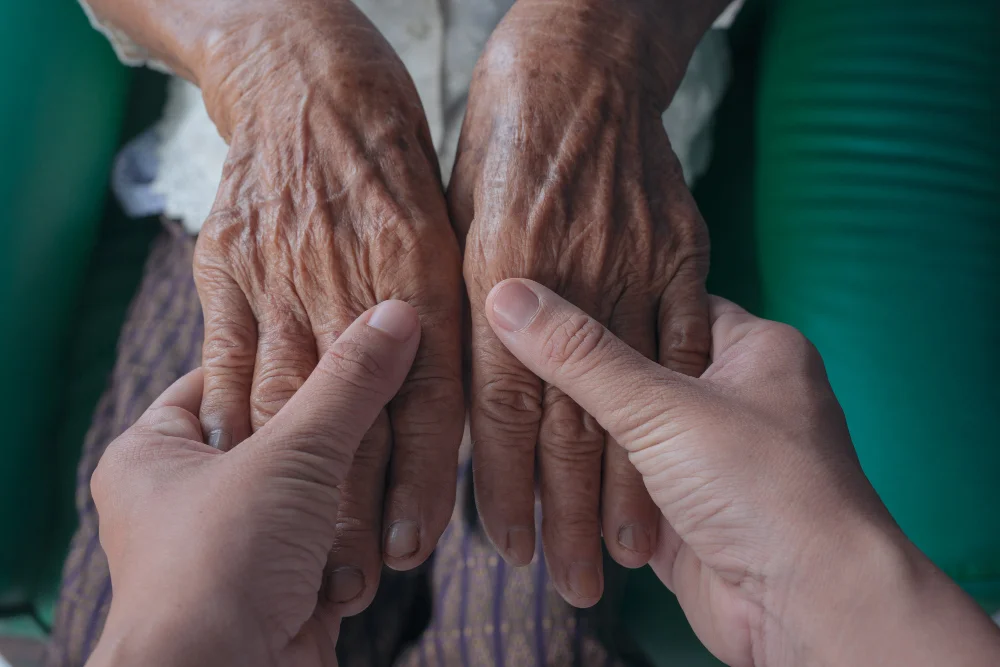
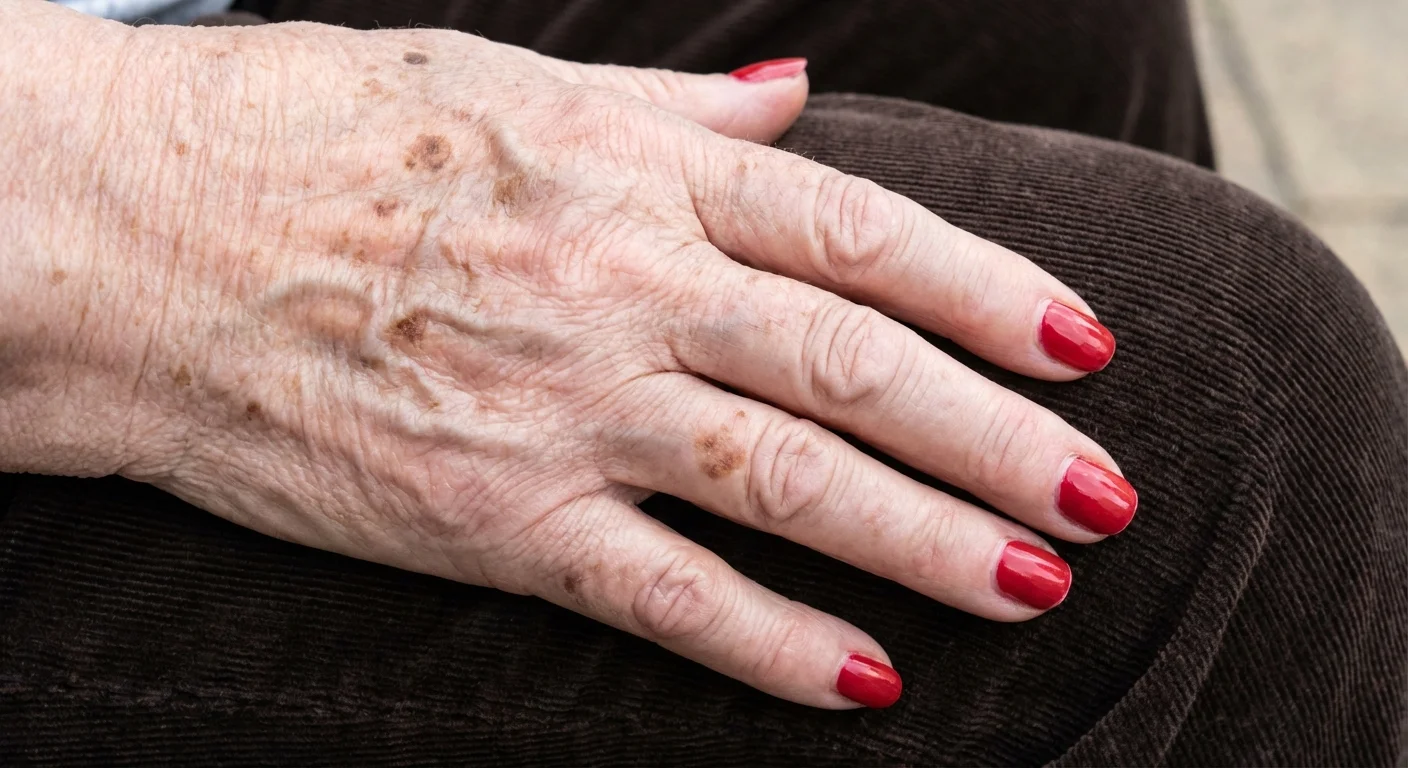
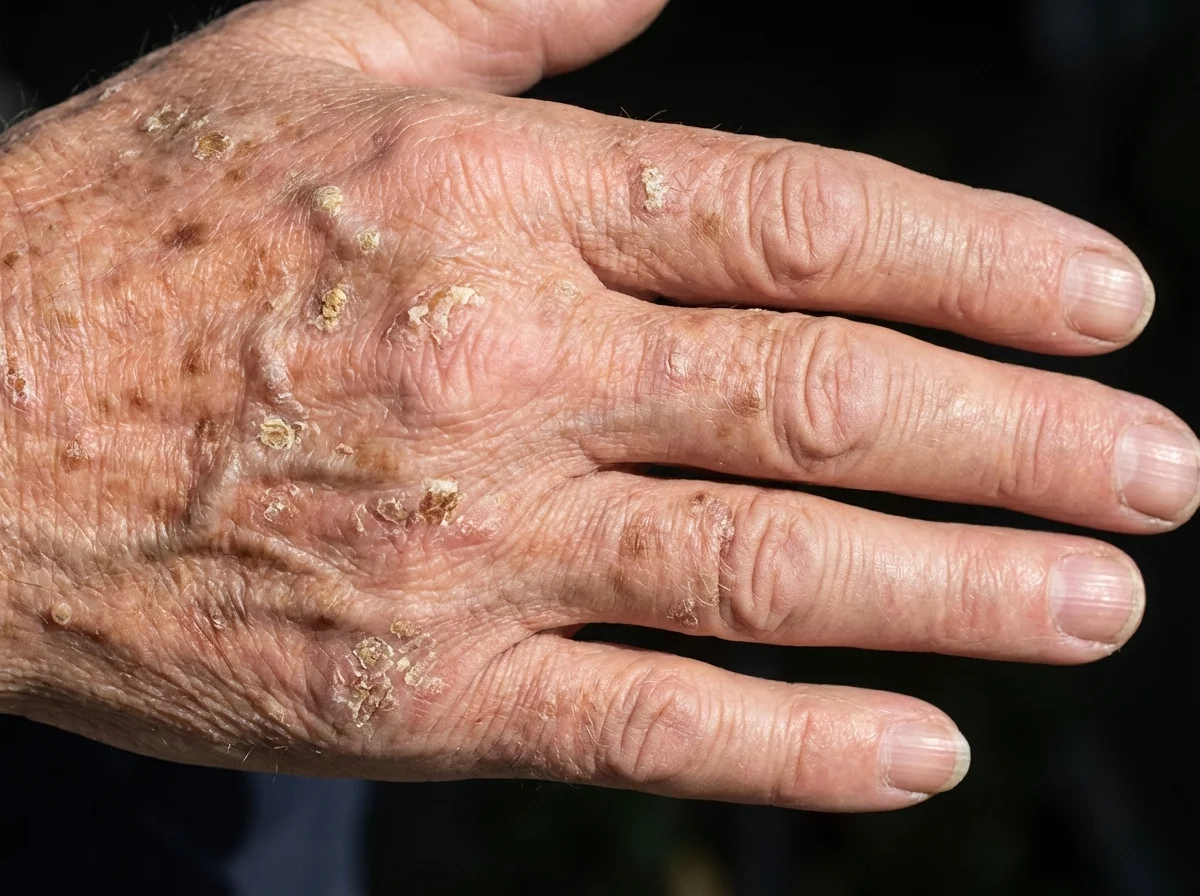
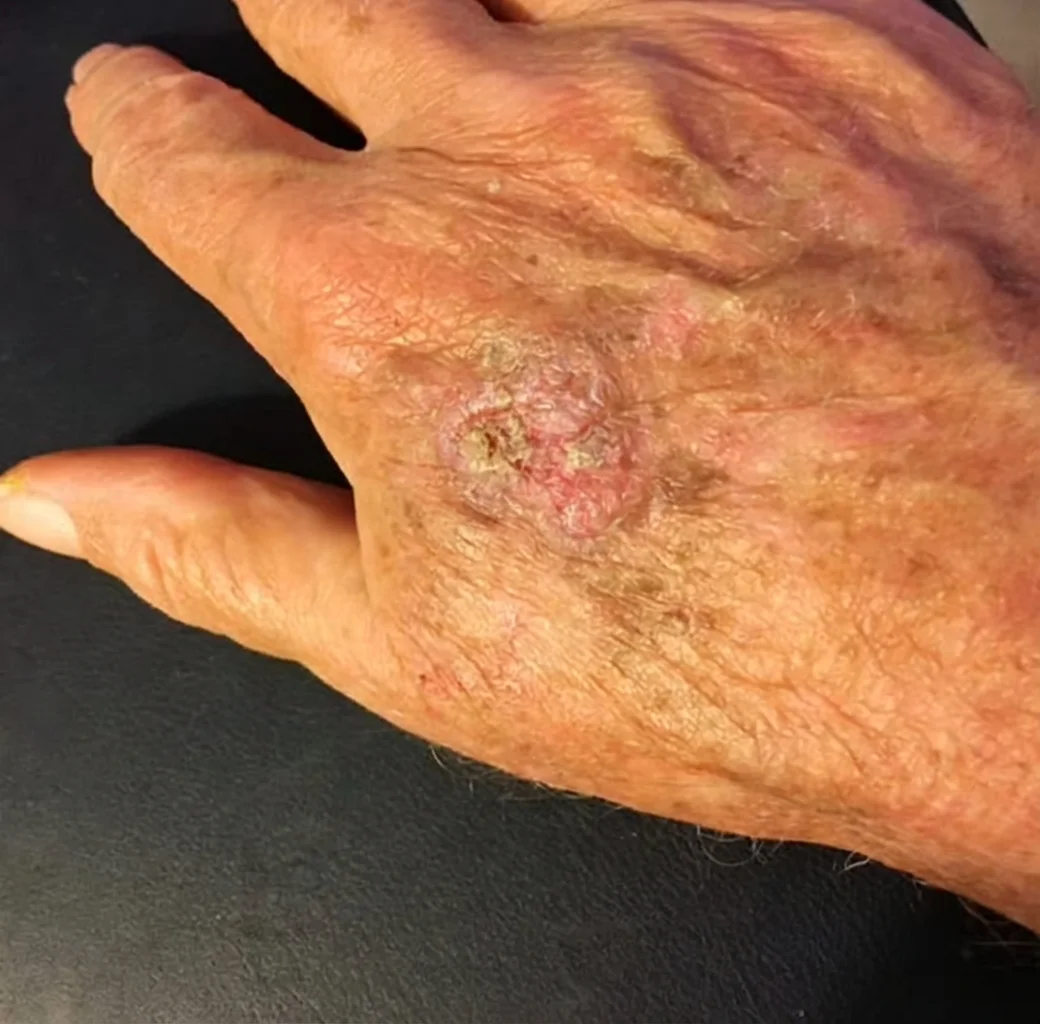
Precancerous & Cancerous Lesions
⚠️ Medical Warning: The following images are for educational purposes only. These lesions require immediate medical assessment. Our doctors will inspect all hand lesions before any cosmetic treatment and refer suspicious cases for biopsy.
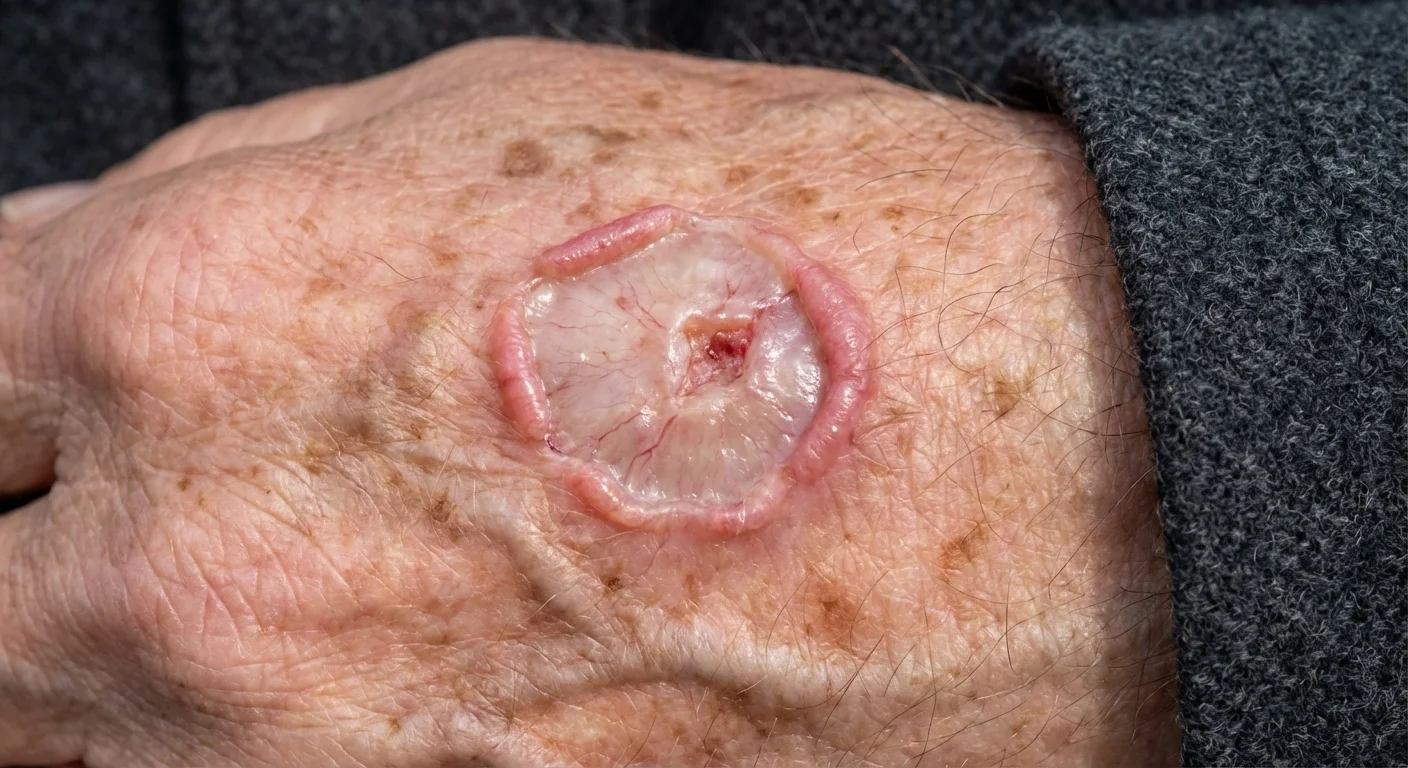
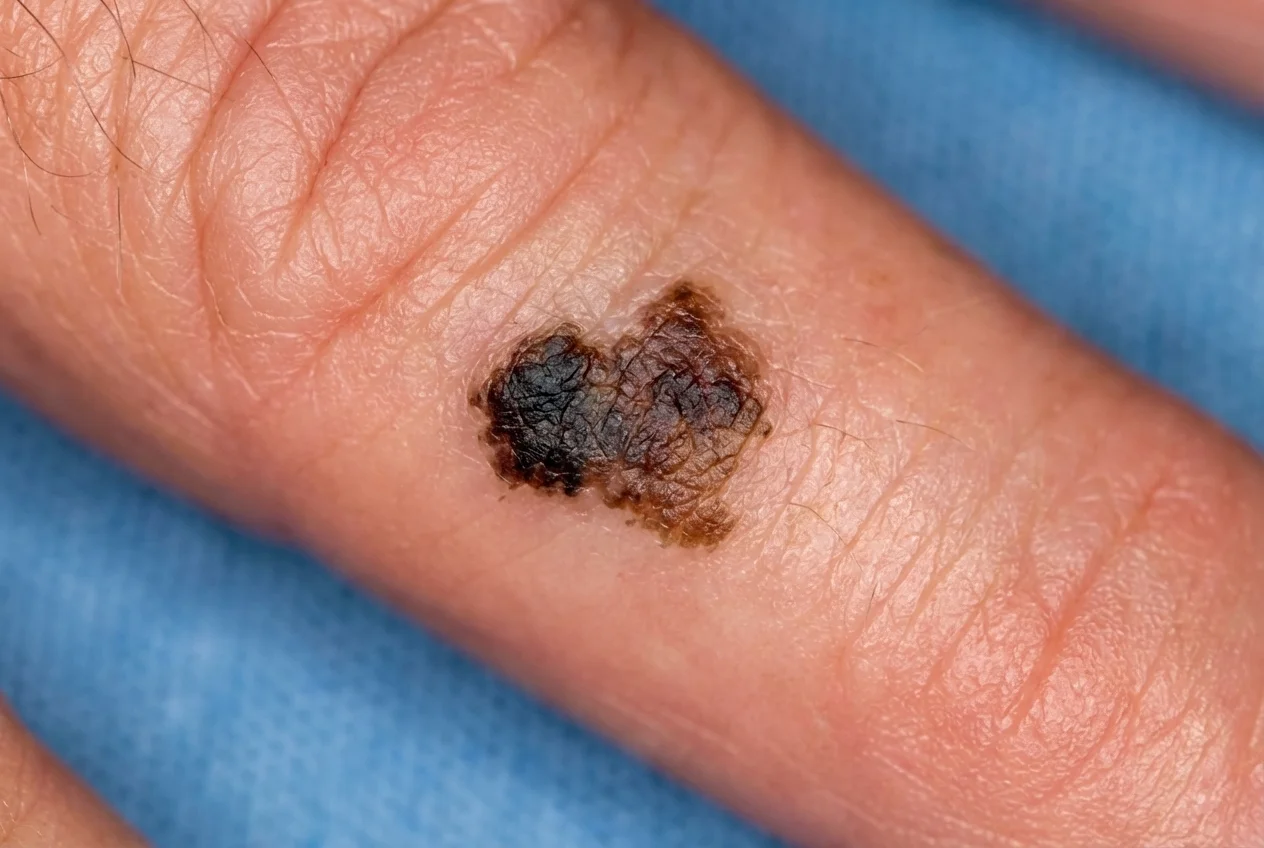
Not sure which treatment is right for your hands? Take our quick 2-question assessment.
Senile Lipodystrophy: Why Hands Look 'Bony'
As we age, we experience systematic fat loss in the hands, making the underlying bones, tendons, and veins progressively more prominent. This is clinically known as Senile Lipodystrophy. While hand creams cannot address this structural deficit, volumising treatments provide an immediate 'cushion' that masks these structures and restores a youthful, soft silhouette.
Treatment Options:
- Radiesse: A calcium-based filler that provides immediate volume and stimulates collagen over time.
- HA Fillers: Hyaluronic acid gels that can be dissolved if needed.
- PRF Biofiller (EZ Gel): Your own growth factors in a natural bio-matrix for gradual regeneration.
Skin Thinning: The Epidermal-Dermal Conflict
Ageing hands suffer from a paradoxical 'double-hit' effect. The superficial layer (epidermis) becomes thicker and rougher due to slower cell turnover, while the deep layer (dermis) becomes thinner due to collagen and elastin loss. This results in a leathery, crepey appearance.
Regenerative treatments like Polynucleotides, Profhilo, and PRP/PRF signal your fibroblasts to produce new structural proteins, effectively 'thickening' the dermis from the inside out while resurfacing treatments address the epidermal roughness.
Beyond Retail Hand Creams: The Prescription Approach
Over-the-counter hand creams provide temporary hydration but cannot reverse structural ageing. For meaningful improvement, a prescription-led approach is required:
Pigment Suppression & Brightening: While Hydroquinone remains the clinical gold standard for stubborn spots, we also utilise Alpha Arbutin, Kojic Acid, and Tranexamic Acid. These agents work synergistically to inhibit tyrosinase activity without the irritation profiles often associated with simpler products.
Dermal Architecture: Niacinamide and Tretinoin are used to repair the skin barrier and stimulate the production of new collagen and elastin proteins.
Our clinical team provides personalised formulations containing these medical-grade actives to maintain your results and prevent further UV-induced damage.
Why Choose PRP London Clinic for Hand Rejuvenation?
Our clinic offers a uniquely medical approach to hand aesthetics:
- GMC-Registered Medical Board: All treatments overseen by qualified doctors with specialist aesthetic training.
- Diagnostic Rigour: Proper lesion assessment before any cosmetic treatment—we prioritise your safety.
- Multi-Modal Protocols: We combine volume, texture, and pigment treatments for comprehensive results.
- Prescription Access: We can prescribe medical-grade topicals (Tretinoin, Hydroquinone) that retail products cannot match.
- Regenerative Focus: Beyond fillers, we offer PRF Biofiller and biostimulators for natural tissue regeneration.
- Long-Term Planning: We create maintenance protocols to preserve your results.
Location: Our hand rejuvenation protocols are available at our Harley Street-adjacent clinic at 33 Cavendish Square, Marylebone, London W1G 0PW—in the heart of London's premier medical district.
Evidence-Based Clinical References
Our treatment protocols are informed by peer-reviewed clinical research and established medical guidelines:
- Hand Revolumisation (CaHA): A 52-week study of safety and efficacy of calcium hydroxylapatite for rejuvenation of the aging hand. Journal of Drugs in Dermatology.
- PRP/PRF & Dermal Thickness: Effect of Patient Age on Platelet-Rich Plasma (PRP) and Fibrin Treatments for Skin Density and Thickness: A Single-Center Ultrasound Study.
- NHS Guidance — Skin Lesion Assessment: NHS diagnostic indicators for malignant melanoma and pigmented lesions — the basis for our pre-treatment safety screening.
References provided for educational purposes. Individual treatment recommendations are made during clinical consultation based on your specific presentation.
Treatment Process
At PRP London Clinic, we follow three clinical pathways for comprehensive hand restoration:
1. Structural Revolumisation (Bony Hands & Visible Veins): To treat bony hands and prominent veins, we use FDA-approved Radiesse (calcium hydroxylapatite)—demonstrated in clinical trials to provide immediate structural correction with high patient satisfaction scores (Goldman et al., 2019)—or high-rheology HA Fillers (Juvederm, Restylane) to replace the lost fat layer. For a 100% natural approach, PRF Biofiller (EZ Gel) utilises your own plasma-derived bio-matrix to regenerate the subcutaneous space, supported by research confirming PRF's role in increasing dermal thickness.
2. Dermal Repair (Thin, Crepey Skin): For thin, crepey skin lacking elasticity, we use Profhilo Structura or Polynucleotides to thicken the dermis and restore the 'snap-back' quality. These biostimulators signal your fibroblasts to produce new collagen and elastin—a mechanism validated in peer-reviewed regenerative medicine literature.
3. Pigment & Texture Correction (Sun Spots & Roughness): We utilise Sylfirm X with pigment-specific protocols and medical-grade Chemical Peels to erase sun spots (Lentigo). This is complemented by prescription-strength topicals including Hydroquinone for pigment suppression and Tretinoin for enhanced cellular turnover. Our lesion assessment protocol follows NHS guidance for identifying potentially malignant pigmented lesions.
Diagnosis & Assessment
Our Hand Diagnosis Protocol involves a dual-layer assessment. First, we evaluate the 'Volume Deficit' using anatomical grading to quantify how much subcutaneous fat has been lost—this determines whether structural revolumisation with fillers or biostimulators is indicated. Second, we perform a clinical inspection of all pigmented lesions. It is medically vital to distinguish benign 'sun spots' (Lentigo Simplex) from precancerous lesions (Actinic Keratosis) or skin cancers like Basal Cell Carcinoma (BCC) and Melanoma. Our doctors provide a safe clinical pathway for any suspicious lesions—including referral for biopsy—before commencing cosmetic rejuvenation. Third, we assess dermal thickness, elasticity (the 'snap-back' test), and surface texture to determine which regenerative or resurfacing treatments are appropriate.
Prevention & Management
Lifestyle Tips
- •Apply broad-spectrum SPF 50 to hands daily—UV exposure is the primary driver of hand ageing
- •Reapply sunscreen after washing hands (most people forget this critical step)
- •Wear driving gloves or UV-protective gloves during prolonged sun exposure
- •Avoid harsh soaps and detergents that strip the skin's protective barrier
- •Stay well-hydrated to support skin plumpness
- •Avoid smoking, which accelerates collagen degradation
Home Care
- •Use medical-grade retinoids (Tretinoin, Retinal) to stimulate collagen synthesis and epidermal turnover.
- •Utilise advanced pigment suppressors: Hydroquinone (the gold standard), or high-efficacy alternatives like Alpha Arbutin, Kojic Acid, and Tranexamic Acid.
- •Apply Niacinamide (Vitamin B3) to strengthen the skin barrier and improve overall tone and elasticity.
- •Apply barrier-repair moisturisers containing ceramides and hyaluronic acid.
- •Apply antioxidant serums (Vitamin C) to neutralise free radical damage from UV exposure.
Symptoms & Causes
Common Symptoms
- Prominent veins and tendons (Senile Lipodystrophy)
- Translucent, 'crepey' or parchment-like skin texture
- Flat brown/black pigment spots (Lentigo Simplex)
- Rough epidermal texture and dullness
- Rough, scaly patches (Potential Actinic Keratosis)
- Loss of protective subcutaneous fat pads
- Visible bones and tendons on the back of hands
- Thin, fragile skin prone to bruising
- Uneven skin tone and discolouration
Potential Causes
- Senile Lipodystrophy: The systematic loss or redistribution of subcutaneous fat that makes hands appear 'bony' and skeletal—clinically documented as a primary biomarker of chronological ageing
- Dermal Atrophy: Thinning of the deep skin layer (dermis) due to reduced collagen and elastin production, well-established in dermatological literature as a key target for regenerative interventions
- UV-Induced Photodamage: Radiation-driven pigment accumulation (Lentigo Simplex) and cellular DNA mutations—the primary driver of extrinsic hand ageing
- Epidermal Thickening: Slower shedding cycles leading to a rough, 'leathery' surface texture
- Environmental & Chemical Stress: Prolonged exposure to extreme temperatures, harsh detergents, and chemicals
- Hormonal Changes: Post-menopausal collagen decline accelerates hand ageing—supported by PRF research showing improved dermal thickness in atrophic skin
- Genetic Predisposition: Some individuals are genetically prone to earlier or more pronounced hand ageing
Treatment Options at PRP London
Dermal Fillers (Radiesse/HA)
FDA-approved structural revolumisation for bony and veiny hands using high-rheology gels to replace lost fat volume.
View Dermal Fillers (Radiesse/HA)Prefer a 100% natural alternative?
Discover if EZ Gel PRF Biofiller is right for your hands.
PRF Biofiller (EZ Gel)
100% natural, autologous regeneration for thin, atrophic hand skin using your body's own growth factors.
View PRF Biofiller (EZ Gel)Profhilo & Skin Boosters
Advanced adipose-remodelling and bio-stimulation to restore the 'snap-back' elasticity of hand skin.
View Profhilo & Skin BoostersSylfirm X Radiofrequency
Precision RF microneedling to target hand pigmentation (Lentigo) and stimulate deep dermal collagen.
View Sylfirm X RadiofrequencyChemical Peels
Medical-grade epidermal resurfacing for surface age spot removal and texture improvement.
View Chemical PeelsPolynucleotides Treatment
Bio-regenerative therapy to thicken the dermis and improve skin quality at a cellular level.
View Polynucleotides TreatmentFrequently Asked Questions
Most are Lentigo Simplex (harmless sun spots), but some can be Actinic Keratosis (precancerous) or even melanoma. Our doctors will inspect your hands during the consultation to ensure any spots are safe to treat cosmetically. If we identify anything suspicious, we'll refer you for appropriate dermatological assessment before proceeding.
Structural fillers like Radiesse typically last 12-18 months in the hands, often longer than in the face due to less movement. HA fillers last 9-12 months. PRF Biofiller (EZ Gel) focuses on long-term tissue regeneration rather than immediate volume, so results develop over months and can be maintained with periodic sessions.
Yes. Retinoids like Tretinoin are the gold standard for maintaining hand skin quality and preventing further thinning. They stimulate collagen production and accelerate cell turnover. Our clinical team can provide prescriptions for medical-grade topicals tailored to your skin type.
We use topical numbing cream and most fillers contain lidocaine (local anaesthetic). Patients typically describe mild pressure or stinging rather than significant pain. The hands have more nerve endings than the face, so some sensitivity is normal, but the procedure is very well-tolerated.
For volumising fillers, expect mild swelling and potential bruising for 3-7 days. You can return to normal activities immediately but should avoid strenuous hand activities for 24-48 hours. For pigment treatments (Sylfirm X, peels), expect some redness and flaking for a few days. We provide detailed aftercare instructions.
Hands are exposed to as much UV as the face but rarely receive the same skincare attention. They also lack the thick fat layer found on the face and are subject to frequent washing with harsh soaps. This combination accelerates ageing. The good news is that hands respond very well to treatment.
Yes. Visible veins are usually due to fat loss (Senile Lipodystrophy) rather than abnormal veins. By replacing the lost subcutaneous fat with volumising fillers, we effectively 'cushion' over the veins, making them much less prominent. The result is a softer, more youthful hand contour.
Not Sure Which Hand Treatment is Right for You?
Our quick 2-question assessment helps match your hand concerns to the ideal treatment pathway. Results are educational only—your consultation will confirm the best approach.
Verified Clinical Reputation
Ruby K
19 Jan 2026
Norin Hanifi
19 Jan 2026
Dominique Heslop
13 Jan 2026
lloyda221
06 Jan 2026
Mane Authority
06 Jan 2026
Victor Contreras Guerra
4 months ago
A A
5 months ago
harris jan
3 months ago
Independent Patient Feedback
Verify on Google Reviews →Clinical Note: To protect patient confidentiality while maintaining educational clarity, some anatomical illustrations on this site utilise medically-verified, AI-generated models. Every anatomical demonstration is reviewed for clinical accuracy by our GMC-registered medical board.