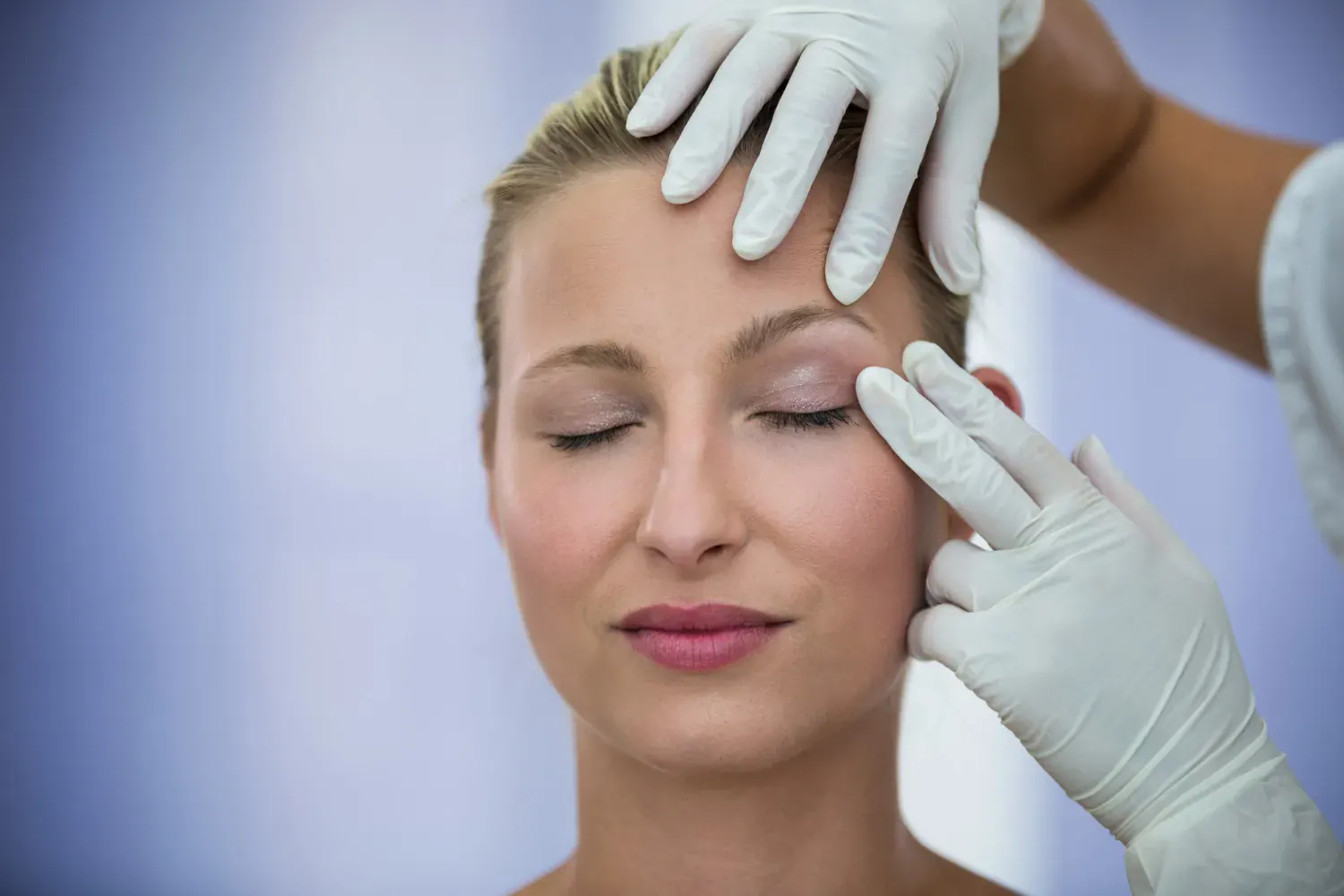
Brow Lift & Bunny Lines Treatment in London
GMC-registered doctors | Non-surgical brow lift and bunny lines correction | Consultation-led treatment at 33 Cavendish Square
Duration
15-20m15-20 mins
Sessions
1 (review at 2 weeks)1 (review at 2 weeks)
Price From
£275£275
Downtime
MinimalMinimal
Key Benefits
- Non-surgical brow elevation without incisions or downtime
- Effective bunny lines reduction in the same appointment
- Consultation-led approach with GMC-registered doctors only
- Subtle, natural-looking results preserving facial expression
- Quick procedure — typically 15–20 minutes
- Fully reversible — effects wear off naturally if you choose not to maintain
- Correction consultations available for unsatisfactory results from other providers
- Mandatory two-week review to assess results and refine if needed
Common Target Areas
Brow Lift & Bunny Lines Treatment at PRP London Clinic
Brow lift London treatment at PRP London Clinic offers a non-surgical approach to elevating the brow position and smoothing bunny lines on the nose — all performed by GMC-registered doctors at 33 Cavendish Square. If you are searching for an eyebrow lift London solution that avoids surgery, incisions, and extended downtime, targeted prescription-only injections can achieve a subtle, natural lift by relaxing the muscles that pull the brow downward.
This page covers two closely related upper face concerns: brow ptosis (a heavy or low-set brow) and bunny lines (the diagonal creases that form across the bridge of the nose during facial expression). Both are treated using the same class of prescription-only medicine and are frequently combined in a single appointment. Our consultation-led approach ensures your treatment plan is tailored to your individual anatomy, muscle activity, and aesthetic goals.
This treatment sits within our comprehensive anti-wrinkle treatment programme. For forehead lines, frown lines, and crow's feet, visit our upper face page.
This procedure is part of our comprehensive Guide to Dynamic Wrinkles & Expression Lines.
Your Doctors for Brow Lift & Bunny Lines in London
Every brow lift London consultation and treatment at PRP London Clinic is performed by a GMC-registered doctor. Our medical team includes Dr Bruno Amendola (GMC: 4346629), who holds an international postgraduate qualification in aesthetic medicine and Save Face accreditation with particular expertise in upper face rejuvenation and non-surgical brow lift techniques; Dr Mohamed Nafei (GMC: 7520509), whose PgDip in Aesthetic Medicine and PgDip in Endocrinology inform a holistic approach to facial anatomy and eyebrow lift treatment London protocols; Dr Reem Nouri (GMC: 6149512), whose MBBS, DRCOG, and advanced aesthetic medicine training enable precise bunny lines treatment London delivery with natural-looking results; and Dr Mohammad Akbar (GMC: 5206673), our Founder and Medical Director, a Fellow of the Royal College of Surgeons of Edinburgh whose surgical background ensures the highest clinical standards across every botox brow lift London procedure we perform.
Understanding Brow Ptosis and Bunny Lines
Brow Ptosis: Why the Eyebrows Drop
Brow position is determined by the balance between elevator muscles (the frontalis, which raises the brow) and depressor muscles (the orbicularis oculi, procerus, and corrugator supercilii, which pull the brow downward and inward). As we age, the depressor muscles often become relatively dominant — compounded by loss of skin elasticity and gravitational descent — resulting in a heavy, low-set brow that can make the face appear tired or aged. A non-surgical brow lift works by selectively relaxing these depressor muscles, allowing the frontalis to elevate the brow unopposed and restoring a more open, refreshed appearance to the upper face.
Bunny Lines: The Nasalis Muscle
Bunny lines are the diagonal creases that appear on either side of the nose bridge when you scrunch your face or laugh. They are caused by contraction of the nasalis muscle. While subtle bunny lines are a normal part of facial expression, they can become more prominent with age or may develop as a compensatory movement after treatment to the frown line area. Targeted injection into the nasalis muscle softens these lines without affecting your ability to smile or express naturally.
How Targeted Injection Achieves a Lift
A systematic review published in Dermatologic Surgery confirmed that targeted injection of brow depressor muscles achieves measurable brow elevation, supporting non-surgical eyebrow lift protocols. By carefully dosing the lateral portion of the orbicularis oculi, the procerus, and the corrugator, your doctor creates a controlled relaxation that allows the forehead's elevator muscle to lift the brow — typically by 1–3 millimetres. This subtle elevation opens the eye area and can reduce lateral hooding without the need for surgery.
For patients considering coordinated rejuvenation beyond the brow area, explore our doctor-led non-surgical facelift approach.
How Brow Lift & Bunny Lines Treatment Is Performed
Brow Lift Injection Technique
For a non-surgical brow lift London treatment, your doctor targets three key depressor muscle groups. Small, precisely measured doses of prescription-only botulinum toxin are injected into the lateral portion of the orbicularis oculi (the muscle surrounding the eye that pulls the outer brow down), the procerus (the central muscle between the brows that pulls downward), and the corrugator supercilii (which draws the brows together and down). Typical dosing ranges from 4–10 units per side, adjusted according to your individual muscle mass and desired degree of lift. The goal is to weaken the downward pull while preserving natural brow movement.
Bunny Lines Injection Technique
For bunny lines treatment, 2–6 units are typically placed into the nasalis muscle on each side of the nose bridge. The injection is superficial and uses an ultra-fine needle. Your doctor assesses the nasalis during active expression to identify the precise placement that will soften the crease pattern without affecting surrounding muscle groups.
What to Expect
The combined procedure takes approximately 15–20 minutes. Most patients describe a brief, mild pinch at each injection point. No anaesthesia is required, though topical numbing cream is available if preferred. You can return to normal activities immediately. Initial results typically appear within 3–5 days, with the full effect visible at 10–14 days. A two-week review appointment is included to assess the result and make any refinements.
Your Brow Lift & Bunny Lines Treatment Journey
Book Your Consultation
Schedule an appointment online or by phone at PRP London Clinic, 33 Cavendish Square, London W1G 0PW. Allow 30 minutes for your initial visit.
Face-to-Face Assessment
Your GMC-registered doctor reviews your medical history, assesses brow position at rest and during expression, evaluates nasalis muscle activity for bunny lines, and identifies any asymmetry or contributing factors.
Personalised Treatment Plan
Based on the assessment, your doctor recommends a tailored injection plan — specifying which muscles to target, the dosing strategy for brow lift and bunny lines, expected outcomes, associated risks, and pricing. There is no obligation to proceed.
Treatment
If proceeding, your doctor uses precise injection techniques to target brow depressors and the nasalis muscle. The combined treatment typically takes 15–20 minutes using ultra-fine needles.
Aftercare Guidance
You receive specific aftercare instructions including avoiding touching the brow and nasal area, remaining upright, and activity restrictions for 24 hours. Results develop over 3–14 days.
Two-Week Review
A follow-up appointment assesses your brow elevation, bunny line reduction, symmetry, and overall result. Any refinement is performed at this stage if needed.
Maintenance Plan
Your doctor advises on maintenance intervals, typically every 3–4 months, and whether complementary treatments may enhance or prolong your results.
Brow Lift Correction and Asymmetry Assessment
If you have received a brow lift or upper face treatment at another clinic and are unhappy with the outcome, PRP London Clinic offers a correction consultation. Common concerns include brow asymmetry following treatment, over-treatment causing a startled or unnatural appearance, under-treatment with insufficient lift, compensatory bunny lines that developed after frown line treatment, or eyelid heaviness from product migration.
Our doctors assess each case individually to determine whether correction is possible. In some instances, targeted supplementary treatment can address asymmetry or under-treatment. In other cases — particularly with over-treatment or ptosis — the most appropriate course is to allow the existing treatment to wear off before retreating with a revised protocol. Your doctor will provide an honest assessment of what can realistically be achieved. A consultation fee applies regardless of whether correction is possible.
Non-Surgical Brow Lift vs Surgical Brow Lift
| Factor | Non-Surgical Brow Lift (Injection) | Surgical Brow Lift (Endoscopic / Thread) |
|---|---|---|
| Procedure time | 15–20 minutes | 1–2 hours (endoscopic) / 30–60 minutes (thread) |
| Anaesthesia | None or topical numbing cream | General or local anaesthetic with sedation |
| Downtime | Minimal — return to normal activities same day | 1–3 weeks recovery, swelling and bruising |
| Results onset | 3–14 days | Final results at 3–6 months |
| Degree of lift | Subtle — typically 1–3 mm elevation | More significant repositioning possible |
| Longevity | 3–4 months (maintenance required) | 5–10 years (endoscopic) / 1–2 years (thread) |
| Scarring | None | Small incisions behind hairline (endoscopic) / entry points (thread) |
| Reversibility | Fully reversible — effects wear off naturally | Permanent structural changes (endoscopic) |
| Risk profile | Low — transient bruising, rare ptosis | Higher — nerve damage, scarring, infection, asymmetry |
| Best for | Mild-to-moderate brow ptosis, subtle enhancement, bunny lines | Significant brow descent, deep structural laxity |
| Starting cost | From £275 | £3,000–£7,000+ (surgical) |
Brow Lift & Bunny Lines Cost in London
Brow lift cost London at PRP London Clinic starts from £275. The final price depends on whether you are having a brow lift alone, bunny lines treatment alone, or a combination of both, as well as the number of units required for your individual anatomy. A detailed, transparent quote is provided during your consultation with no hidden fees.
Many patients combine brow lift and bunny lines treatment with upper face areas such as forehead lines and crow's feet for a comprehensive upper face rejuvenation. Your doctor will discuss all options and associated costs during your assessment. Consultation fees are deducted from the treatment cost if you proceed on the same day.
Safety of Brow Lift & Bunny Lines Treatment
The safety of botulinum toxin for upper face rejuvenation is well-established in the clinical literature. A systematic review and meta-analysis published in the Aesthetic Surgery Journal (Zargaran et al., 2022) analysed 4,268 injection sessions in the glabellar and forehead region, finding an overall complication rate of 16% — with the vast majority of complications mild and transient. Headache (6.3%) and local skin reactions (3.8%) were the most commonly reported adverse effects.
The most significant technique-dependent risk specific to brow lift treatment is eyelid ptosis (drooping), which occurs when product migrates to the levator palpebrae superioris muscle. This risk is minimised by precise injection placement, appropriate dosing, and adherence to aftercare instructions — particularly remaining upright and avoiding rubbing the treatment area. In the rare event that ptosis occurs, it is temporary and resolves as the product wears off, typically within 2–6 weeks.
At PRP London Clinic, all treatments are administered by GMC-registered doctors with advanced aesthetic training. A meta-analysis of 32 randomised controlled trials involving 9,669 patients confirmed the overall acceptable safety profile of cosmetic botulinum toxin when administered by qualified practitioners.
Aftercare Following Brow Lift & Bunny Lines Treatment
First 24–48 Hours
- Remain upright for at least 4 hours after treatment
- Avoid touching, rubbing, or massaging the brow area and nose bridge
- Do not apply makeup to injection sites for 12 hours
- Avoid strenuous exercise, saunas, steam rooms, and hot baths
- Do not wear headbands, tight hats, or heavy-framed eyeglasses that press on the brow area
- Limit alcohol consumption
- Sleep on your back if possible for the first night
First Two Weeks
- Results typically begin to develop within 3–5 days, with full brow lift effect visible at 10–14 days
- Avoid dental procedures for 2 weeks
- Do not have facials or facial massages for 2 weeks
- Avoid prolonged bending or lying face-down
- Attend your scheduled two-week review appointment
- Contact the clinic immediately if you experience significant eyelid drooping, difficulty closing the eye, or any unusual symptoms
Your doctor will provide written aftercare instructions specific to your treatment areas at the time of your appointment.
Who Is Suitable for Brow Lift & Bunny Lines Treatment?
| Ideal Candidate | May Need an Alternative Approach |
|---|---|
| Mild-to-moderate brow ptosis with visible heaviness or asymmetry | Severe brow descent with significant excess upper eyelid skin (may require surgical brow lift or blepharoplasty) |
| Visible bunny lines during facial expression or at rest | Deep static nasal creases unresponsive to muscle relaxation (may benefit from dermal fillers or skin resurfacing) |
| Seeking subtle, natural-looking brow elevation without surgery | Expecting dramatic lift or permanent repositioning of the brow |
| In good general health with no neuromuscular conditions | Those with myasthenia gravis, Lambert-Eaton syndrome, or similar conditions |
| Not pregnant or breastfeeding | Currently pregnant, breastfeeding, or planning pregnancy in the near term |
| Committed to maintenance appointments every 3–4 months | Seeking a permanent one-time solution |
Contraindications for Brow Lift & Bunny Lines Treatment
Your suitability for brow lift and bunny lines treatment is determined during your medical consultation. The following conditions are contraindications:
- Neuromuscular disorders — myasthenia gravis, Lambert-Eaton syndrome, amyotrophic lateral sclerosis
- Pregnancy or breastfeeding — treatment is not administered during pregnancy or lactation
- Allergy or hypersensitivity — known allergy to botulinum toxin or any formulation excipients
- Active skin infection — any infection at the proposed injection site must be resolved first
- Bleeding disorders — including patients on anticoagulant therapy (discussed on a case-by-case basis)
- Significant dermatochalasis — excessive upper eyelid skin laxity may require surgical assessment rather than non-surgical brow elevation
- Certain medications — aminoglycoside antibiotics, muscle relaxants, or other medications that may interact
If you are unsure whether any of these apply to you, your consulting doctor will review your full medical history and advise accordingly. All decisions are made with patient safety as the primary consideration.
Medical Disclaimer
This page is intended for informational and educational purposes only. The content does not constitute medical advice, diagnosis, or a recommendation for any specific treatment. Certain treatments described involve prescription-only medicines that can only be prescribed by a qualified medical professional following a face-to-face assessment. Individual results vary, and outcomes cannot be guaranteed. All medical treatments carry risks, which will be discussed in full during your consultation. This content was last reviewed on 2 April 2026 by the medical team at PRP London Clinic.
Brow Lift Treatment Near You in Central London
PRP London Clinic is located at 33 Cavendish Square, London W1G 0PW, in the heart of Marylebone — one of London's most established medical districts. Our clinic is a short walk from Oxford Circus (Central, Victoria, and Bakerloo lines), Bond Street (Central and Jubilee lines), and Regent's Park (Bakerloo line). If you are searching for a brow lift London clinic with GMC-registered doctors, convenient central access, and a consultation-led approach, PRP London Clinic provides specialist non-surgical brow lift and bunny lines treatment tailored to your individual anatomy.
Book Your Brow Lift & Bunny Lines Consultation Today
Take the first step toward a refreshed, more open brow and smoother nasal profile. Book a consultation with one of our GMC-registered doctors at PRP London Clinic to receive a personalised assessment for brow lift and bunny lines treatment in London. Whether you are considering a non-surgical eyebrow lift for the first time or seeking a second opinion on a previous treatment, our medical team is here to help you make an informed decision.
Myths vs Facts
A brow lift will leave you with a frozen forehead and no expression.
When performed by an experienced, GMC-registered doctor using precise dosing, a non-surgical brow lift softens brow heaviness while preserving natural movement and expression. The 'frozen' look results from over-treatment — our doctors tailor every plan to the individual's anatomy, muscle strength, and aesthetic preferences.
Surgery is the only way to lift a drooping brow.
For mild-to-moderate brow ptosis, targeted injection of brow depressor muscles achieves measurable elevation of 1–3 millimetres without surgery, incisions, or downtime. A systematic review in Dermatologic Surgery confirmed the efficacy of non-surgical brow lift protocols. Surgery may be appropriate for severe cases, but many patients achieve their desired result non-surgically.
Bunny lines are just a normal part of ageing and nothing can be done about them.
While bunny lines can develop naturally with age, they can also become more prominent as a compensatory movement after frown line treatment. Targeted injection into the nasalis muscle softens bunny lines effectively in a few minutes, and the treatment is commonly combined with a brow lift in the same appointment.
Botox in the brow area will make my eyebrows feel heavy.
A properly performed brow lift targets the depressor muscles that pull the brow downward. By relaxing these muscles, the frontalis (elevator) can lift the brow more effectively — resulting in a lighter, more open feeling around the eyes, not a heavier one. Heaviness only occurs if the frontalis itself is over-treated, which is avoided through careful assessment and dosing.
Brow lift treatment is only for older patients.
Brow lift treatment is suitable for adults of various ages. Some younger patients have naturally low-set brows or develop early brow heaviness, while others seek preventative treatment. The decision is based on your individual anatomy and concerns, not your age. A consultation determines whether treatment is appropriate and beneficial at any stage.
The results of a non-surgical brow lift look obviously 'done'.
A well-executed non-surgical brow lift achieves a subtle, natural-looking elevation — typically 1–3 millimetres — that refreshes the eye area without appearing artificial. The goal is to restore a more youthful brow position, not to create an exaggerated arch. Most people will notice you look refreshed rather than identifying a specific treatment.
Frequently Asked Questions
Clinical Evidence & Scientific References
Camargo (2021): Botulinum toxin type A for facial wrinkles
Cristina Pires Camargo, Jun Xia, Caroline S Costa, Rolf Gemperli, Maria Dc Tatini, Max K Bulsara, Rachel Riera · Cochrane Database of Systematic Reviews, 2021PMID: 34224576
Supports: Cochrane review of 65 RCTs (14,919 participants) confirming botulinum toxin type A reduces wrinkles within four weeks of treatment with high-to-moderate certainty evidence.
Limitations: Heterogeneous study designs. Most studies limited to glabellar region. Lack of evidence on multiple treatment cycles and long-term outcomes.
View on PubMed →Zargaran (2022): Complications of Cosmetic Botulinum Toxin A Injections to the Upper Face: A Systematic Review and Meta-Analysis
David Zargaran, Florence Zoller, Alexander Zargaran, Eqram Rahman, Alexander Woollard, Tim Weyrich, Afshin Mosahebi · Aesthetic Surgery Journal, 2022PMID: 35178552
Supports: Systematic review and meta-analysis of 24 studies (4,268 injection sessions) confirming cosmetic botulinum toxin injections in the glabellar and forehead region are safe with most complications mild and transient. Overall complication rate was 16%, with headache (6.3%) and local skin reactions (3.8%) most common.
Limitations: Heterogeneous reporting of complications across studies. Lack of consistent definition of treatment-related complications. In 70% of studies, the training status of the practitioner was not reported.
View on PubMed →Ng (2022): Use of Micro Botulinum Toxin for a Face-lifting Effect: A Systematic Review
Zhi Yang Ng, Alexandre G Lellouch · Dermatologic Surgery, 2022PMID: 35560135
Supports: Systematic review of micro-botulinum toxin for face-lifting effects including brow elevation. Reported that targeted injection of brow depressors achieves measurable brow elevation, supporting non-surgical brow lift protocols.
Limitations: Only 372 patients studied with highly variable injection sites and assessment methods. Subjective assessment between patients and physicians was highly discordant. Much heterogeneity in dosage, definition of face-lifting, and outcomes precludes definitive conclusions.
View on PubMed →Gostimir (2022): Safety of Botulinum Toxin A Injections for Facial Rejuvenation: A Meta-Analysis of 9,669 Patients
Mišo Gostimir, Victor Liou, Michael K Yoon · Ophthalmic Plastic and Reconstructive Surgery, 2022PMID: 35353777
Supports: Meta-analysis of 32 RCTs involving 9,669 patients confirming acceptable overall safety profile for cosmetic botulinum toxin.
Limitations: Pooled RR of any treatment-related adverse event was 1.53 vs placebo. Literature search limited to January 2020.
View on PubMed →*PRP London Clinic provides these references for educational purposes. Our Clinical Board regularly reviews emerging peer-reviewed literature to ensure our protocols align with the latest advancements in regenerative medicine.
Quick Links
Our Medical Team
Your treatment will be performed by one of our qualified medical professionals
Dr Mohamed Nafei
GMC: 7520509GMC-registered doctor with 10+ years experience. Expert in PRP, exosomes, and ad...
Profile
Dr Reem Nouri
GMC: 6149512GMC-registered doctor with nearly 20 years of medical experience including 10+ y...
Profile
Dr Bruno Amendola
GMC: 4346629Highly sought-after aesthetic physician with decades of medical experience, inte...
Profile
Dr Mohammad Akbar
GMC: 5206673FRCS (Edinburgh) Fellow of the Royal College of Surgeons with extensive experien...
Scroll to see all
Ready to Get Started?
Book your consultation today and take the first step towards your transformation.
Book ConsultationVerified Clinical Reputation
Ruby K
19 Jan 2026
Norin Hanifi
19 Jan 2026
Dominique Heslop
13 Jan 2026
lloyda221
06 Jan 2026
Mane Authority
06 Jan 2026
Victor Contreras Guerra
4 months ago
A A
5 months ago
harris jan
3 months ago
Independent Patient Feedback
Read all verified stories →Medical Suitability Note
As a GMC-regulated practice, a mandatory consultation is required for all new patients to assess suitability and clinical need. This treatment may not be appropriate for everyone. All procedures are performed by GMC-registered doctors whose credentials can be verified on the official GMC register.