
Medical Review
Medically reviewed by Dr Mohamed NafeiQuick Navigation
- Why treatment records matter in aesthetics
- What a complete treatment record contains
- Consent is per treatment, not per patient
- Product and batch details, and why they matter most
- How we document treatments at PRP London
- Questions to ask any clinic before you are treated
- Your right to see your own records
Most people choose an aesthetic clinic on results, reviews and price. Very few ask what the clinic writes down. It is an unglamorous question, but if something ever goes wrong, or you simply want the same result again in twelve months, the quality of your treatment record is what decides whether that is possible.
This guide sets out what a complete aesthetic treatment record should contain in the UK, why each part of it matters clinically, and the questions worth asking before you let anyone inject you.
Why treatment records matter in aesthetics
Aesthetic medicine sits in an awkward regulatory gap. Botulinum toxin is a prescription-only medicine, so it has to be prescribed by a qualified prescriber following a personal assessment. Dermal fillers are regulated as medical devices rather than medicines, which means the product itself clears a lower bar before it reaches the market. The Government has legislated for a licensing scheme for non-surgical cosmetic procedures in England under the Health and Care Act 2022, and standards across the sector are tightening.
In the meantime, how a clinic documents is the most reliable proxy you have for how seriously it takes safety. Records are not administration. They are the clinical backbone of three things:
- Continuity. If you return in a year, or see a different practitioner, the next person needs to know exactly what was used, how much of it, and where it went.
- Complication management. If you develop a problem, the right treatment depends on knowing precisely what is in your face and when it was placed.
- Accountability. A contemporaneous record is what protects both you and the practitioner if there is ever a disagreement about what was agreed.
Doctors and nurses on the GMC and NMC registers already carry a professional duty to keep clear, accurate and contemporaneous clinical records. Not everyone injecting in the UK is on one of those registers, which is exactly why the question is worth asking.
What a complete treatment record contains
A properly documented appointment should produce all of the following:
- A medical history covering current medications, allergies, previous aesthetic treatments, autoimmune conditions, and pregnancy or breastfeeding status.
- Treatment-specific consent recorded before treatment begins, naming the risks of that particular procedure.
- Prescriber details wherever a prescription-only medicine is involved.
- The product, the quantity, and the batch or lot number.
- Injection sites and depths, ideally marked on a facial diagram or photograph rather than described in prose.
- Standardised before and after photographs, taken in consistent lighting and position so they are actually comparable.
- Clinical notes covering what was discussed, what was agreed, and anything unusual during treatment.
- Aftercare given and follow-up arranged, including how to reach someone urgently.
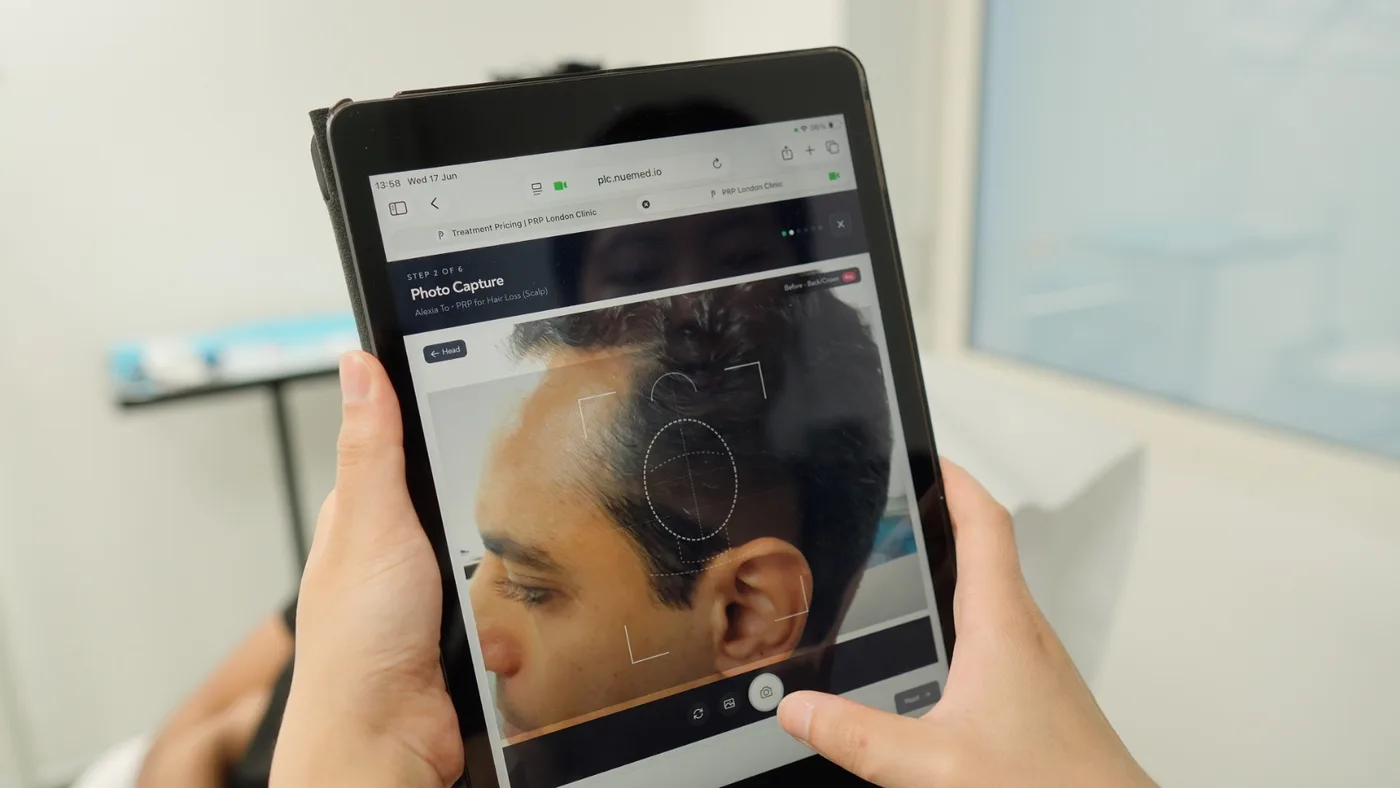
If a clinic cannot produce that list on request, the record is incomplete.
Consent is per treatment, not per patient
A common shortcut is one consent form signed at a first visit and then treated as covering everything that follows. That is not how consent works. Consent is specific to the procedure, the product and the moment, and it should be taken fresh whenever the treatment changes.
Consent for lip filler is not consent for tear troughs. Consent given last year does not cover a different product this year. And valid consent requires that you were told about the material risks of that specific procedure, including the rare ones.
What should not happen is being asked to rebuild your entire medical history from scratch at every visit. A well-run clinic already holds your history, asks you to confirm or update what has changed, and then takes fresh consent for the specific procedure in front of you.
Product and batch details, and why they matter most
If you take one thing from this guide, make it this.
Dermal fillers are not interchangeable. Most fillers used in the UK are hyaluronic acid based, and hyaluronic acid can be dissolved using an enzyme called hyaluronidase. Some fillers are not hyaluronic acid at all. Poly-L-lactic acid and calcium hydroxylapatite products, for instance, cannot be dissolved.
That distinction becomes urgent in a vascular occlusion, where filler compromises the blood supply to an area of tissue. It is rare, but it is the complication that matters, and it is time-critical. Whoever treats you needs to know immediately which product was used and where it was placed. A note reading "1ml filler, lips" is close to useless. A record naming the product, the volume and the batch number, with the injection points marked, is what allows someone to act.
Batch numbers matter for a second reason. They are what makes a product recall, or a Yellow Card report to the MHRA, traceable back to you specifically.
How we document treatments at PRP London
We run our clinical records on nuemed, the clinic software we use for booking, consent, notes, photography and follow-up. We were one of its earliest clinics, and we have now used it across thousands of appointments, several practitioners and more than one location.
The practical effect is that every appointment produces a single record rather than a scatter of paper forms, phone photos and calendar entries. In sequence:
- Before. Booking, intake, medical history, treatment-specific consent, and prescriber approval where a prescription-only medicine is involved.
- During. Clinical notes, a photograph of the product and its batch details, injection markings, and standardised before and after images, all attached to that appointment.
- After. Recommendations, written aftercare sent to you, a follow-up reminder, and the record locked so it cannot be quietly amended later.
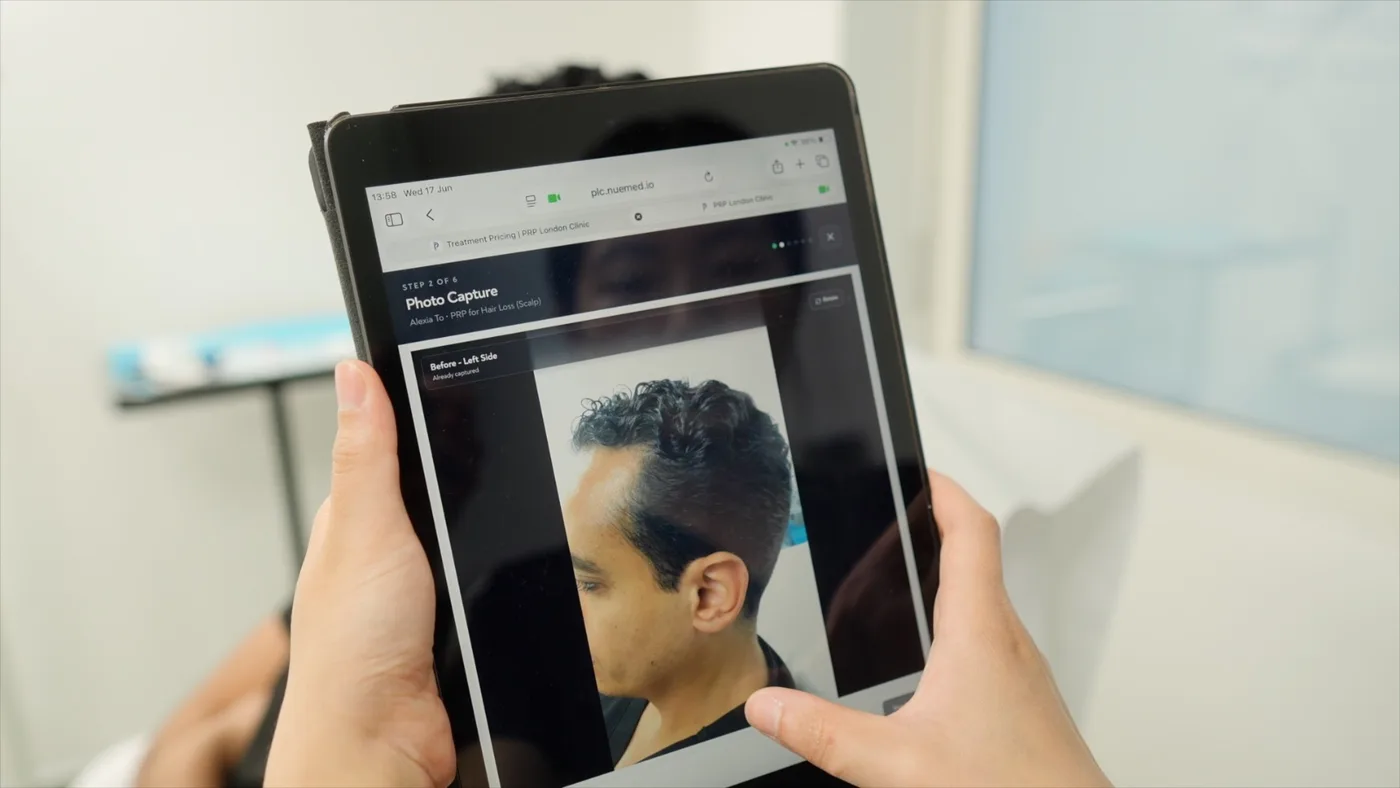
That last point is the one that tends to get overlooked. A record that can be changed after the fact is not really a record.

All clinical work at the clinic is overseen by our GMC-registered medical team, and the standards behind our clinical and editorial content are set out in our medical review process.
Questions to ask any clinic before you are treated
You are entitled to ask every one of these, and a good clinic will answer without hesitation:
- Which exact product are you using, and can I see the box and the batch number?
- Who is the prescriber, and have they assessed me personally?
- Will my injection points be recorded, and how?
- Do you take standardised before and after photographs, and can I have copies?
- Do you keep hyaluronidase on site, and who here is trained to use it?
- Who do I contact out of hours if something goes wrong?
- How long do you keep my records, and how do I request them?
The hyaluronidase question is a particularly good filter. Any clinic injecting hyaluronic acid filler should hold it on site and have someone qualified to use it in an emergency.
Your right to see your own records
Your treatment records are your personal data. Under UK GDPR you have a right of access, which means you can ask any clinic for a copy of what it holds about you. The request is free in normal circumstances, and the clinic should respond within one month.
That covers your clinical notes, your consent forms and your photographs. If you are moving to a new clinic, requesting your records first is a sensible step, and it gives your new practitioner a proper starting point instead of an educated guess.
If a clinic cannot tell you what it injected, cannot produce your consent form, or holds no photographs, that is worth knowing before you book with them again.
If you would like to talk a treatment through with a GMC-registered doctor, you can get in touch with the clinic here.
Frequently Asked Questions
Can I ask which filler was used on me?
Yes, and you should. You are entitled to know the exact product name, the volume used and the batch or lot number, and a clinic should be willing to show you the box before treatment. This matters because not all fillers behave the same way. Hyaluronic acid fillers can be dissolved with hyaluronidase if there is a problem, whereas poly-L-lactic acid and calcium hydroxylapatite products cannot.
How long should a clinic keep my treatment records?
There is no single rule covering every private aesthetic clinic, but most follow the NHS benchmark for adult health records, which is eight years after your last treatment. Ask your clinic directly what its retention period is, and how you would request your records after you stop attending.
Do I need to sign a new consent form every time?
You need fresh consent for each procedure, but you should not have to rebuild your whole medical history each visit. The usual pattern is that the clinic already holds your history, asks you to confirm or update anything that has changed, and then takes consent specific to the treatment you are having that day. Consent for one treatment never carries over to a different one.
Can I get copies of my before and after photographs?
Yes. Your clinical photographs are your personal data, so a subject access request under UK GDPR covers them alongside your notes and consent forms. The request should be free in normal circumstances and answered within one month. Note that consenting to your photographs being used in marketing is a separate decision, and you can decline that while still keeping them in your record.
What should I do if a clinic has no record of my treatment?
Treat it as a significant warning sign. Without a record there is no way to know what product went in, in what quantity or where, which makes both a repeat treatment and any complication far harder to manage safely. Ask for whatever they do hold in writing, and give any new practitioner as much detail as you can remember, including approximate dates and the areas treated.